
Meeting Minutes Templates
Minutes are the meeting’s official memory, the one place a decision, who made it, and who has to act on it survive after everyone leaves the room. These meeting minutes templates hold that record in a fixed order, attendees, motions, decisions, and action items, so nothing essential gets lost in a hurried write-up. Start from the format that matches your meeting, a board session, a corporate or formal meeting, a construction job, or a simple team catch-up, and write it down as you go.
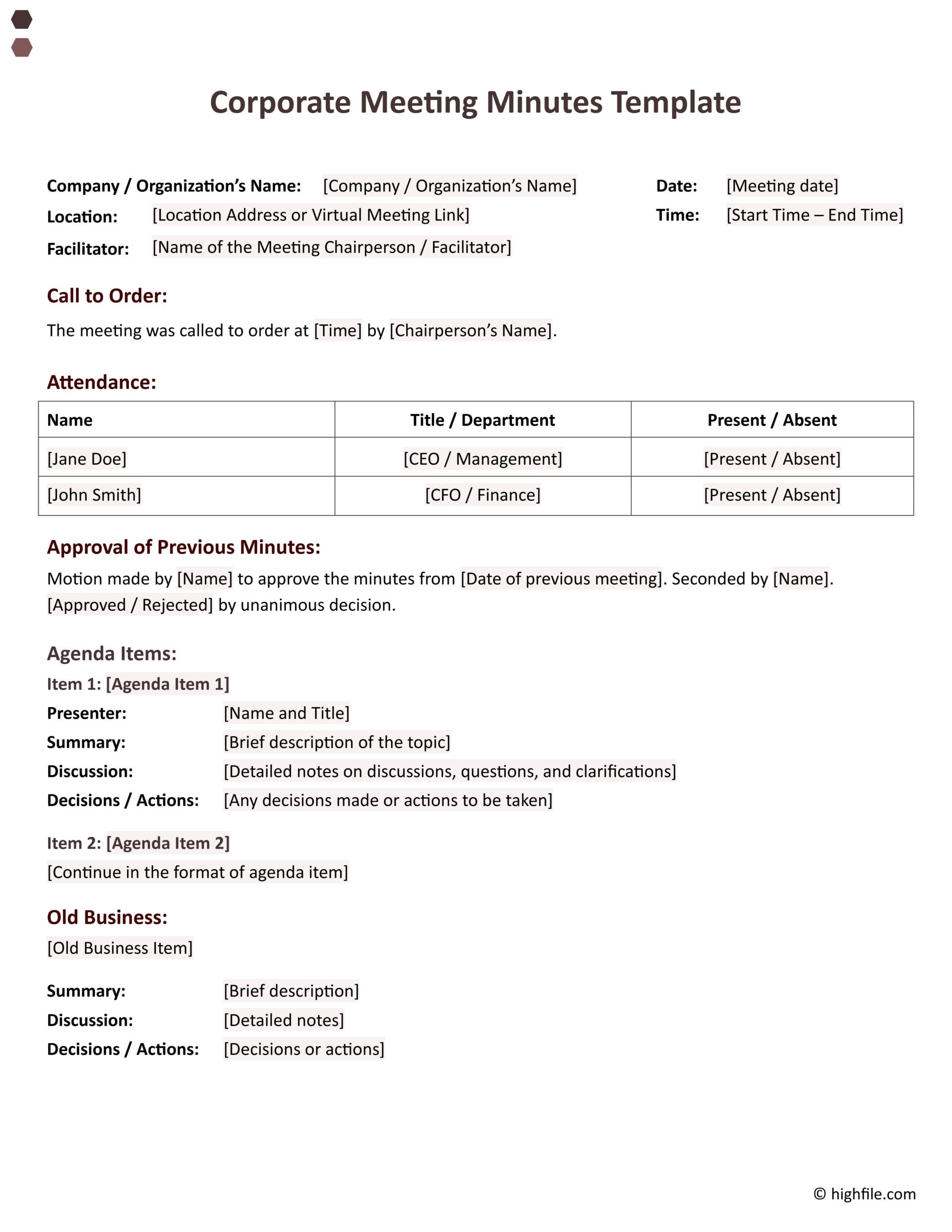




Minutes exist so a meeting’s decisions outlast the meeting. Once the room clears, what was agreed, who agreed to it, and who has to do something next live only in the record someone kept, and a vague record is as good as none when a question comes up weeks later. These meeting minutes templates keep that record on track by giving each part a place in advance, attendance, motions, the decisions reached, and the action items assigned, so the note-taker writes down the meeting rather than reconstructing it afterward.
How much formality a meeting needs sets which format fits. For a corporation, board and shareholder minutes are a legal record, evidence in disputes and audits that the board acted with due care, and most states require them to be kept. A weekly team catch-up needs far less, a record of what was discussed and who owns the follow-ups. These meeting minutes templates span that range so the structure matches the stakes, and the formal and board formats include the motion-and-second detail that governance demands. Choose the one your meeting calls for and write it down as it happens.
Worth knowing: For corporations, board minutes are often the first document pulled in a dispute or audit, and courts have treated thin minutes as a sign the board did not act with due care. Recording motions, who moved and seconded, and the vote is what makes them hold up.
What minutes need to record
The parts that make a record stand as the meeting's official account.
The date, time, location, and the body meeting, so the record is fixed to a specific session that can be cited later.
Who was present, absent, or recused, since a decision's validity can turn on having enough members there to vote on it.
When the meeting opened and who chaired it, the formal start that marks the point from which the record begins.
The vote accepting the last meeting's record, which closes that account and confirms it as the agreed version of events.
Every topic taken up, with a short summary of the discussion, kept to what was decided rather than a transcript of who said what.
Each formal motion, who moved and seconded it, and the result. In board and corporate minutes this is the part with legal weight.
The resolutions reached and policies adopted, recorded plainly so there is no later argument over what the meeting actually agreed.
Every task assigned, the person responsible, and the deadline, so the follow-ups have owners rather than drifting after the meeting ends.
The closing time, the next meeting date, and who prepared the minutes, sealing the record and pointing to the session that follows.
Taking minutes that hold up
Capturing a meeting live so the record is accurate and complete.
Begin with the format the meeting calls for, the board or formal layout for governance that needs motions recorded, the simple layout for a team catch-up. A board meeting and a standup need very different levels of detail.
Before the meeting, drop the agenda items into the record and fill the date, body, and expected attendees. Walking in with the structure already laid out means you record rather than scramble.
Mark who is present, absent, or recused as the meeting opens. For a board, note that a quorum is met, since decisions taken without one can later be challenged.
Write down what was decided and the motions behind it, not a line-by-line account of the talk. Minutes are a summary of outcomes; a transcript buries the decisions a reader needs.
Tip — For each motion, note who moved it, who seconded, and the vote count. That trio is what proves a decision was properly made if anyone questions it later.
Write each follow-up with a named owner and a deadline as it is agreed. An action item with no name attached is the one that quietly goes undone before the next meeting.
Finish the minutes while the meeting is fresh, then send them for review and approval at the next session. Accurate minutes written the same day beat detailed ones reconstructed a week later.
FAQs
What has to be in board or corporate minutes?
At minimum the date, attendees, confirmation of a quorum, each motion with its mover, seconder, and vote, and the decisions reached. For corporations these are a legal record, so the board and corporate formats here include the motion-and-vote structure that governance and any later audit expect.
How much detail should minutes include?
Enough to record what was decided and who is acting on it, not a word-for-word account of the discussion. Minutes are a summary of outcomes, so capturing motions, decisions, and action items serves a reader far better than a transcript that buries them.
Which format fits a small team meeting?
The simple format suits a regular team catch-up, where the value is a clear list of what was discussed and who owns the follow-ups. The board, corporate, and formal layouts are built for meetings where motions and votes have to be recorded, which a weekly standup does not call for.
Do meeting minutes need to be signed or approved?
Minutes are typically approved by vote at the following meeting, which confirms them as the official record, and many formats note who prepared them and the date approved. For boards, that approval step matters, since it is the point the record becomes the accepted account of what happened.