
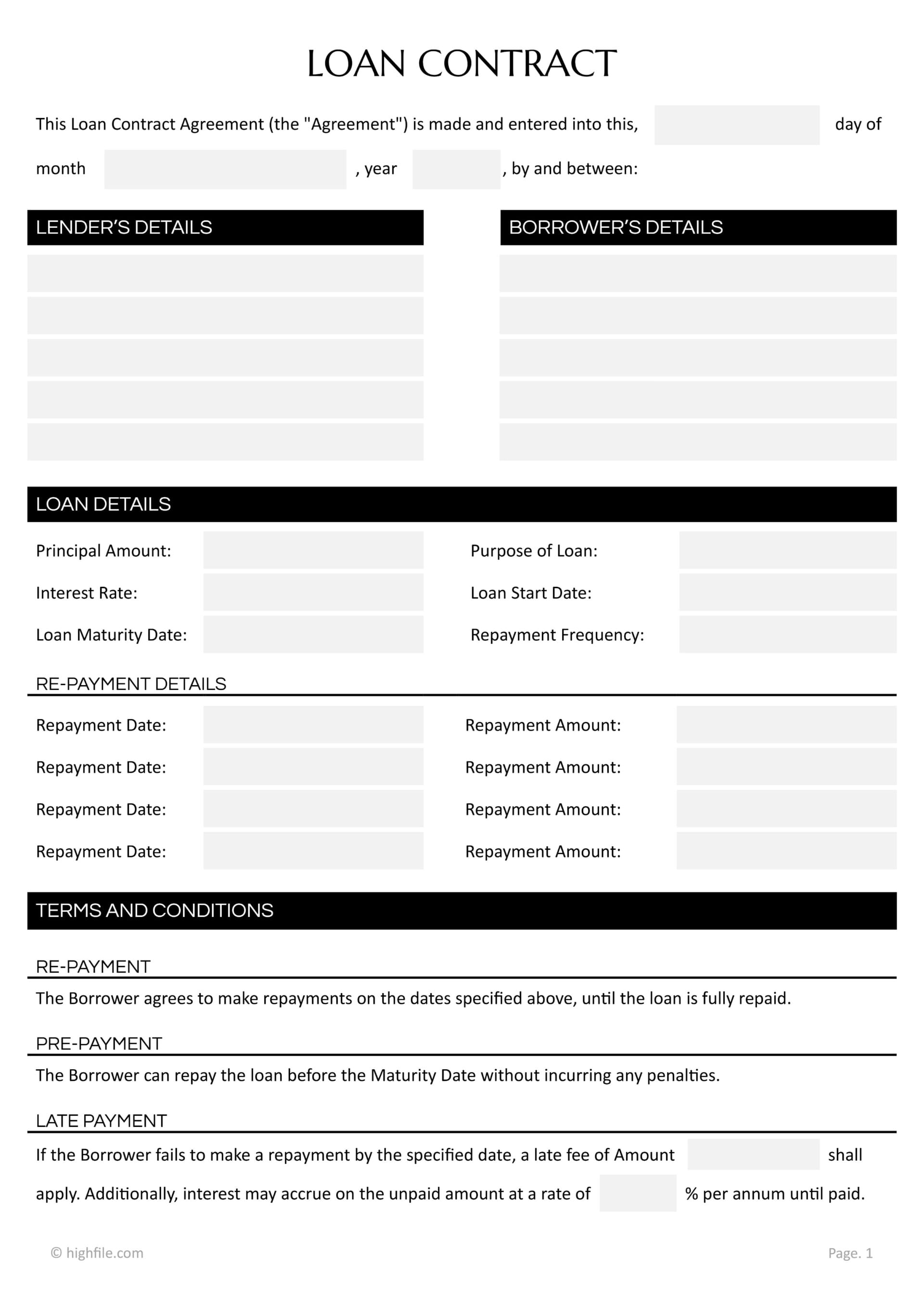



A loan contract is a written agreement between a lender and a borrower that puts the loan terms in one document so both sides can refer back to the same details if questions come up later. It typically covers the principal amount, interest, repayment timing, late payment charges, prepayment terms, and what happens if the borrower misses payments or breaks another obligation. If collateral is involved, it also identifies the secured property, along with the lender’s options if a default occurs.
This loan contract template is designed for personal lending, family loans, private funding, and small-business borrowing. It includes space for the parties’ names and contact details, the loan terms and repayment schedule, and standard contract clauses such as governing law, amendments, confidentiality, and signatures.
How To Use This Loan Contract Template
Begin by entering the effective date of the contract. Then add the full legal names and contact details of the lender and the borrower, including their addresses, phone numbers, and email addresses. These entries connect the agreement to the correct parties and anchor the obligations that follow. After completing these fields, move to the next heading to enter the loan terms.
Loan Details
Enter the loan amount and the purpose for which the funds are issued, such as business expenses, personal use, or another agreed reason. Add the interest rate that applies, followed by the date on which the loan term begins. Next, enter the loan maturity date, which marks when the loan is scheduled to end, and enter the repayment frequency that will be followed during the loan term. This may be weekly, monthly, quarterly, or another interval agreed between the parties. These entries complete the core financial terms before moving to the repayment section.
Repayment Details
List each repayment date together with its corresponding repayment amount. This section records the installment schedule by identifying the dates on which payments fall due and the sums payable on those dates. Add rows if further repayments need to be listed.
Terms and Conditions
This section brings together the clauses that govern how the loan operates during its term. It defines the obligations, rights, and rules that apply to both parties.
Repayment
This clause states the borrower’s duty to follow the payment schedule listed in the Repayment Details section. It confirms that each installment must be made on the stated dates and that payments continue in that sequence until the full loan amount has been paid.
Prepayment
This provision permits the borrower to finish paying the loan before the maturity date without a penalty. Early payment requires the remaining principal and the interest that has built up up to that day, with no additional charges applied for ending the loan ahead of schedule.
Late Payment
Use this clause to specify what applies when a scheduled installment is not paid on its due date. The purpose of this entry is to set the cost of late repayment so both sides know how delays are addressed under the agreement. Enter the late fee in the space provided, as this charge is added when a payment is missed, and then add the interest rate that applies to the overdue balance from the day the payment becomes late until the amount is fully paid.
Security/Collateral
This clause applies where the borrower provides an asset as security for the loan and records the property given for that purpose. State the collateral item and include details that identify it, such as its description, location, or any unique reference linked to it.
Default
Default refers to a situation where the borrower fails to pay an amount due or breaches another obligation under the contract. This section identifies the lender’s rights once a default has taken place and defines the action that may be taken in response. In the space provided, enter the action the lender may take, such as demanding the remaining balance, enforcing collateral named earlier, or pursuing any step permitted under the terms of the loan.
Governing Law
This provision identifies the state whose laws control the agreement throughout its term. It determines the legal standards that apply to interpretation, enforcement, and any dispute that may arise. Enter the state that will govern the agreement so the parties know which legal system applies to their obligations.
Amendment
This clause states the process for making any change to the agreement. Its function is to confirm that no alteration is effective unless both parties put the change in writing and sign it. This requirement confirms that all adjustments to the loan terms are formally agreed upon and documented.
Entire Agreement
This clause states that the written terms in this agreement stand as the only terms governing the loan. It confirms that earlier conversations or informal arrangements do not carry any effect unless included here.
Confidentiality
The confidentiality provision requires both parties to keep the terms of the agreement confidential and to restrict any disclosure. It prevents the loan conditions, repayment information, and any related details from being shared with others unless both parties provide written consent or disclosure is required by law.
Acknowledgment
The acknowledgment section confirms that the lender and the borrower have reviewed the agreement and accept the terms recorded within it. Each party must enter a full legal name, provide a signature, and note the date of signing. These entries complete the formal acceptance of the contract.
FAQs
Notarization is not always required for a loan contract to be legally valid. What matters is that both parties agreed to the terms and signed the document. Notarization can still be worth considering when the loan amount is large, when the parties do not know each other well, or when you expect the agreement may be questioned later. A notary verifies identity at signing, which can reduce disputes about whether a signature is genuine.
The interest rate should be written as a specific percentage, and it should match what you intend to charge. Some jurisdictions limit interest rates or regulate certain lending terms, especially when a loan resembles consumer lending. If you plan to charge interest, write the rate, how it is calculated, and when it starts accruing. If you do not plan to charge interest, state that the loan is interest-free so the repayment amounts match the schedule you list.
Late payment terms work best when they spell out three points. First is when a payment is considered late, such as the day after the due date or after a short grace period. Second is the late fee amount, stated as a fixed amount or another method both parties accept. Third is the overdue interest rate and how it applies, including whether it applies only to the missed installment or to the overdue balance until it is paid. Keep these terms consistent with the repayment schedule so the due date and late trigger line up.
Collateral is used when the lender wants a secured loan, meaning a specific asset is tied to repayment. If collateral is included, list enough identifying detail that the asset cannot be confused with something else. For a vehicle, that usually means make, model, year, and VIN. For equipment, it can mean serial numbers and location. For other property, include the identifiers commonly used for that asset type. If the collateral description is vague, enforcement can become difficult during a dispute.
Before signing, read the Repayment Details table, the Late Payment clause, and the Default clause together and check that they are talking about the same due dates and the same meaning of “amount due.” If installments are due on the 1st, the late fee should be tied to that same due date, not a different day. If default gives the lender the right to demand the remaining balance, the wording should not conflict with the repayment table as if only the next installment is due.


