
Cookbook Templates
A cookbook lives or dies on one test. Can someone cook from it a year later without you in the room. That asks for a recipe written the same way every time, photos that show the result, and a contents page that gets a reader to the dish fast. These cookbook templates set out those pages so the work left to you is the recipes and the story around them. Pick the style that suits the collection you are gathering and start filling in the first recipe.






Every recipe in a cookbook is something another person has to follow without you there to explain. That one fact decides how the pages are built. Each recipe needs the ingredients listed in the order they are used, the steps numbered so a cook can find their place after looking up from the pan, and a photo of the finished dish so they know what they are aiming for. A recipe that reads well in your own kitchen can still leave a reader guessing, which is why these cookbook templates fix the shape of a recipe page first and leave the wording to you.
Around the recipes, a book needs the parts that turn loose pages into something a reader moves through. A cover names the collection and sets its tone, a contents page sends a reader to a dish without flipping every page, and section dividers group the recipes so starters do not sit next to desserts. These cookbook templates give those pages a consistent look, so a family recipe collection, a single-theme book like grilling or holiday baking, or a blank book you fill from scratch all read as one finished piece rather than a stack of printouts. The recipes are yours; the pages keep them in order.
Worth knowing: Write the ingredient list in the order the steps call for them, not the order they sit in your cupboard. A cook reads top to bottom while working, so an ingredient that appears in step one should sit at the top of the list, and the method lines up with the hands instead of sending a reader back and forth.
Pages inside a cookbook template
The pages a cookbook repeats, and what each one does for a reader cooking from it.
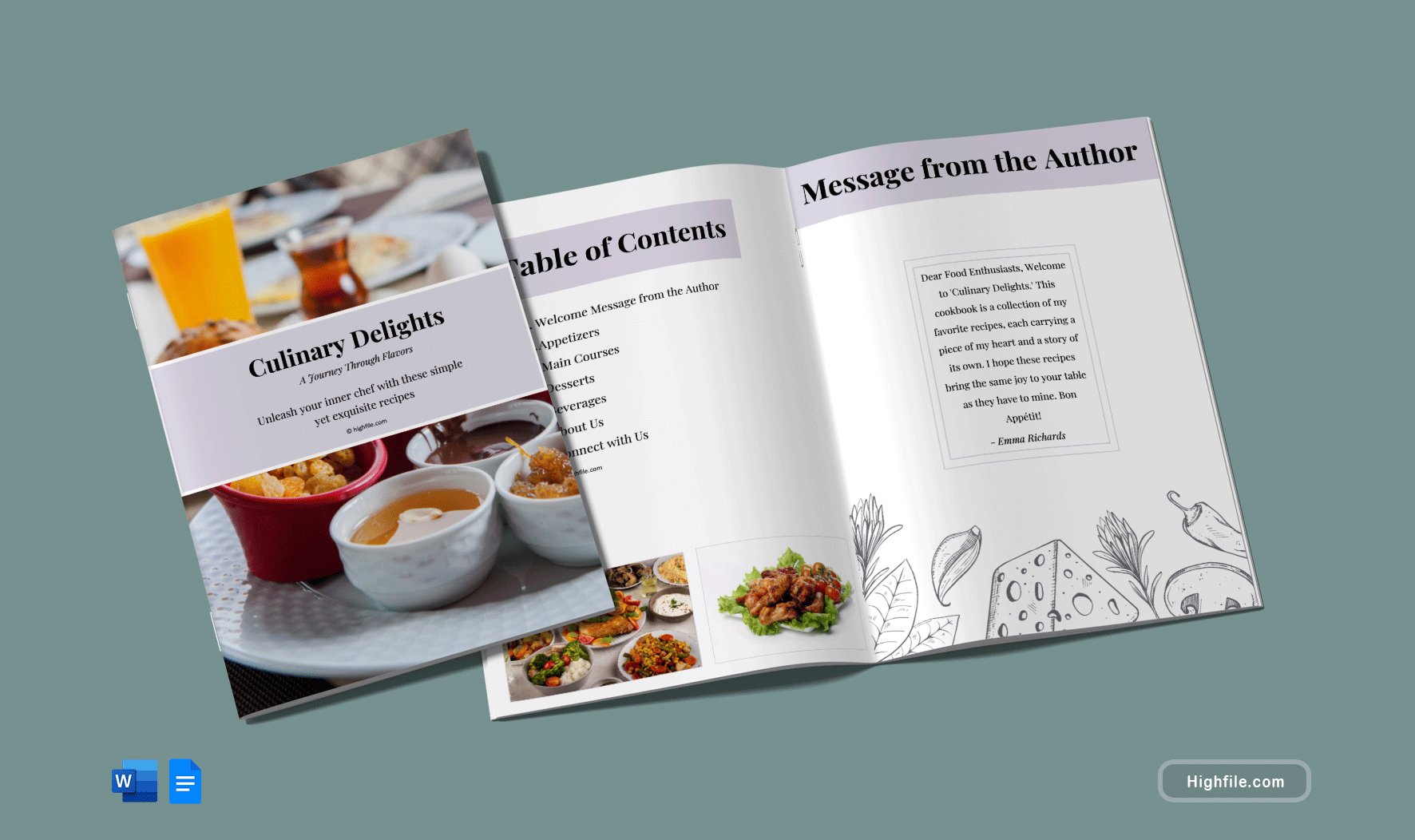
The face of the book, with the title, a hero photo, and a line that sets the tone, from a family keepsake to a themed collection like grilling or holiday baking.
A listing that sends a reader straight to a recipe by name and page, so a finished book is something to move through rather than flip start to end.
An opening page for the note that frames the collection, where the cook explains the recipes, the occasion, or the kitchen they came from.
The core of the book, each holding the dish name, ingredient list, numbered steps, and a photo of the result, written the same way on every recipe.
Breaks that group recipes into courses or themes like starters, mains, and desserts, so a reader lands in the right part of the book.
Framed image areas sized to the page for the finished dish, the picture a cook checks their result against while working through the steps.
Building your cookbook
From a blank book to recipes a reader can follow without you in the kitchen.
Set the title and the cover photo to what ties the recipes together, a family name, a single theme like grilling, or a year of holiday meals. The cover is what tells a reader whose book this is.
Decide how the recipes group, by course, by season, or by who contributed them, and label the dividers to match. The sections are what let a reader find a dish without reading the whole book.
Fill one recipe page fully, the ingredient list in the order the steps use them and the method numbered. Set the wording you want here and the rest of the recipes follow the same shape.
Tip — List quantities in both the unit you cook by and a common one, so a reader who measures differently is not left converting mid-recipe.
Drop a photo of each finished dish into its frame at the size it prints. A reader uses the picture to check their result, so a clear shot of the plated dish does more than a styled one that hides the food.
List each recipe and its page once the order is set, so the contents match the book. This is the page a reader opens first to get to the dish they came for.
Use the author page for the story around the collection, where a recipe came from or who it belongs to. This is where a cookbook stops being a list and becomes a book worth keeping.
FAQs
How should I organize the recipes in my cookbook?
Group them the way a reader would look for them. Courses (starters, mains, desserts) suit a general collection, while a themed book might group by season, by occasion, or by who contributed the recipe. Set the section dividers to match and list every recipe on the contents page so a dish is findable by name.
Where do I add photos of the dishes?
Each recipe page has a framed area sized for a photo of the finished dish, and the cover takes a hero image. Add a clear shot of the plated result rather than a heavily styled one, since a reader uses the photo to check what they are aiming for while they cook.
Can I include personal stories or notes with the recipes?
Yes. The author page is built for an opening note, and recipe pages leave room for a line or two of headnote above the method, where you can say where a dish came from or what to serve it with. Those notes are what separate a personal cookbook from a printed recipe list.
What if I only want a blank book to fill in myself?
A blank cookbook in the collection gives you the cover, contents page, section dividers, and empty recipe pages with nothing pre-written, so you add every recipe from scratch. The themed books, by contrast, come with example recipes already in place that you replace with your own.