
Outline Templates
An outline is where you decide the order of your ideas before you commit them to full sentences. Settle the sequence first and the writing itself gets faster, because every paragraph already knows what it is doing and what comes before and after it. These outline templates are organized for the kind of piece you are working on, since an essay, a novel, and a script each move in a different order. Open the outline template for what you are writing and fill in your own material.
 ×
× ×
× ×
×





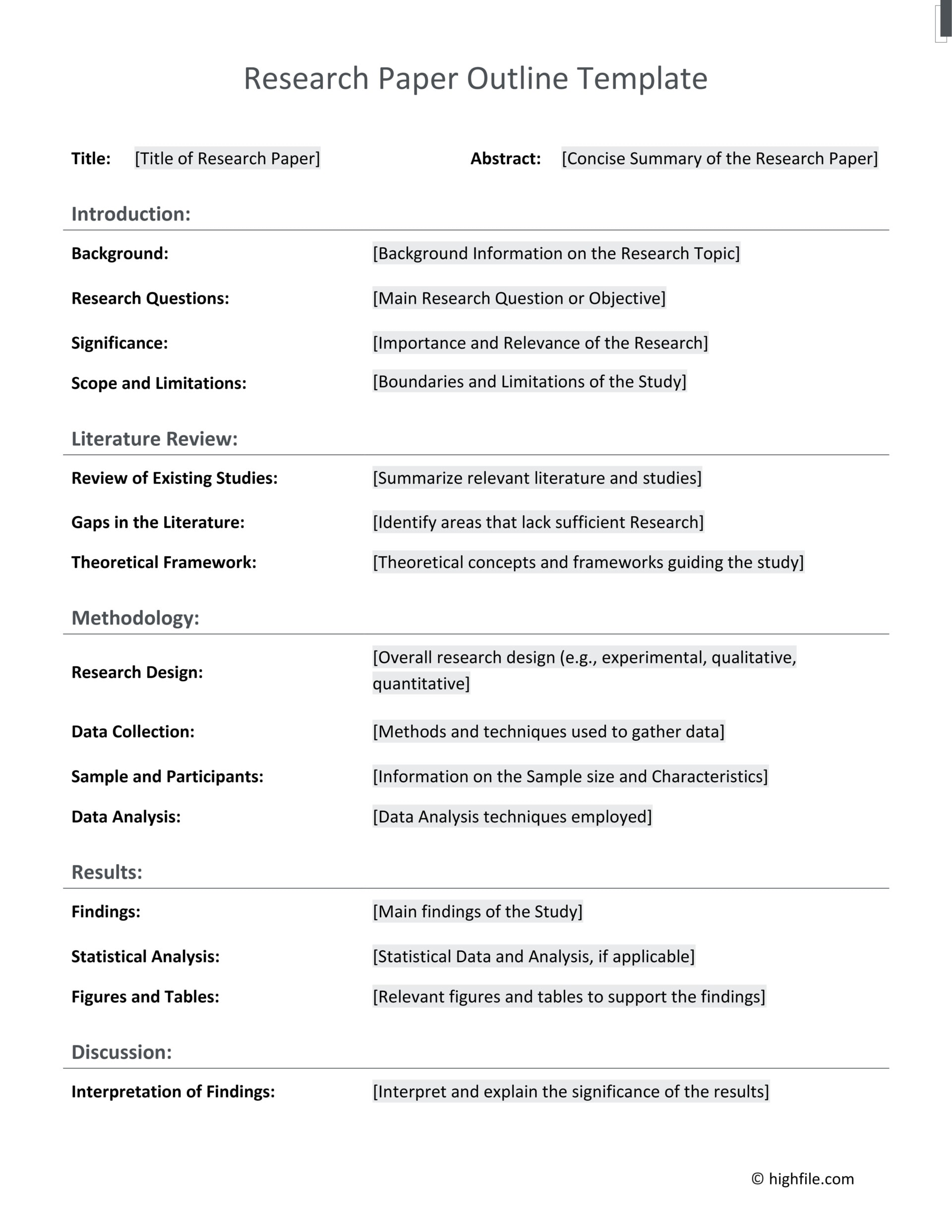


An outline is where you work out what to say before you hunt for the words to say it. Decide the order first and the draft stops stalling, because you are no longer settling the sequence and writing the prose in the same breath. The payoff grows with length, since a wrong turn taken in chapter two is far cheaper to fix as a moved line than as twenty written pages.
What that order should be depends entirely on what you are writing. An argumentative essay moves a reader from a claim to a conclusion, so it runs thesis, evidence, counterargument, and close. A story or novel turns on tension, so it tracks beats, the inciting incident, the rising action, the midpoint turn, the climax. A script works scene by scene with action and dialogue, an ebook breaks into chapters and subsections, a ceremony runs as a timed program from prelude to recessional. Each of these outline templates is arranged for its own kind of writing, so the order you fill in is already the one that piece calls for.
Worth knowing: An outline is meant to be argued with. The point of getting the structure onto a page is that you can see a weak link, a missing beat, an argument that arrives before its evidence, while it is still easy to move. A draft that fights you halfway through is often a draft whose outline was never tested.
Find the outline for your piece
Each template is arranged for one kind of writing. Here is what each one is for.
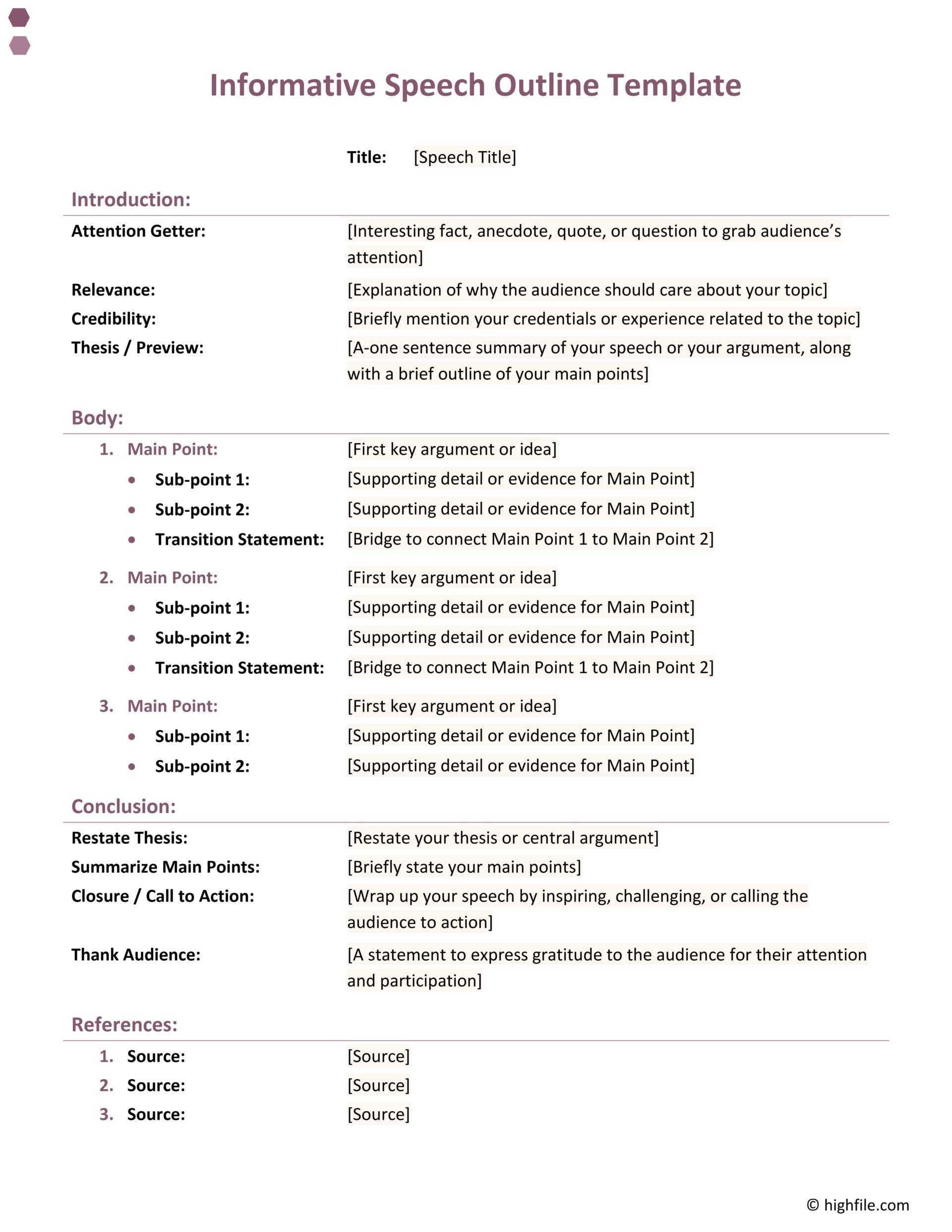
Hook, thesis, body points with evidence, a fair counterargument, and a conclusion that restates the claim. The order is the argument, so it reads as a line of reasoning.
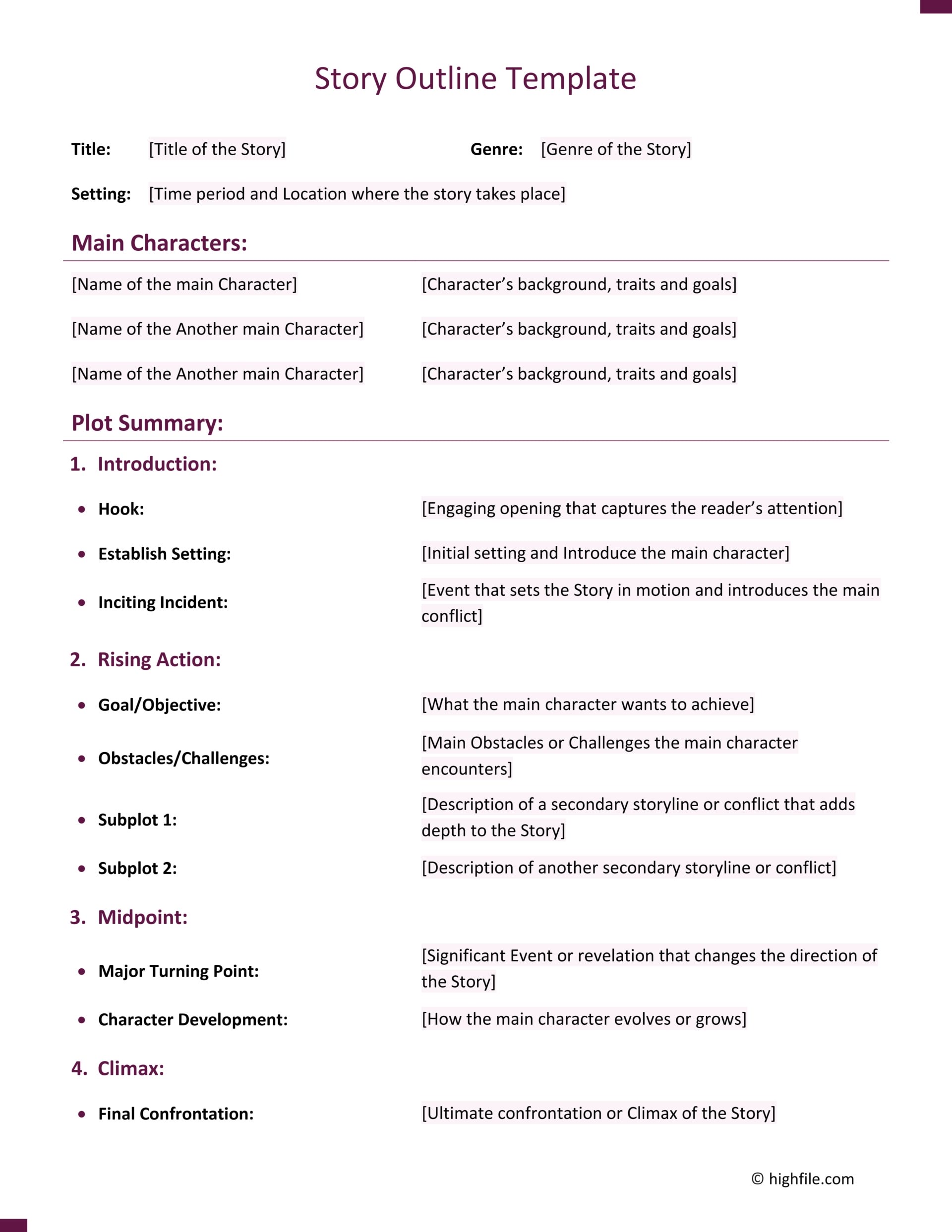
Title, setting, and main characters above a plot built on beats, the hook, inciting incident, rising action, midpoint, and climax, so the tension is planned before a word of prose.
The story beats plus room for world, magic system, and threaded subplots, the extra structure a longer, invented setting needs to stay consistent across chapters.
A premise and character block above a scene-by-scene table logging location, time, action, dialogue, and visual notes, since a script is read by the people staging each scene.
Title, author, and scope above chapters broken into subsections with key points under each, the hierarchy a long nonfiction piece needs to stay navigable as it grows.
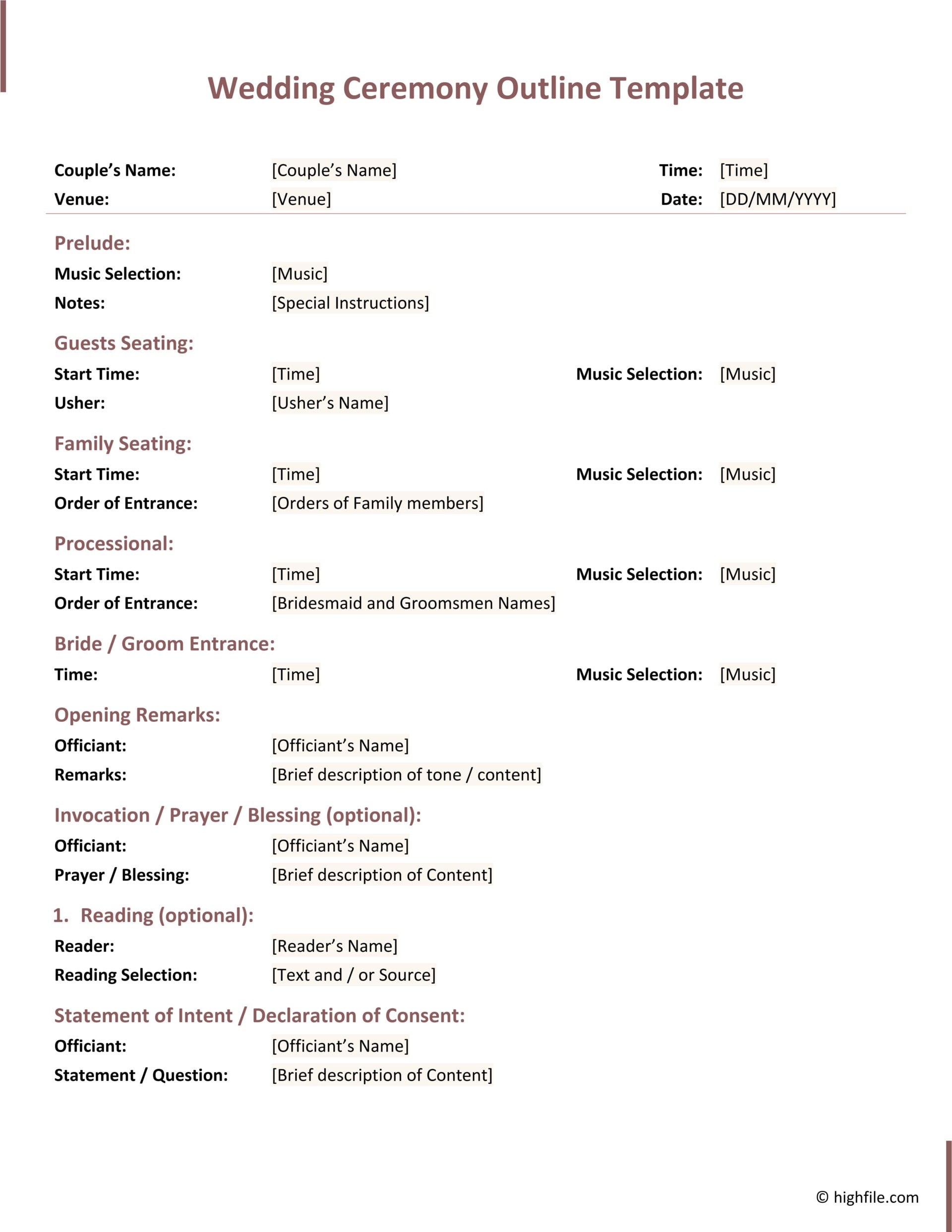
A timed program, prelude, processional, readings, vows, recessional, with music, speakers, and cues named beside each part, so the day runs in order on the day.
Building an outline you can write from
The moves that separate a plan you can draft against from a list of headings that goes nowhere.
Begin with the outline template for what you are writing, since an essay and a novel are arranged in different orders. Starting from the matching one means the major parts are already the right ones to fill.
Write the thesis, logline, or core argument in one sentence before anything else. Every section you add afterward is there to serve that line, and a section that does not is the first thing to cut.
Block in the large parts, acts, chapters, the stages of an argument, without detail yet. Getting the big pieces in the right order first means the smaller ones have somewhere to land.
Under each section, list the specific moments or claims in the order a reader meets them. For a story, this is where the turns go; for an essay, where evidence lines up behind each point.
Tip — Put each point on its own line so you can move it. The value of an outline is partly that reordering is a drag of a line rather than a rewrite of a page.
Read down the structure and check each part is earned by what came before. An argument that lands before its evidence, or a climax with no rising tension under it, surfaces here while it is still cheap to fix.
Mark the parts you are unsure of as open rather than forcing a decision. An outline is a plan, not a contract, and the draft will teach you things the outline could not.
FAQs
How detailed should an outline be?
Detailed enough to write from without thinking about structure again, no more. A short essay may need only its thesis and a few points; a novel often wants beats under every act. Over-building an outline can turn into a way of avoiding the draft, so stop once the path is clear.
Which outline do I use for a novel versus a script?
The story and fantasy novel outlines are built on plot beats, the inciting incident, rising action, midpoint, and climax, and suit any long narrative. The script outline adds a scene-by-scene table with action and dialogue, which is what a screenplay or stage piece needs that a prose outline does not.
Is an outline worth it for a short piece?
Often, yes, even if it is only a few lines. A short argumentative essay still benefits from fixing the thesis and the order of points before drafting, since that is what keeps a quick piece from wandering. The longer the piece, the more an outline saves you.
What if the draft pulls away from the outline?
That is normal and usually a good sign. An outline is a starting plan, and writing surfaces better ideas than planning does. Let the draft lead when it has a reason to, and update the outline to match so the rest of the piece stays coherent.