
Contract Templates
A contract is the written record of what two parties agreed to, so that months later neither side has to rely on memory for who owed what. These contract templates frame that agreement, with room to name the parties, set out the scope, fix the payment and the term, and sign, across the kinds of deals people actually make. Start from the contract closest to your situation, a rental, a consulting engagement, an investment, or a simple agreement, and fill it in from there.







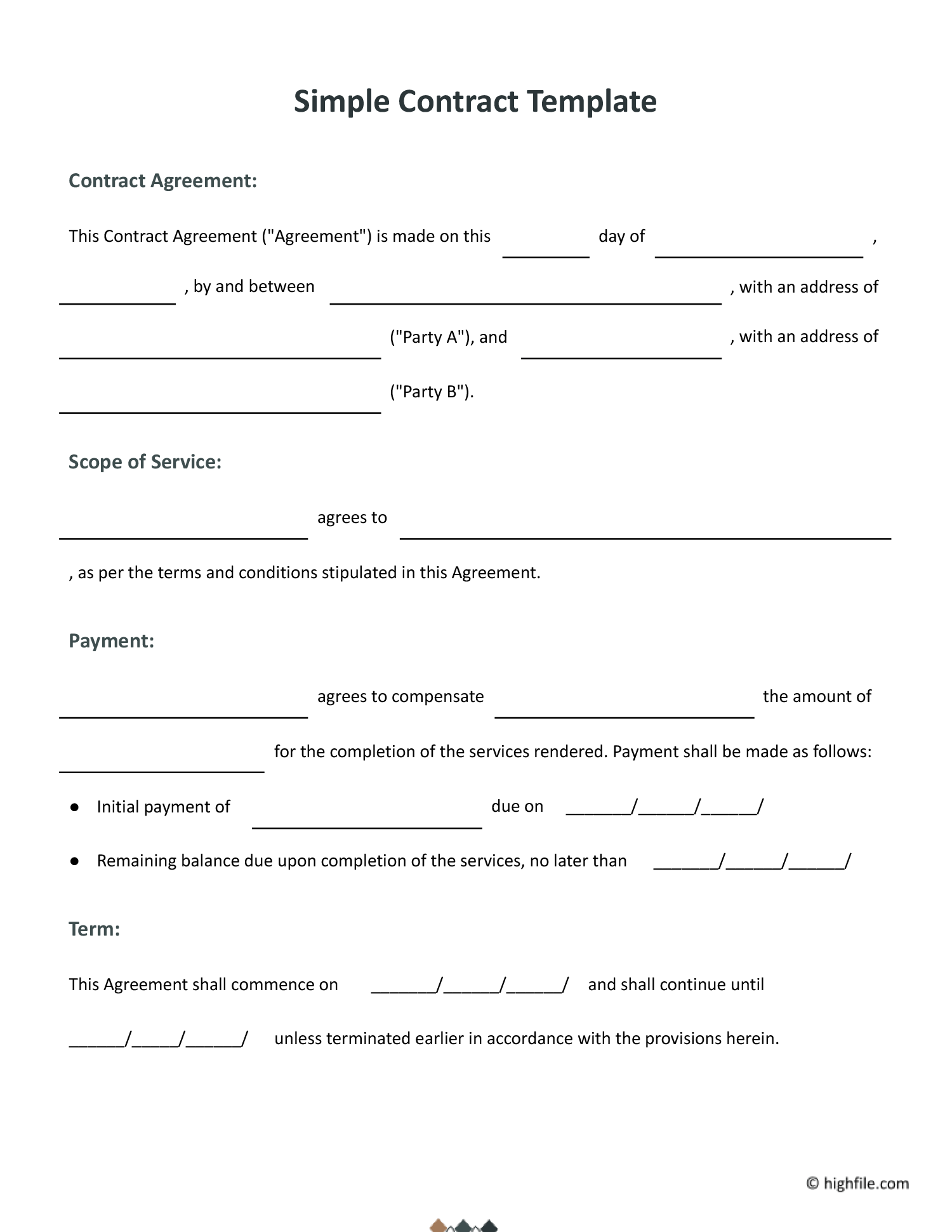


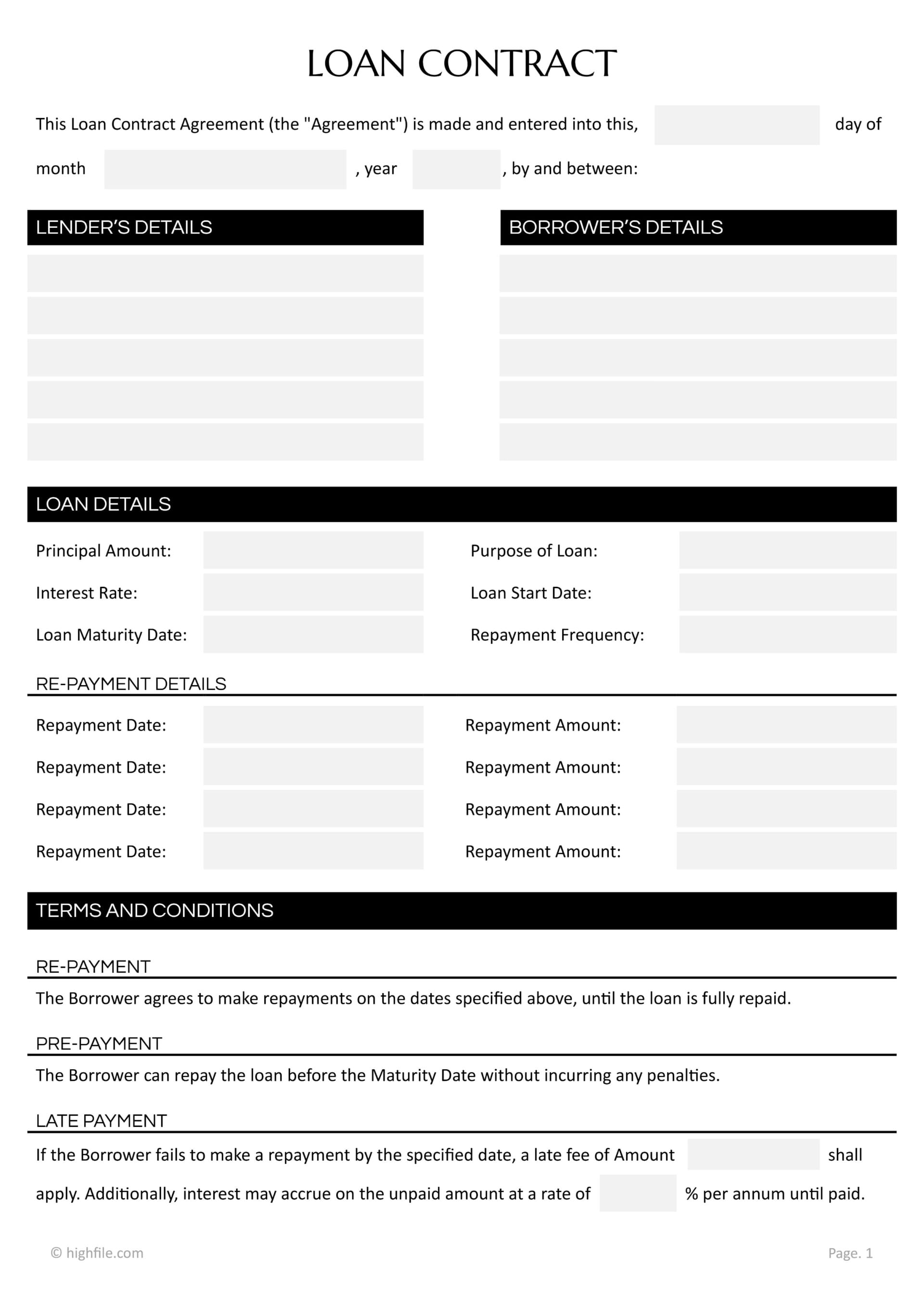


A contract turns an understanding into something both sides can point to later. Most disputes between two parties come down to a term that was never written down or was written so loosely it could be read two ways, and a written agreement is what closes that gap. These contract templates already include the parts a working agreement needs, so the task in front of you is naming the specifics of your deal rather than building the document from a blank page.
The right starting point depends on the deal. Renting out equipment or a room turns on the item, the rate, and the return condition; a consulting engagement turns on the scope and the payment schedule; an investment turns on the amount, the equity, and the representations each side makes. These contract templates span those situations so you can begin from one near yours and adjust the terms to fit. For a binding or high-value agreement, having a legal professional review the final version before anyone signs is worth the step, since a template is a solid starting point rather than legal advice.
Worth knowing: A signature binds you to the version in front of you, not the version you discussed. Read the full document before signing, and get any verbal promise written into the terms, because a court reads the contract, not the conversation that led to it.
Common parts of a contract
The clauses that make an agreement clear enough to rely on.
Full legal names and addresses of everyone bound by the agreement, identified once at the top so every later reference to a party is unambiguous.
What is being provided, rented, or exchanged, written in enough detail that both sides would describe the obligation the same way.
The amount, the schedule, and how payment is made. A vague figure here is the clause disputes turn on, so it pays to be exact.
When the agreement starts and ends, and how it renews or extends, so neither party is left guessing about the dates it is in force.
Promises each side makes about its own standing, such as the authority to enter the deal or knowledge of the risks involved.
The state or jurisdiction whose law applies if a question arises, which decides where and how a dispute would be settled.
A clause keeping the terms and any shared information private, common in consulting and investment agreements where sensitive detail changes hands.
How either party can end the agreement early, on what notice, and what happens to payments and obligations when they do.
The dated signature block where each party accepts the terms. An agreement is not in force until the people with authority to bind each side have signed.
Completing a contract properly
Working through an agreement so the terms hold up later.
Begin with the agreement that matches your deal, since a rental, a consulting engagement, and an investment each include clauses the others do not. Starting from the nearest type means fewer terms to add and fewer to strip out.
Enter the full legal names and addresses, using a registered business name where a company is involved rather than a trading name. The parties named here are the ones the agreement binds.
Spell out what is being provided or exchanged so both sides read the obligation the same way. A line that could mean two things is the line a dispute is built on later.
Tip — Write the scope as if a stranger had to decide on their own that it was met. If your description leaves that open to argument, tighten it before anyone signs.
Fix the amount, the schedule, and how payment is made, then set the start and end dates and any renewal. These two clauses are where most disagreements over an agreement begin.
Complete the parts unique to your agreement, the equity split and representations in an investment, the return condition in a rental, the deliverables in a consulting engagement, rather than leaving them at the defaults.
Read the full agreement and confirm every verbal promise made it into the written terms. For a binding or high-value deal, have a legal professional review it first, since the signed version is what governs, not the discussion behind it.
What each agreement turns on
The clause that matters most shifts with the kind of deal.
Equipment, room, and lot rentals turn on the item rented, the rate and period, and the condition it must be returned in, with responsibility for damage spelled out.
A services engagement turns on the scope of work and the payment terms, plus who owns the result and how either side can end the work early.
An investment turns on the amount, the equity in return, and the representations each side makes, since both are committing to figures with real consequences.
A simple contract covers a plain exchange, naming the parties, what each owes, and the term, for a deal that needs a record without specialized clauses.
Across every type, confirm the names are exact, the payment is unambiguous, and every promise is in writing, then read the full document a second time.
Binding or high-value agreements, anything involving equity, large sums, or long commitments, are worth a legal professional's eyes before signing rather than after.
FAQs
Are these contract templates legally binding?
A contract becomes binding when both parties with the authority to agree sign it and exchange something of value, and these templates give you the structure to record that. They are a starting point rather than legal advice, so for a binding or high-value agreement it is worth having a legal professional review the completed version before you sign.
Which contract should I start from?
Begin with the type closest to your deal. A rental agreement suits renting equipment, a room, or a lot; a consulting agreement suits paid services; an investment agreement suits putting money in for equity; and the simple agreement covers a straightforward exchange that does not fit a named type. Starting near your situation leaves fewer clauses to change.
Do both parties need to sign?
Yes. An agreement takes effect only when every party it binds has signed, and where a company is involved, the person signing needs the authority to commit it. Each side should keep a signed copy, since a contract one party cannot produce is hard to enforce.
Can I change the clauses to fit my deal?
The terms are meant to be set to your situation, the amounts, dates, scope, and any clauses your deal needs that the starting point does not include. When you add or remove a clause that changes who is liable or how disputes are handled, a quick legal review is the safe step before signing.