
Shot List Templates
On a shoot, the shots you forget are the ones you remember later, when the location is gone and the people have left. A shot list is how a crew makes sure every needed frame is planned before the day, so nothing essential is forgotten under time pressure. These shot list templates give that plan a working shape, a header for the production details and a table for the shots, so you walk in knowing what to shoot and in what order. Build the list, mark the must-haves, and shoot it down.
 ×
× ×
× ×
× ×
×


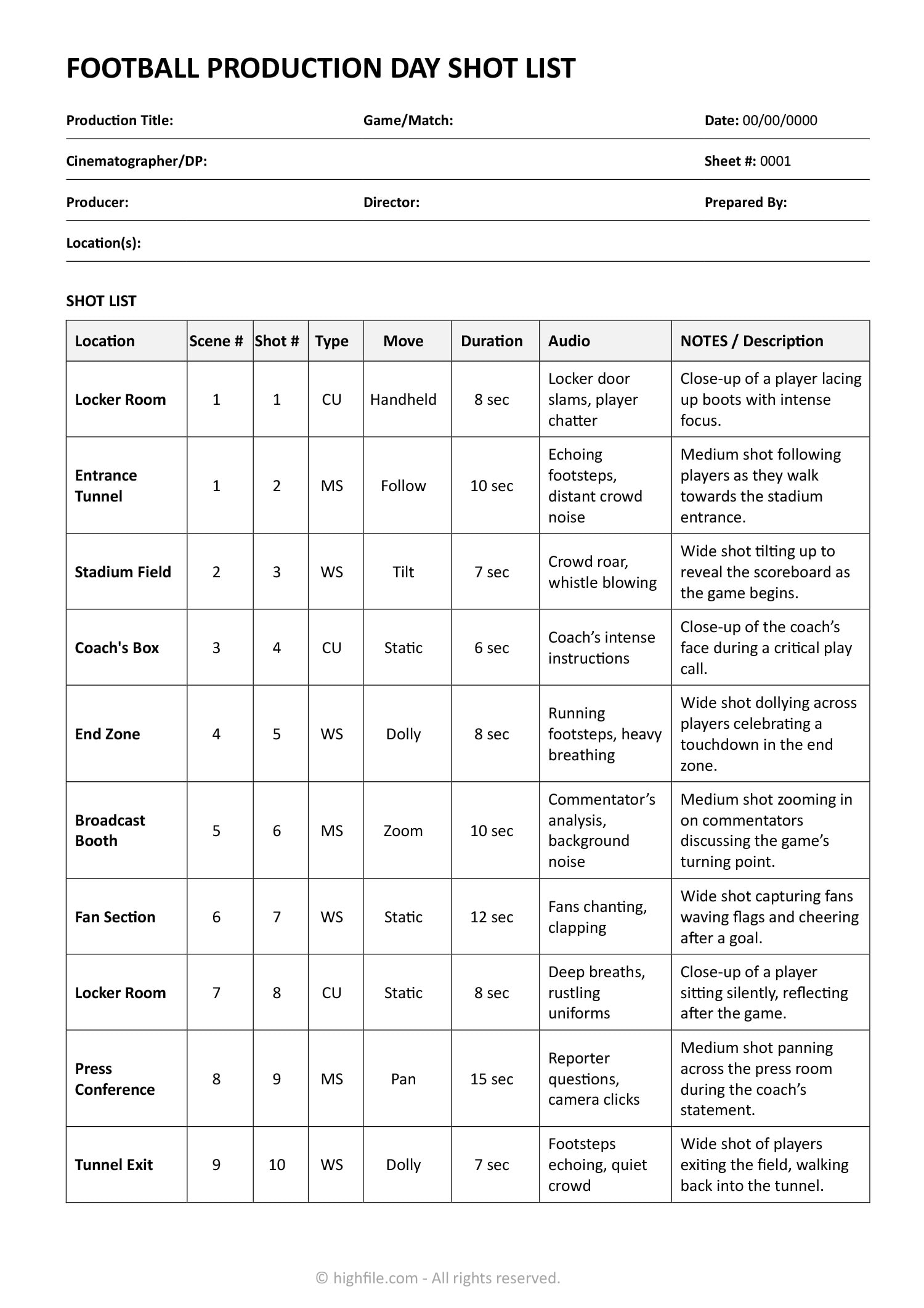


A shot list is a plan made before the shoot so that decisions are not left to a moment when there is no time to make them. A shoot day moves fast and seldom goes fully to plan. Light shifts, a location frees up late, a subject is available for only ten minutes. The shots that get missed are almost never the obvious ones, they are the specific frames a client wanted that no one wrote down. A shot list exists to hold those, so the crew can move quickly and still know that every needed shot has a place in the day.
What turns a list of shots into a useful plan is two things working together, completeness and order. Completeness means the must-have frames are all on the page, separated from the nice-to-have ones, so when time runs short everyone knows what cannot be dropped. Order means the shots are grouped the way the day will actually run, by location, by setup, or by sequence, so the crew is not relighting the same corner three times or chasing a subject back and forth. A list that has both lets a shoot stay loose and improvised on top of a structure that guarantees the essential work is done.
Worth knowing: The single most useful column on a shot list is the must-have flag. When the schedule slips, and it will, the crew that marked which frames are non-negotiable knows exactly what to protect and what to let go, instead of deciding under pressure and regretting it later.
What's on a shot list template
The header and columns that make a shot list usable on the day.
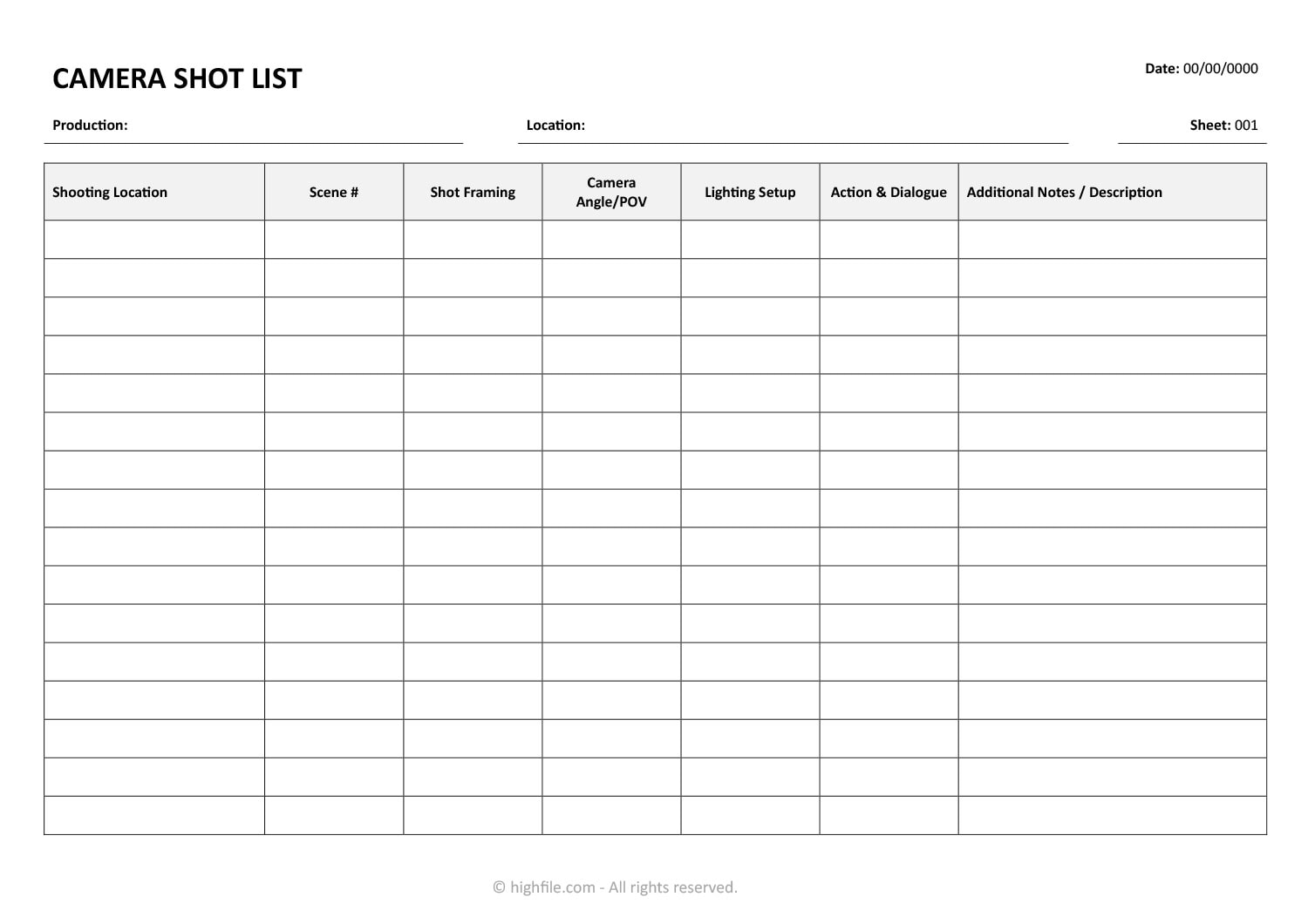
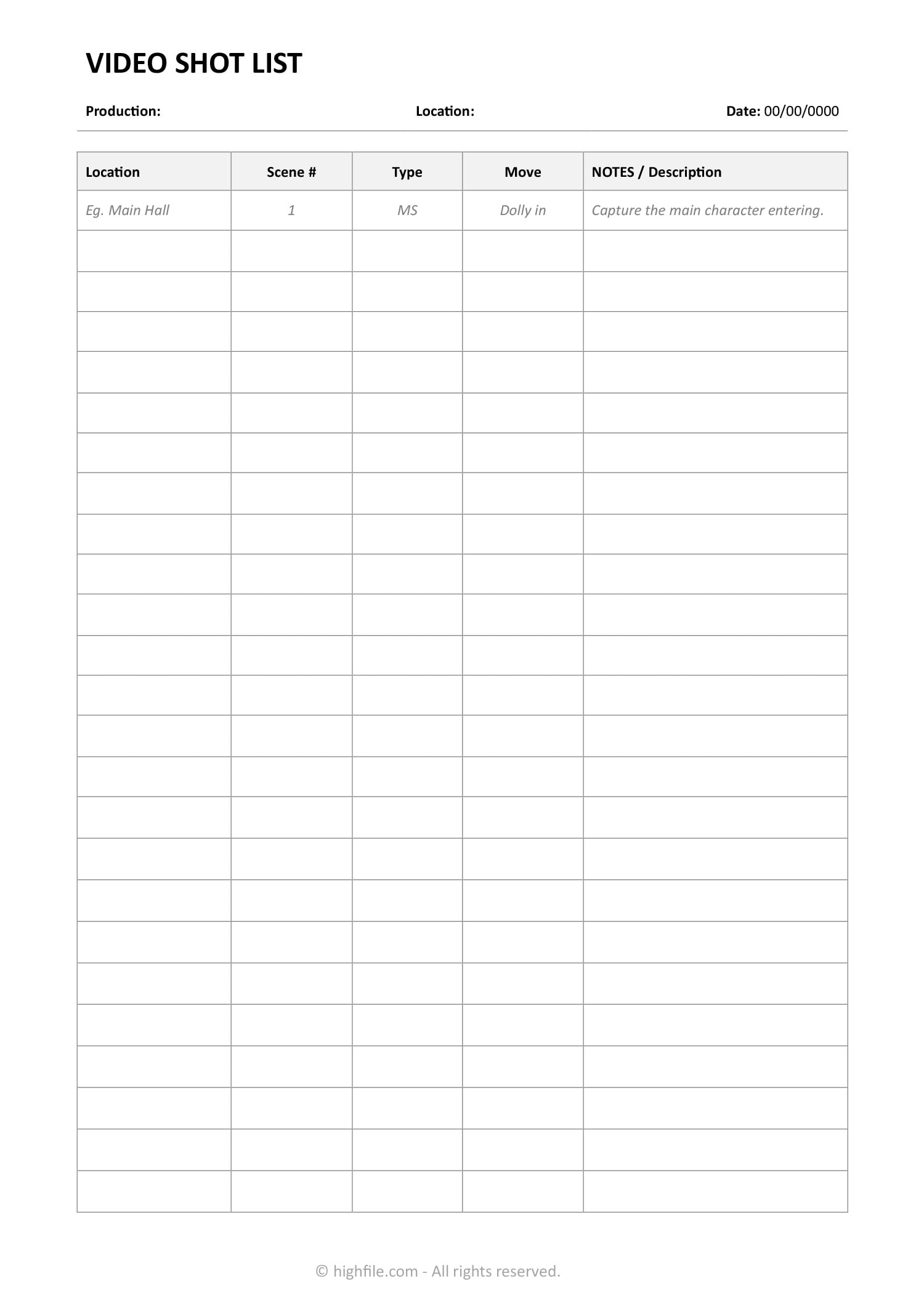
The names that fix the document to one shoot, the client or couple, the photographer or director, and who prepared it, so the right list reaches the right crew.
When and where the shoot happens, named at the top, since a crew planning travel and light works from these before anything else.
The task or subject for each frame, written plainly enough that a second shooter reads it the same way the director meant it.
A mark for the shots that cannot be dropped, so when time gets tight the crew protects the essential frames instead of guessing.
How long each setup should take, so the list adds up to a day that fits the hours, not one that runs out of them at frame nine of twenty.
The framing or camera move for the shot, a wide, a close-up, an overhead, so the look is decided in planning rather than invented on set.
Headings that gather shots by location, sequence, or kind, like getting-ready apart from ceremony, so the table follows the order the day runs.
Who shoots each frame and a line of direction beside it, so on a multi-camera crew every shot has an owner and the intent travels with it.
A column to tick captured shots on the day, plus space for editing, delivery, and file-format notes that hand the shoot to post.
Building a shot list that works on the day
From a script or a brief to a list the crew can shoot from on the day.
Read through the script, run-of-show, or client brief and pull every shot it calls for. The list starts as a complete record of what the finished piece needs, before any thought about order.
Describe each frame plainly enough that a second shooter sees what you see. "Close-up, rings on the bouquet" directs a crew; "detail shot" leaves them guessing at what you meant.
Mark the shots the client is paying for and the ones the edit cannot do without. These are the frames you protect when the day runs short, so they have to be unmistakable on the page.
Tip — Ask the client directly which three or four images they would be upset to not receive, and flag exactly those. Their must-haves are not always the ones a photographer would guess.
Add the angle or camera move for each frame, a wide, a close-up, an overhead. Deciding the look in planning means the crew sets up once rather than working it out on the spot.
Gather shots that share a place, a light, or a lens so they can be taken together. Sequencing this way is what stops a crew relighting the same corner or moving gear back and forth all day.
Put a rough minute count on every group and add them up against the hours you have. A list that overruns the day on paper will overrun it worse on set, where this is the step that catches it early.
On a multi-camera crew, name who takes each frame so nothing falls between people. Then leave a little unplanned space, since the candid moment no one scripted is often the best one of the day.
Tick each frame as it is captured so the list tracks the day in real time. A glance tells you what is left and confirms every must-have is in the can before you wrap and lose the chance.
What changes from one kind of shoot to another
The same shot list, weighted differently for what each shoot has to get on the day.
Built around a fixed timeline no one can rerun, so it leans on must-have family groupings and the key moments, getting-ready, vows, first dance, that happen once.
Carries scene and shot numbers tied to the script, so coverage of each beat is tracked and the edit has every angle it needs to cut the scene.
Organized by setup and look, grouping shots that share a backdrop, lens, or lighting so a session moves through styles without constant resetting.
Plans for action that will not wait, naming the cameras, positions, and the recurring moments to cover when there is no second take.
Weighted toward the hero shots a brief specifies, with framing and angle pinned down in advance so each required image is delivered exactly as agreed.
Strips the list to subject, must-have, and done, for a short shoot that needs a checklist of frames more than a full production plan.
FAQs
What is the difference between a shot list and a storyboard?
A shot list names every frame to shoot in words, with details like framing, who shoots it, and how long it takes. A storyboard draws key moments to show how they look and cut together. They answer different questions, the list asks what gets shot and in what order, the storyboard asks what it looks like, and many productions use both.
How do I decide the order to shoot in?
Group by what is slow to change rather than the order the final piece will play. Shoot everything in one location or lighting setup together, then move, so the crew is not relighting or relocating repeatedly. Scenes are routinely shot out of story order for exactly this reason, then assembled in the edit.
Does a small photo shoot really need a shot list?
Even a short shoot benefits, because the value is in not forgetting the few frames that matter. For a portrait session the list might be brief, but it still means the must-have angles and any specific request the client made are captured before time runs out, rather than remembered on the drive home.
Who usually prepares the shot list?
On a film or video set it is typically the director with the cinematographer, often alongside the assistant director, so the plan reflects both the look and the schedule. On a photo shoot the photographer builds it, frequently with the client for an event like a wedding, where the couple’s requested shots become the must-haves on the page.