
Consent Form Templates
A consent form is the written record that someone was told what they were agreeing to and agreed to it freely. What it needs to spell out is the specific thing being consented to and enough detail for that agreement to count as informed. These consent form templates put those prompts in order so the record is complete. Choose the one that matches what you are seeking consent for and fill in the particulars.






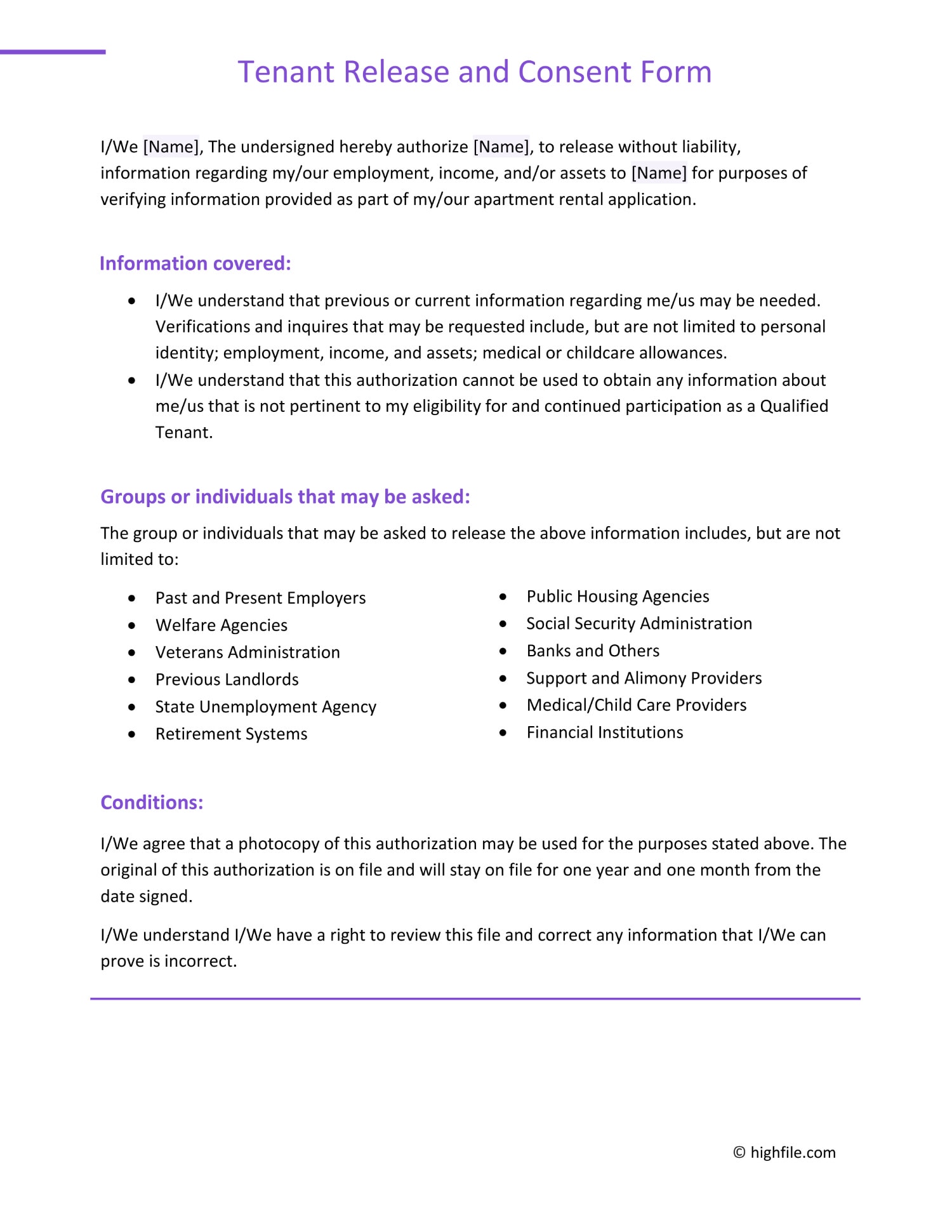
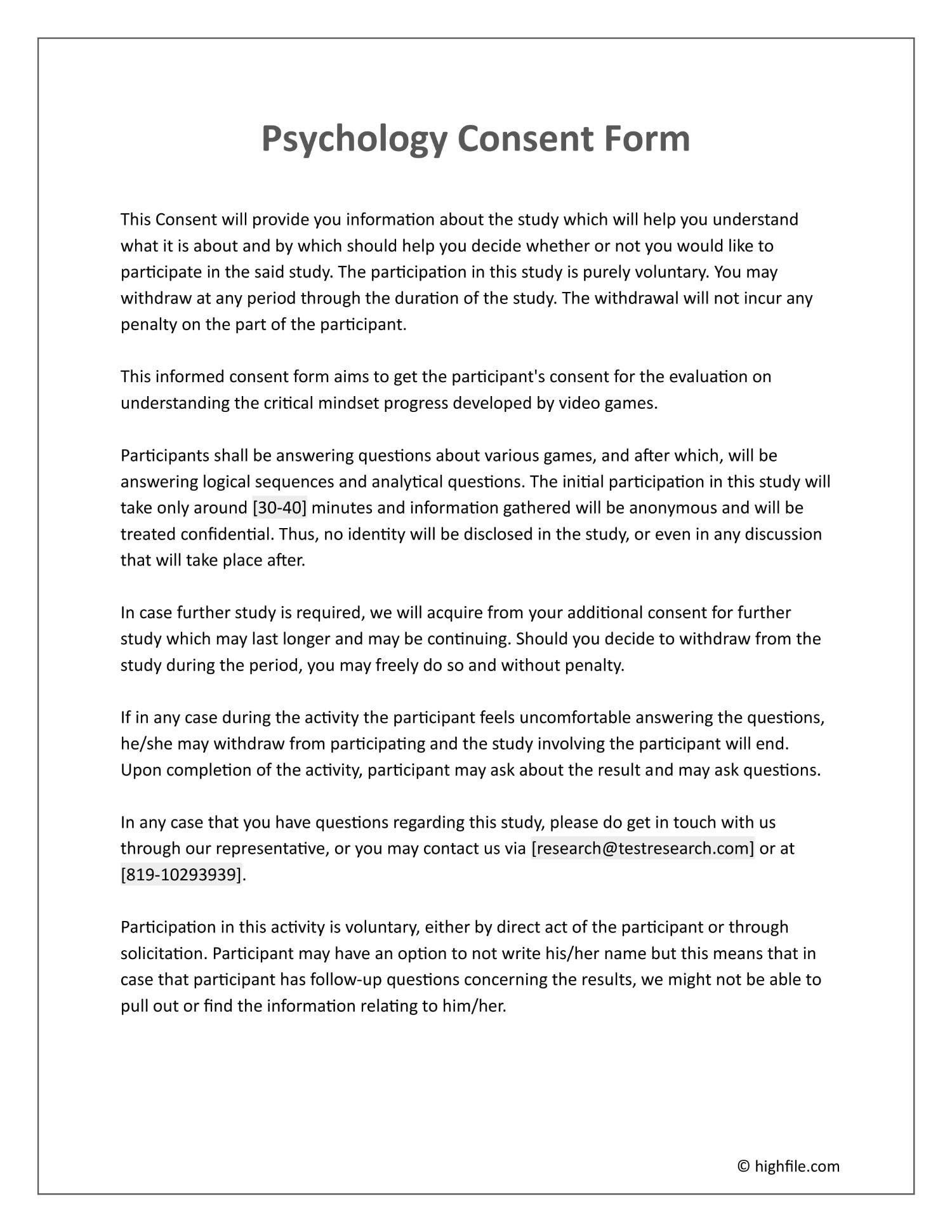


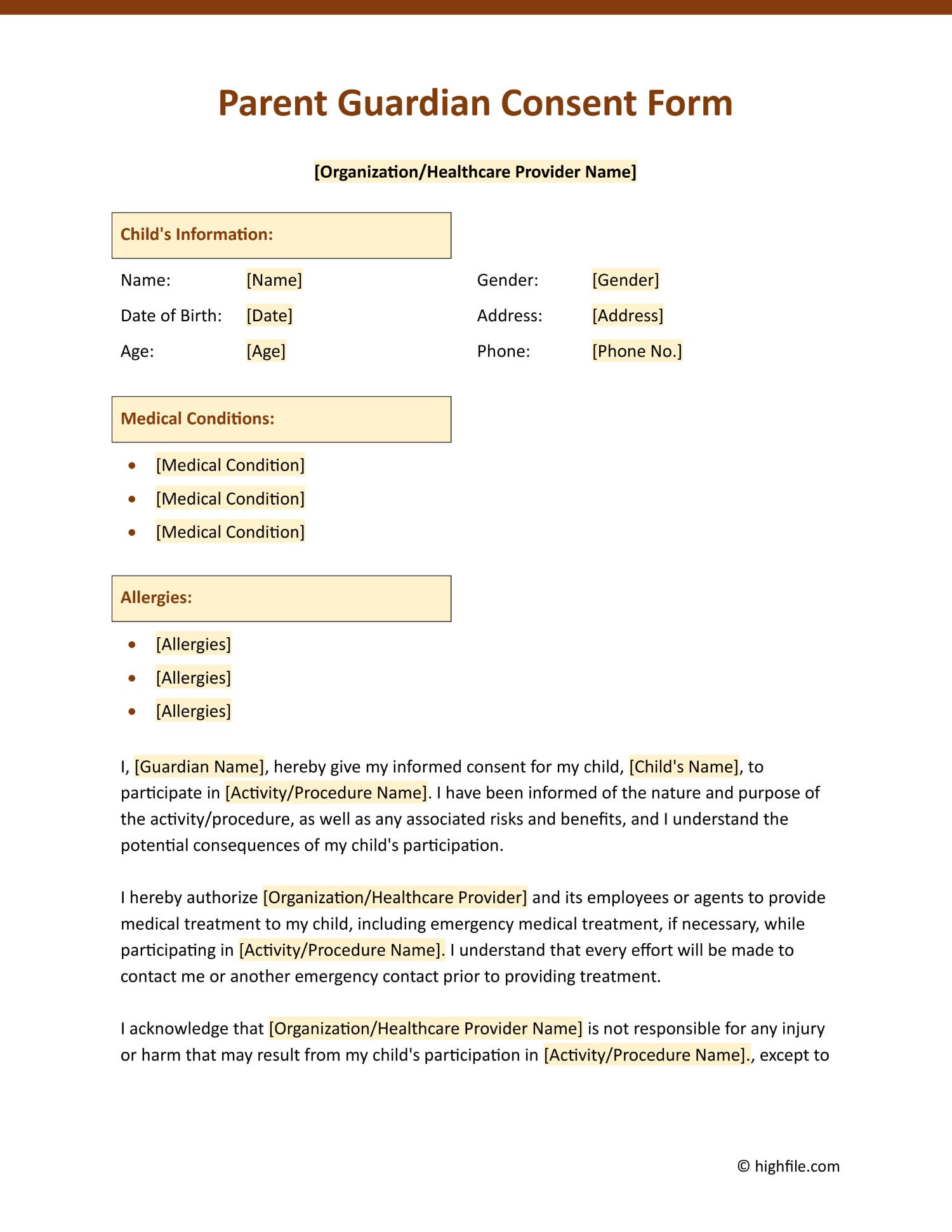


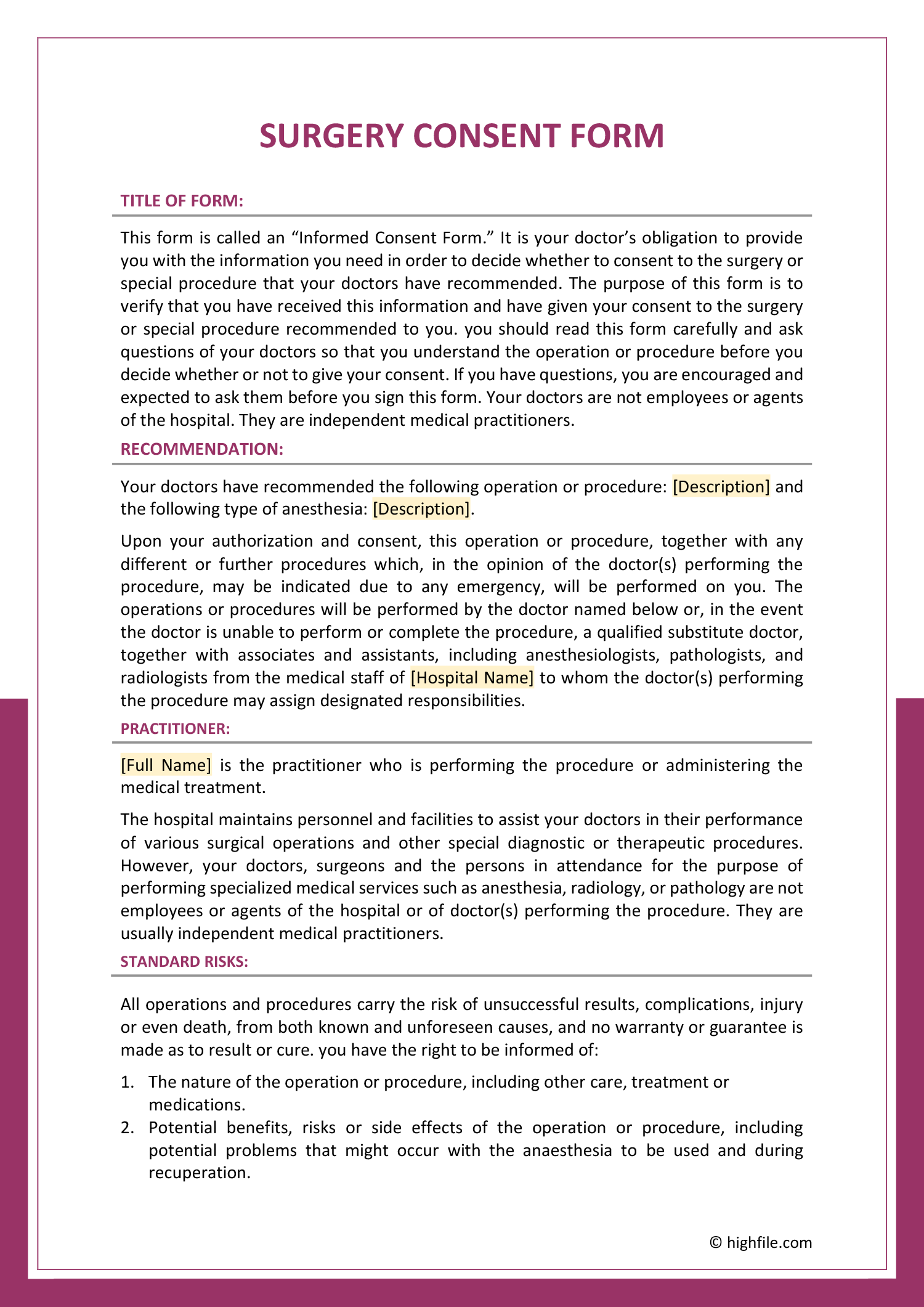


A consent form documents that a person was informed about something and agreed to it of their own free will. Its job is to record evidence. It sets down who is giving consent, exactly what they are consenting to, what they were told beforehand, and that they signed without pressure. The detail is what separates real consent from a signature on a blank, which is why a usable form names the specific action and the specific risks or terms rather than asking for a general yes.
These templates cover the situations where that record matters, agreeing to a medical or treatment procedure, a parent permitting a child’s travel, an employee agreeing to monitoring, or a client agreeing to a service. Each is written around the particular thing being consented to, with the disclosure and the voluntary-agreement statement already set out, so you fill in the names, the specifics, and the date. They are a starting point for capturing consent in a clear, consistent way, and you adapt the wording to your own situation before use.
Important: What makes consent legally valid depends on where you are and the kind of consent involved, and it can differ from one jurisdiction to the next. Treat these templates as a way to record informed, voluntary agreement, and check the wording against the rules that apply to your situation before relying on it.
What's on a consent form
The parts that make a consent form a record of informed, voluntary agreement.
Who is giving consent and who is receiving it, named in full. On a parental or guardian form this also records the relationship and authority to consent on a child's behalf.
A specific description of the action, procedure, or use being agreed to. Naming it precisely is what keeps the consent tied to one thing rather than an open-ended yes.
The risks, details, or terms the person is told before agreeing, such as the risks of a procedure or the scope of what is being monitored. This is the part that makes the consent informed.
What the consent does and does not extend to, including the purpose it is given for. A bounded scope keeps the agreement from being read more broadly than intended.
A statement that the person agrees freely and understands what they are signing. It records that the consent was given without pressure, which is central to it counting.
The case-specific information the situation calls for, a tooth number on a dental form, passport and travel details on a parental travel form, the devices covered on a tracking form.
Where it applies, a note that consent can be withdrawn and how. Some agreements are ongoing rather than one-off, and this records that the person keeps that choice.
The signature, printed name, and date that fix who agreed and when. On forms for a minor or dependent, a parent or guardian signs in their place.
Completing a consent form
Setting out what is being agreed to and putting the agreement on record.
Enter who is giving consent and who is receiving it. On a parental or guardian form, record the relationship and the authority to consent for the child as well as the child's own details.
State the specific action, procedure, or use being agreed to in plain terms. The narrower and clearer this is, the less room there is to read the consent as covering more than intended.
Fill in the risks, terms, or details the person needs to know before agreeing. This is what makes the consent informed, so write it for someone reading it for the first time.
Spell out the purpose the consent is given for and any limits on it, such as a single visit or a fixed period. A stated scope keeps an ongoing agreement from being treated as open-ended.
Complete the fields specific to your situation, the procedure and tooth on a dental form, the destination and accompanying adult on a travel form, the equipment covered on a tracking form.
Keep the statement that the person agrees freely and understands the terms, and give them time to read before signing. Consent recorded under pressure is the weakness this line guards against.
Before you rely on the form, compare the wording with the requirements that apply to your situation and place, since what valid consent must say varies. Adjust anything the local rules call for.
Have the person sign and date it, with a parent or guardian signing where the subject is a minor or dependent. Keep a completed copy as the record that consent was given.
FAQs
Are these consent forms legally valid as written?
Treat them as a starting point rather than a guaranteed-valid instrument. What makes consent valid depends on the type of consent and the rules where you are, and those vary by jurisdiction. Use the template to record informed, voluntary agreement, and check the wording against the requirements that apply to your situation before relying on it.
Do these work for international or regional situations?
They are written to be broadly applicable, but consent rules differ from place to place, so a template may need adjusting to match your local or regional standards. Before using one across borders, such as a parental travel consent, confirm it covers what the destination and any authority involved expect.
What is the difference between a general and an informed consent form?
A general agreement is a blanket yes; informed consent records that the person was told the specific risks, terms, or details before agreeing. These templates are built around the second, with a disclosure section, because the description of what was understood is what makes the consent meaningful.
Can consent be withdrawn after the form is signed?
In many situations, yes, particularly for ongoing arrangements like monitoring. Where that applies, the template includes a note on withdrawing consent and how, so the person keeps that choice on record. How withdrawal works in a given case depends on the context and the rules around it.
Who signs a consent form for a child or dependent?
A parent, legal guardian, or someone with the authority to consent on the person’s behalf. The parental and travel templates record that relationship and authority alongside the child’s details, since the record needs to show the signer was entitled to give consent.