
Custody Schedule Templates
For children, the comfort of a custody arrangement is knowing what comes next, which only works when the pattern of days is written down and agreed. Custody schedule templates put a rotation on the calendar, with each parent’s days and the handovers between them set out plainly. The rotations families lean on most are already worked out here, from an even split to weighted and alternating patterns, so you are choosing one rather than building it from scratch.
 ×
× ×
× ×
× ×
×


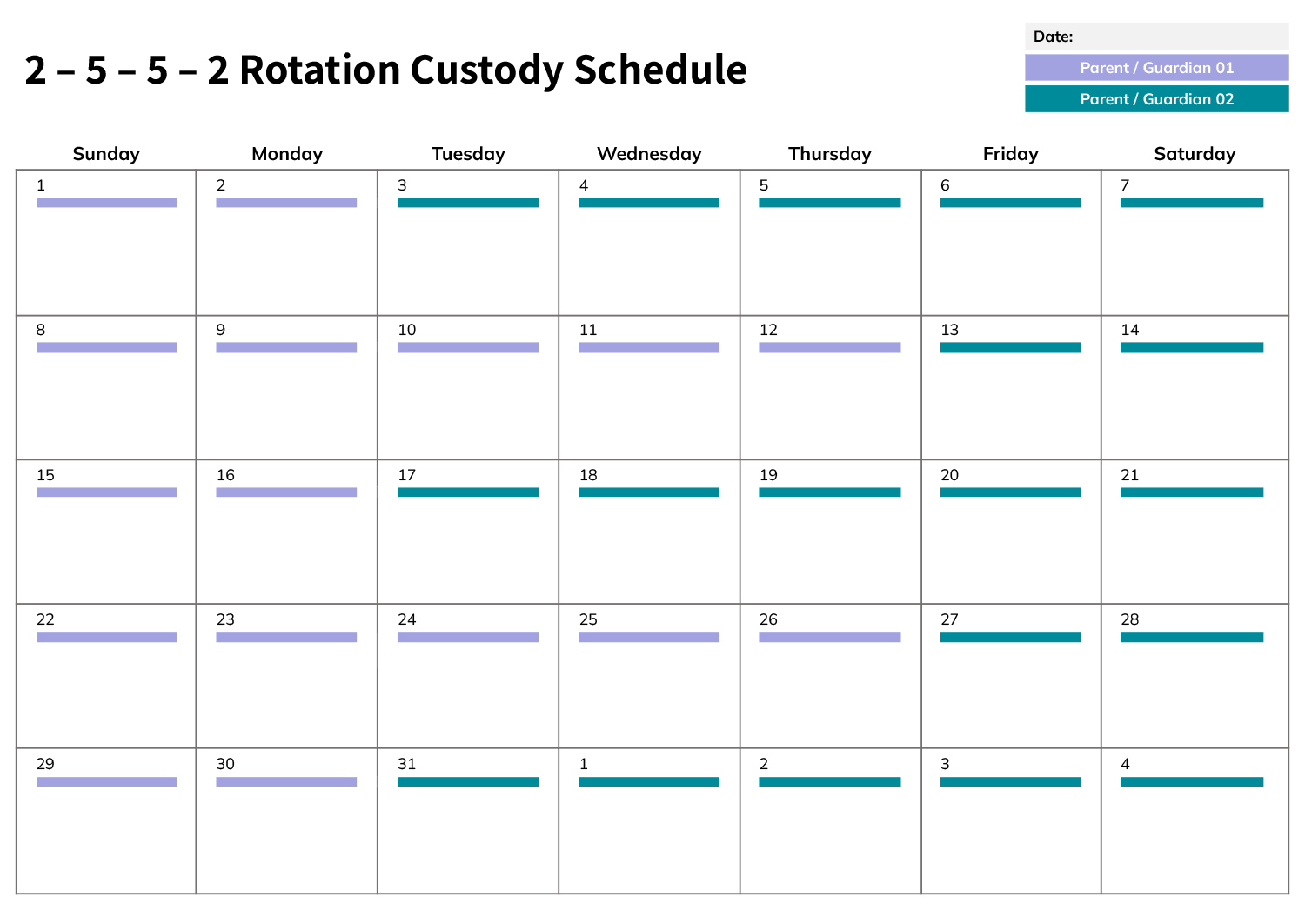


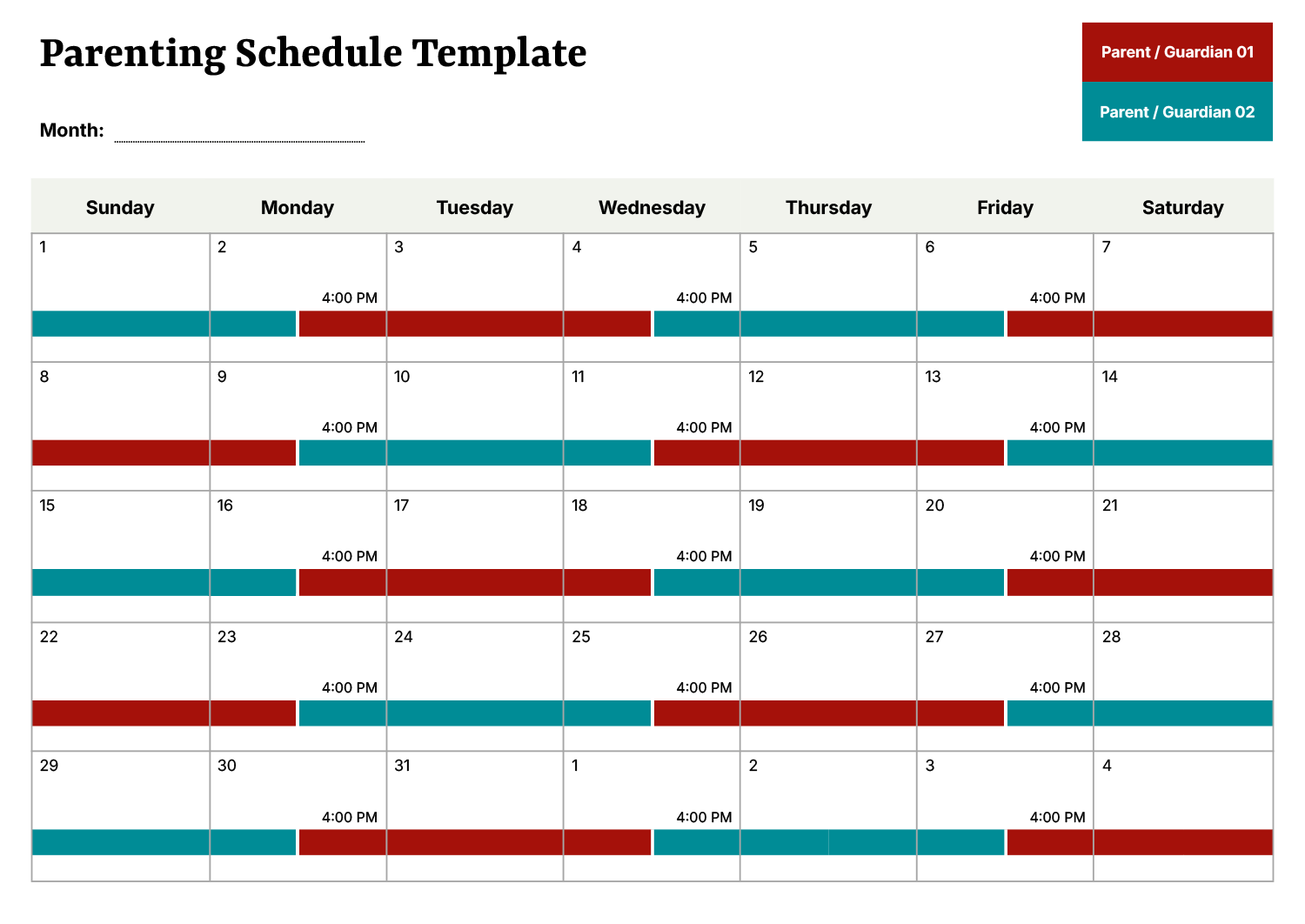


These custody schedule templates map a parenting rotation onto the calendar, with each parent’s days, the handovers between them, and the way the pattern repeats set down plainly, so both homes and the children read the same plan and whose day it is stops being a weekly discussion. The patterns are already worked out across enough weeks to show a full cycle, so you are choosing and adjusting a rotation rather than designing one from scratch.
The collection sets out the rotations families commonly use, from an even split through weighted patterns to alternating weeks, each balancing the time differently for a different situation and age of child. You pick the pattern that fits, mark which parent starts and on what date, then add the day, time, and place for each handover so the changeovers are as firmly agreed as the nights. Holidays and school breaks are noted apart from the regular pattern, since those usually need their own arrangement.
The detail that prevents friction: Whichever rotation you choose, the detail that prevents friction is the handover, the agreed day, time, and place a child moves between homes. A schedule that fixes those changeover points, not just the nights, is the one that leaves least room for misunderstanding.
Custody patterns these templates cover
The collection sets out the common parenting rotations.
A 50-50 rotation that divides time equally between homes, for arrangements where both parents share the days evenly.
Patterns like 2-2-3 that move the children between homes across a week, keeping each parent in regular contact rather than apart for long stretches.
Rotations like 4-3-3-4 or 3-4-4-3 that split time unevenly, for when one home takes more of the week than the other.
A week-on, week-off pattern, often with a midweek visit, for older children who manage longer stretches in one home.
The day, time, and place the children change homes, set down alongside the nights so the changeovers are as clear as the pattern.
Separate rows for holidays, birthdays, and school breaks, which usually sit outside the regular rotation and need their own agreed arrangement.
Setting up the custody schedule
From a chosen pattern to a calendar both homes can follow.
Choose the pattern that fits your arrangement, an even 50-50 split, a short-cycle rotation like 2-2-3, a weighted one, or alternating weeks. Each divides the time differently and suits a different family.
Mark which parent begins and on what date, so the pattern is anchored to a real week and the repeat is clear from the first cycle onward.
Fill each day with the home the children are in, following the rotation across enough weeks to show the full cycle repeat, so both parents can see how it plays out.
Tip — Mark holidays, birthdays, and school breaks separately, since these often sit outside the regular rotation and are where arrangements most need to be agreed in advance.
Add the day, time, and place for each changeover, so the moments the children move between homes are as firmly agreed as the nights themselves.
FAQs
Which custody pattern should I choose?
It depends on the children’s ages and both homes’ situations. An even 50-50 split suits parents sharing equally; short-cycle patterns like 2-2-3 keep younger children in frequent contact with both; alternating weeks suit older children who manage longer stretches. The collection sets out each so you can compare them.
What is the difference between 2-2-3 and alternating weeks?
A 2-2-3 rotation moves the children several times across a week, so neither parent is apart from them for long. Alternating weeks keeps them in one home for a full week at a time. The first favours frequent contact, the second fewer transitions, which is why age often decides between them.
How should the schedule handle holidays?
Mark them separately from the regular rotation. Holidays, birthdays, and school breaks usually need their own agreed arrangement, so noting them apart keeps them from being lost in the normal pattern and gives both homes time to plan around them.
How many weeks should the schedule show?
Enough to show the full cycle repeating at least once, so the pattern is unmistakable. A 2-2-3 rotation resolves over two weeks, alternating weeks over two, and a longer pattern like every-third-week needs three, so map it across that many weeks and the repeat becomes self-evident rather than something either parent has to work out.