
Vehicle Inspection Form Templates
Checking a vehicle by memory means something gets missed; checking it against a list does not. That is what a vehicle inspection form is, every component to look at written down with a condition mark beside it. These vehicle inspection form templates set out that checklist in full. Pick the one that matches the vehicle and the kind of check, and work down the list.





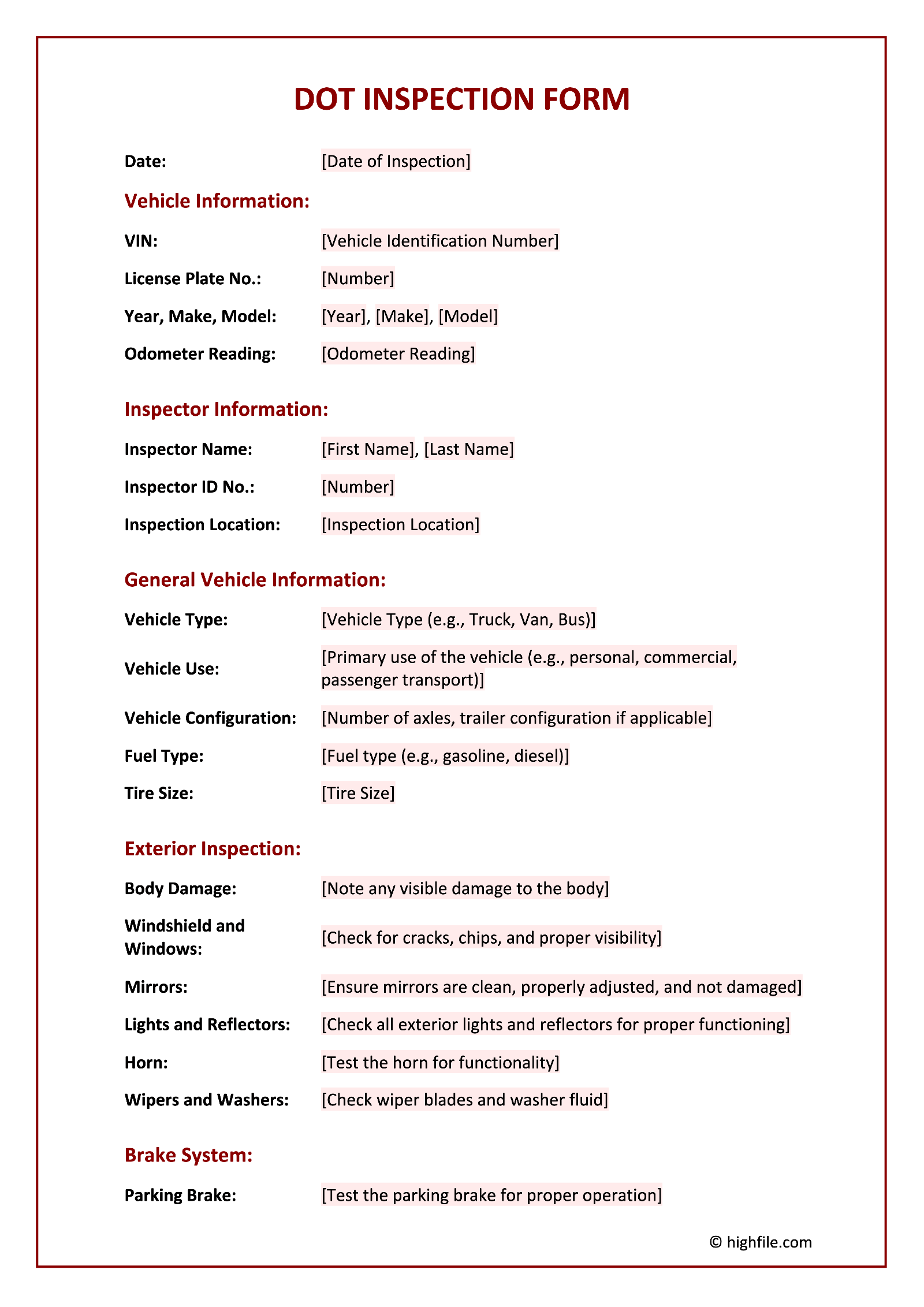


A vehicle inspection form is a checklist that records the condition of a vehicle, component by component. Its value is that it makes the check systematic. Instead of relying on the inspector to remember every part, the form names each one, from tires and brakes to lights and fluid levels, with a mark beside it for pass, fail, or condition. The result is a dated record showing exactly what was examined and what state it was in.
These templates cover the inspections people do, a driver’s pre-trip walk-around, a routine or weekly maintenance check, an examination before buying a used vehicle, and the more detailed checks used for commercial vehicles. Each lists the components grouped the way an inspection proceeds, with room to note defects and a sign-off for the inspector, so a completed form stands as proof the check was done. You choose the one matching the vehicle and purpose, work through the list, and record what you find.
Worth knowing: Commercial and pre-trip inspections are often required to meet recognized safety standards such as those set by the DOT, and what a given operation must check can depend on the vehicle and how it is used. Where an inspection has to satisfy a regulator, confirm the points it must cover rather than assuming the template's list is complete for that purpose.
What's on a vehicle inspection form
The sections an inspection works through and what each one records.
The details that tie the inspection to one vehicle, the VIN, license plate, make, model, year, and mileage. This is what links the record to the right vehicle later.
Body, paintwork, windshield, mirrors, and visible damage. The walk-around that catches dents, cracks, and anything wrong before looking closer.
Tread, pressure, wear, and the condition of wheels and lug nuts. Tires are a frequent point of failure, so they get their own checks rather than a single line.
Headlights, brake lights, turn signals, and reflectors, each confirmed working. A light out is both a safety issue and a common reason a vehicle fails a formal check.
Service brakes, the parking brake, the brake pedal, and air brakes where fitted. Recorded carefully because brake condition is central to a vehicle being safe to drive.
Engine condition, battery, belts and hoses, and fluid levels for oil, coolant, brake, and transmission. The mechanical checks that need the hood up.
Steering movement and play, and suspension response. How the vehicle handles, checked by feel and operation rather than by sight.
Seatbelts, horn, dashboard and gauges, wipers, and HVAC, plus safety equipment such as a fire extinguisher or first-aid kit where required.
The pass, fail, or condition column beside each item, where the inspector records the state of every point listed. This is what turns the checklist into a result.
Space to describe anything that failed or needs attention, in enough detail to act on. A note here is what tells the next person what to fix.
The inspector's name, signature, and date, with the driver or operator signing on the forms that call for it. This is what makes the record accountable.
Completing a vehicle inspection
Working through the checklist so the record reflects the vehicle's real condition.
Match the template to the vehicle and the reason for inspecting, a quick pre-trip walk-around, a routine maintenance check, a pre-purchase look, or a detailed commercial inspection. Each lists the components that purpose calls for.
Fill in the identifying details, VIN, plate, make, model, year, and mileage, before you start. These tie the completed inspection to the specific vehicle so the record is unambiguous later.
Add or remove items so the list matches what this vehicle has, air brakes on a truck, cargo securement on a hauler, equipment a standard car lacks. An inspection covering parts the vehicle does not have only invites blank marks.
Go section by section, exterior, tires, lights, brakes, under the hood, steering, interior, marking the condition of each item as you reach it. Following the form's order is what keeps a point from being skipped.
Use the pass, fail, or condition column for every item rather than ticking by habit. The value of the record is that a mark reflects what you actually saw, so a borderline part is noted as such.
Describe anything that failed or needs watching in the notes, specifically enough to act on, a tire below tread, a light out, a fluid low. A vague note leaves the next person guessing what to do.
Complete the sign-off with the inspector's name, signature, and date, and the driver or operator signature where the form includes one. This is what makes the inspection a record someone is accountable for.
Hold the completed form as proof the check was done and as a baseline for the next one. A series of dated inspections shows how a vehicle's condition is changing over time.
FAQs
Can these forms be used for different types of vehicles?
Yes. The templates cover standard cars, trucks, and commercial vehicles, and the checklist is yours to adjust. For something with parts a car does not have, air brakes, cargo securement, a larger powertrain, add the items it needs so the inspection matches the vehicle in front of you.
Do these work for both personal and professional inspections?
They are. A private owner checking a used car before buying and a driver doing a pre-trip inspection are carrying out the same thing at different depth, so the collection includes both simpler walk-around forms and the fuller checklists used for commercial vehicles. Pick the one matching the check you are doing.
How often should a vehicle be inspected with one of these?
It depends on how the vehicle is used. A pre-trip check is done before a journey, a maintenance check on a regular cycle, and a pre-purchase inspection once before buying. Commercial operations often schedule inspections at set intervals. Match the frequency to your situation rather than a fixed rule.
Do these meet DOT or commercial inspection requirements?
The commercial and pre-trip templates are built around the kinds of points such inspections check, but what a regulator requires can vary by vehicle and operation, and the rules are set by the authority, not the form. Where an inspection has to satisfy a standard like the DOT, confirm the required points and use the template to record them.
What should I do about a defect the inspection turns up?
Record it in the defects section in enough detail to act on, then decide based on what it is. A failed safety item like brakes or a tire below tread should be addressed before the vehicle is driven; a minor issue can be logged to watch. The written note is what passes the problem on to whoever fixes it.