
Cleaning Schedule Templates
Cleaning rarely slips because someone forgot how; it slips because no one settled what gets done, and how often. Cleaning schedule templates settle it, pairing each task with a frequency and the area it belongs to, so the daily wipe-down and the monthly deep clean each have a place. These suit a home, a restaurant kitchen, or a commercial site cleaned by zones, so the schedule fits the space rather than a one-size checklist.
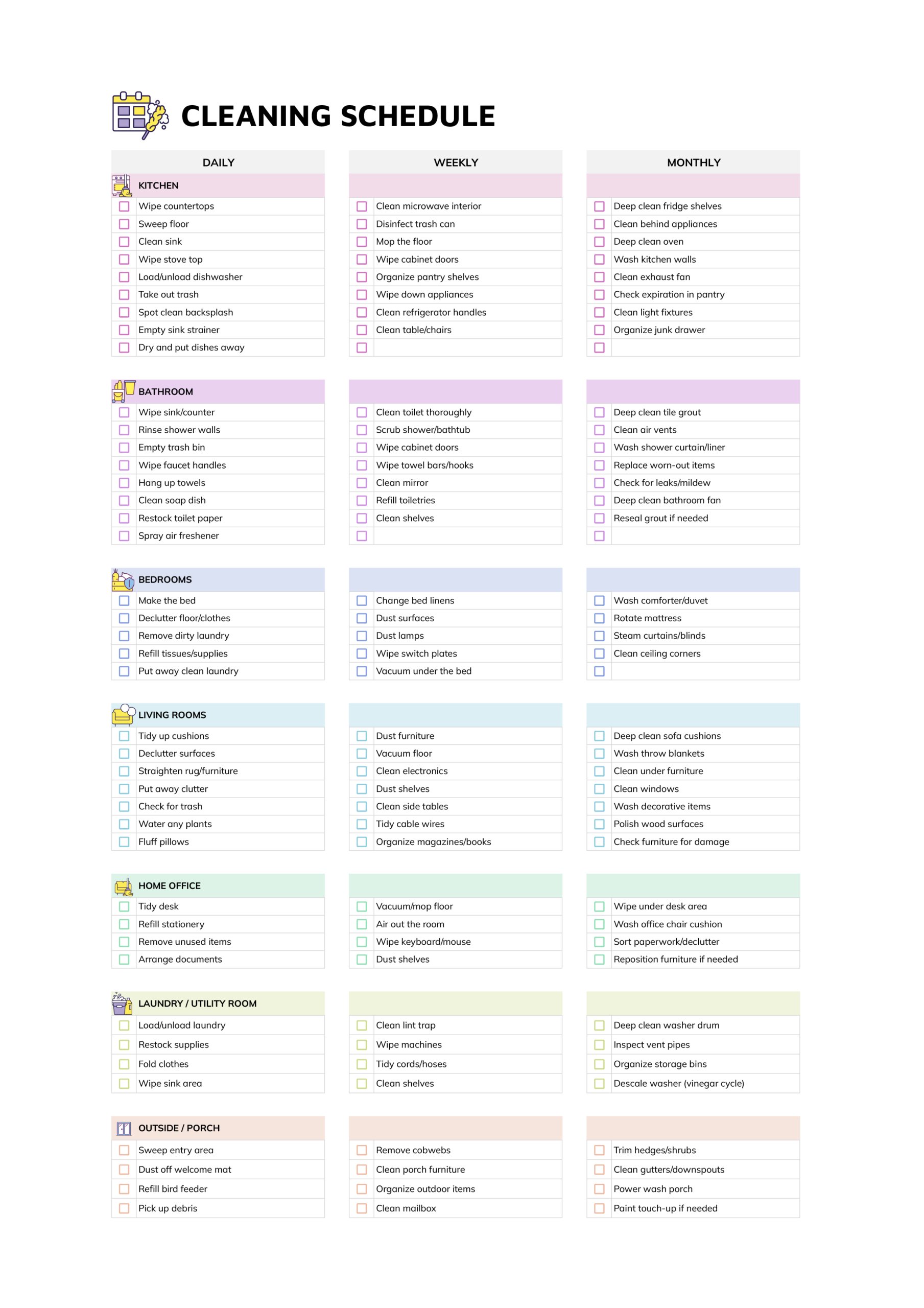








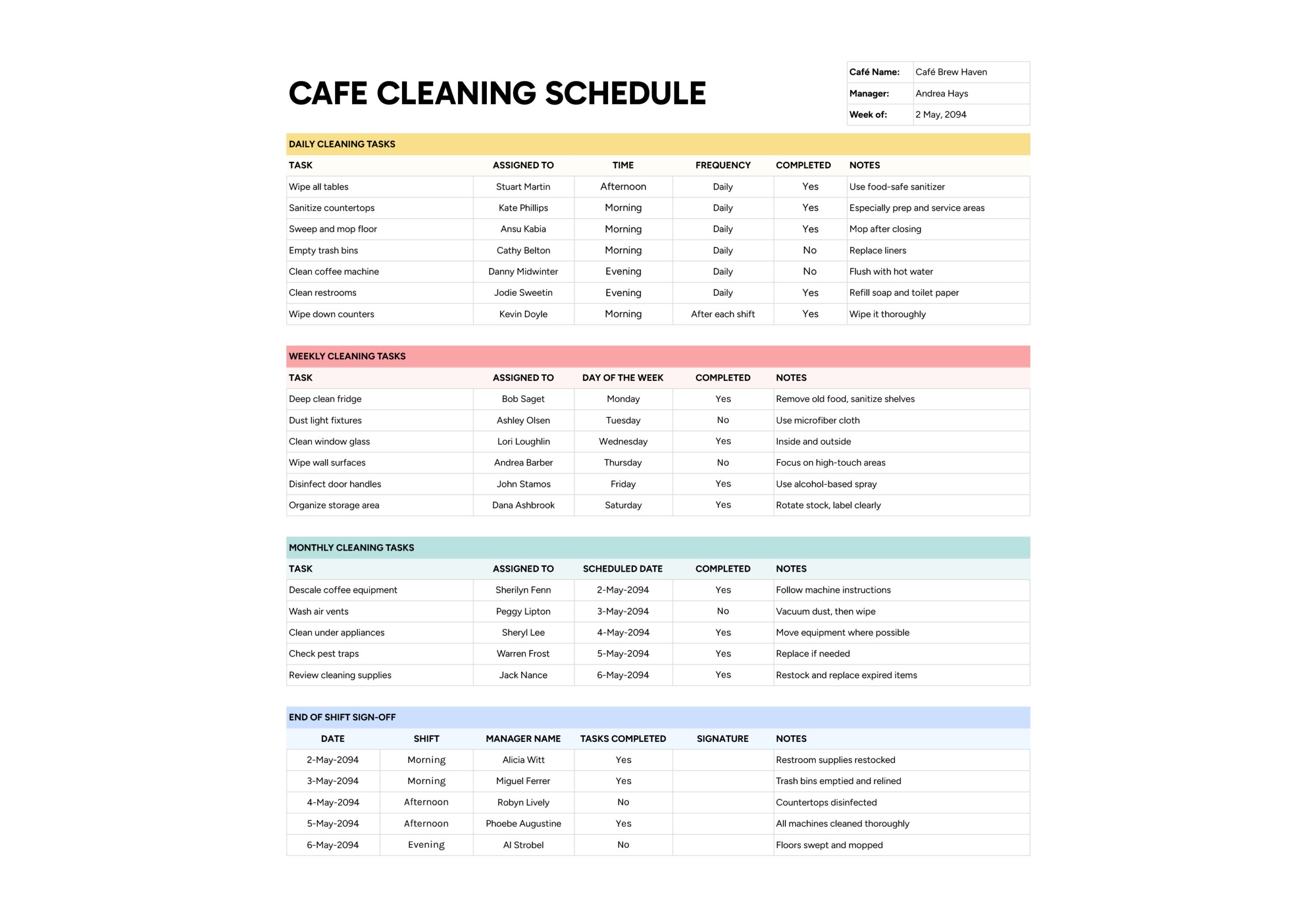
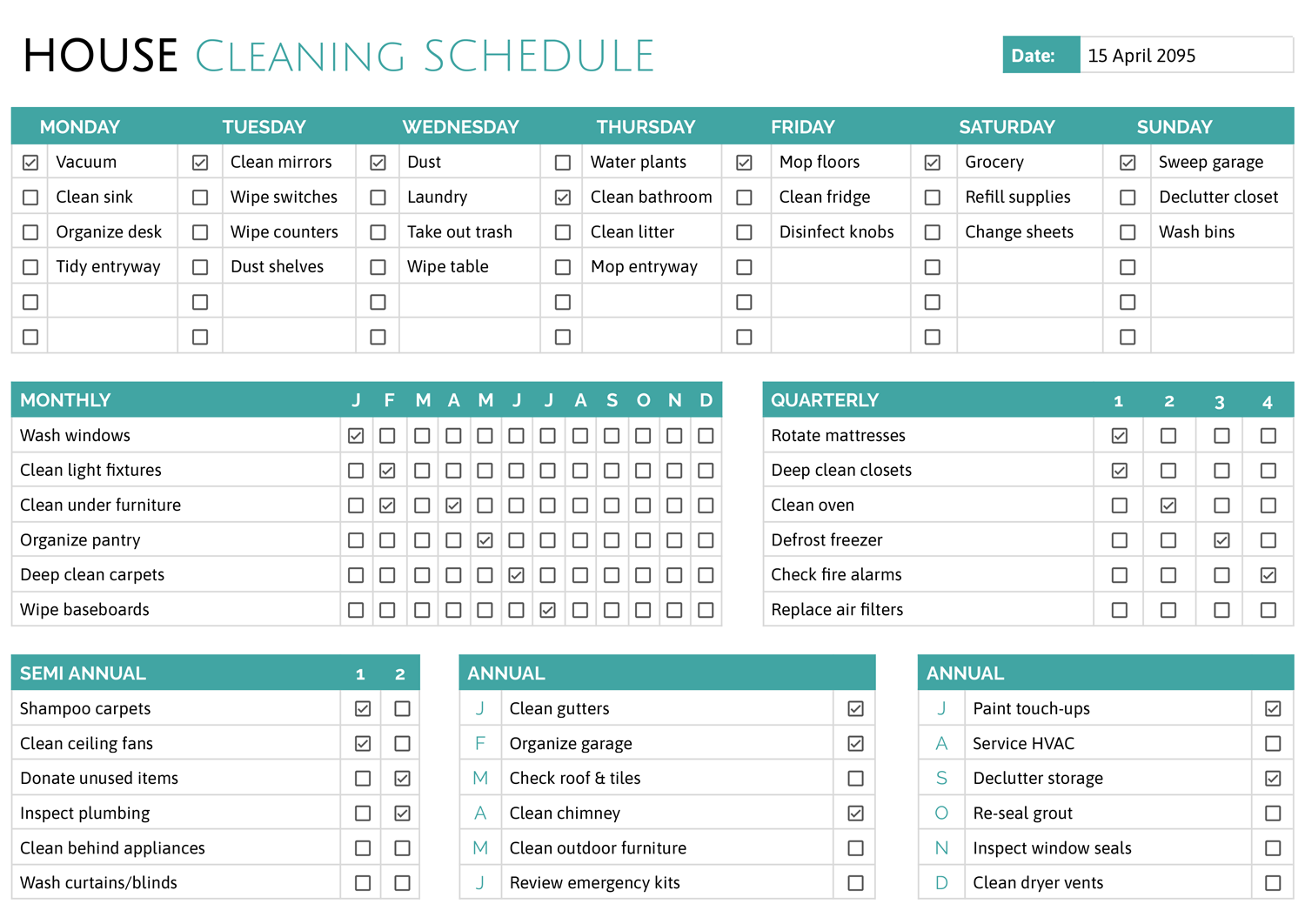
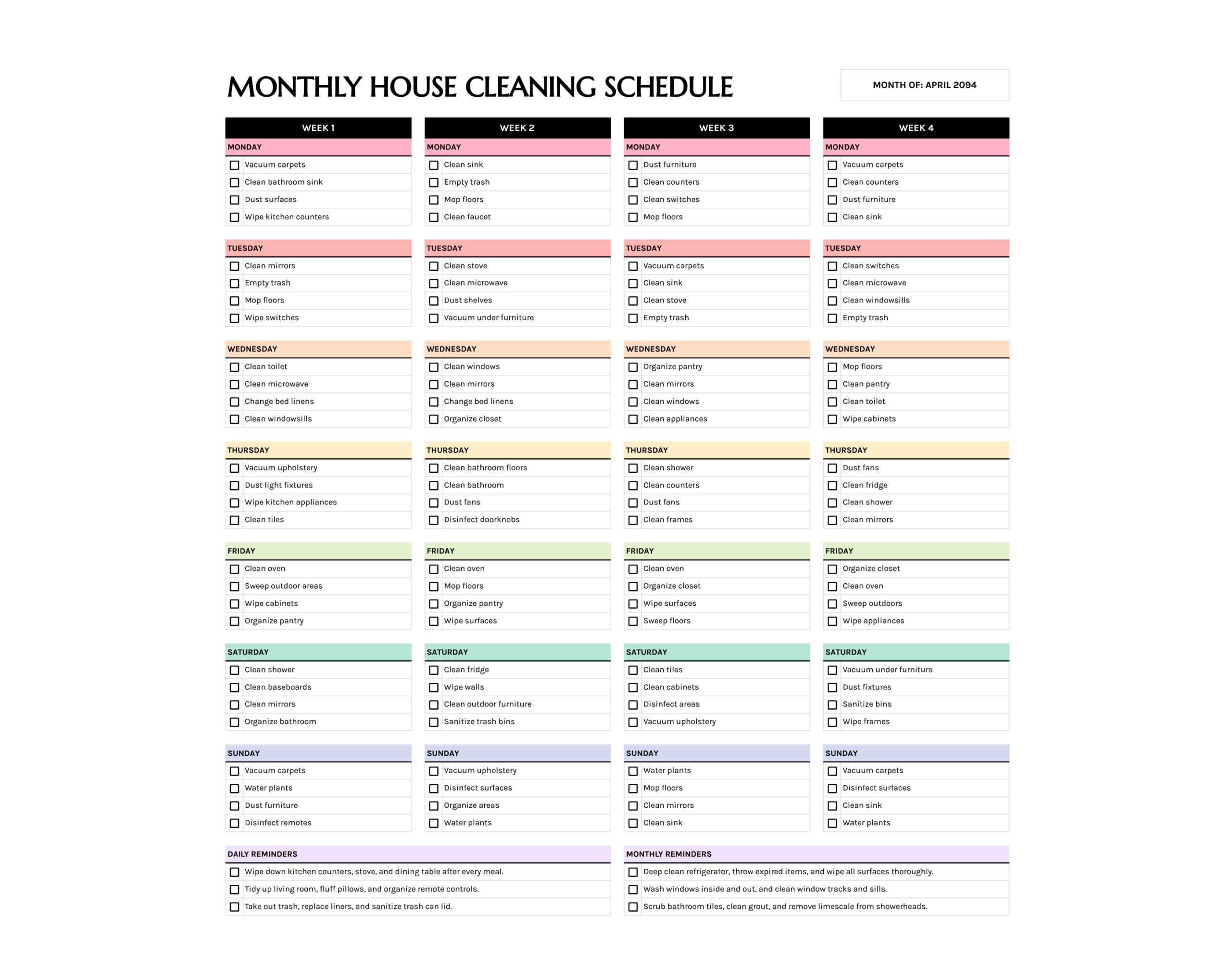
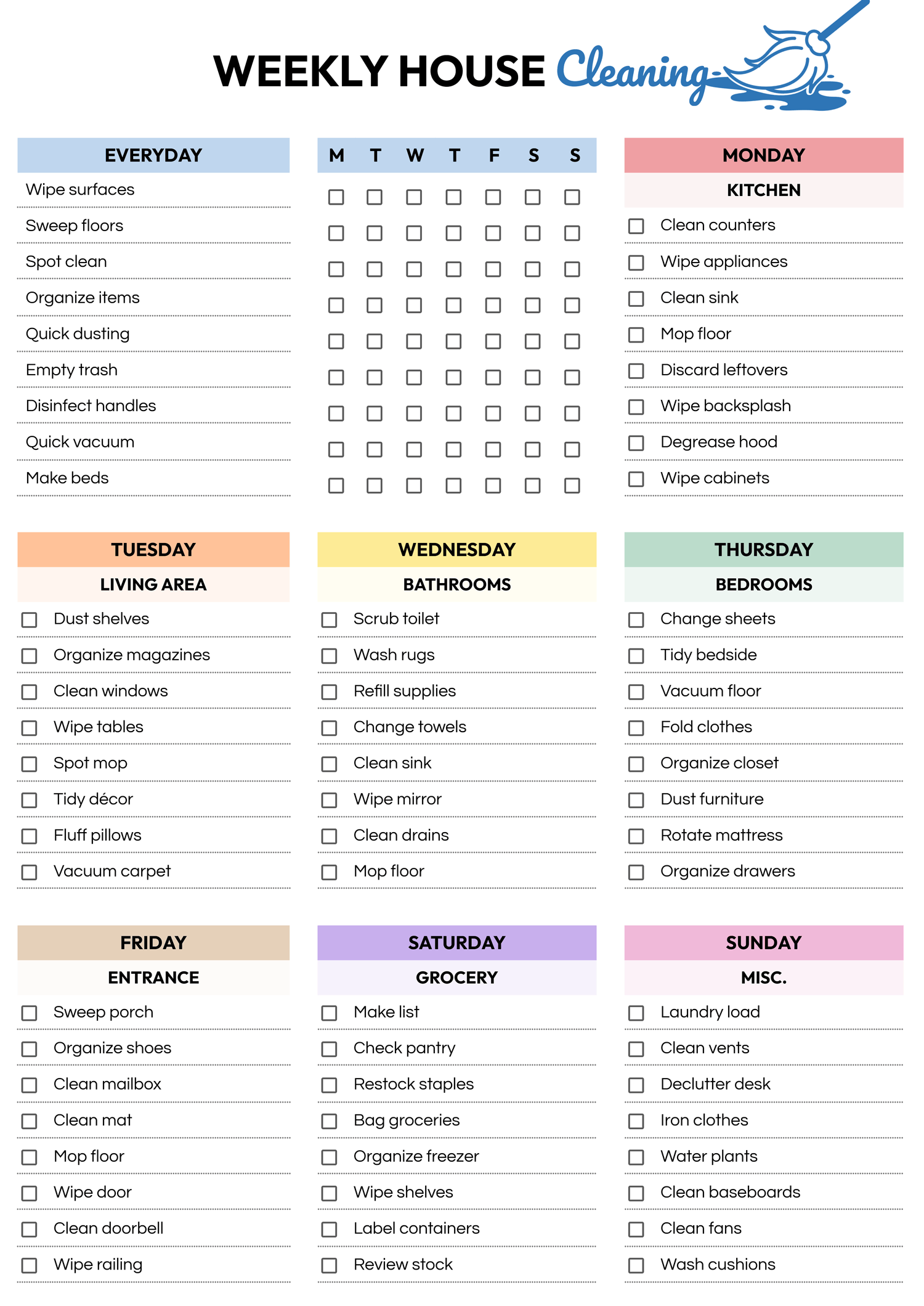

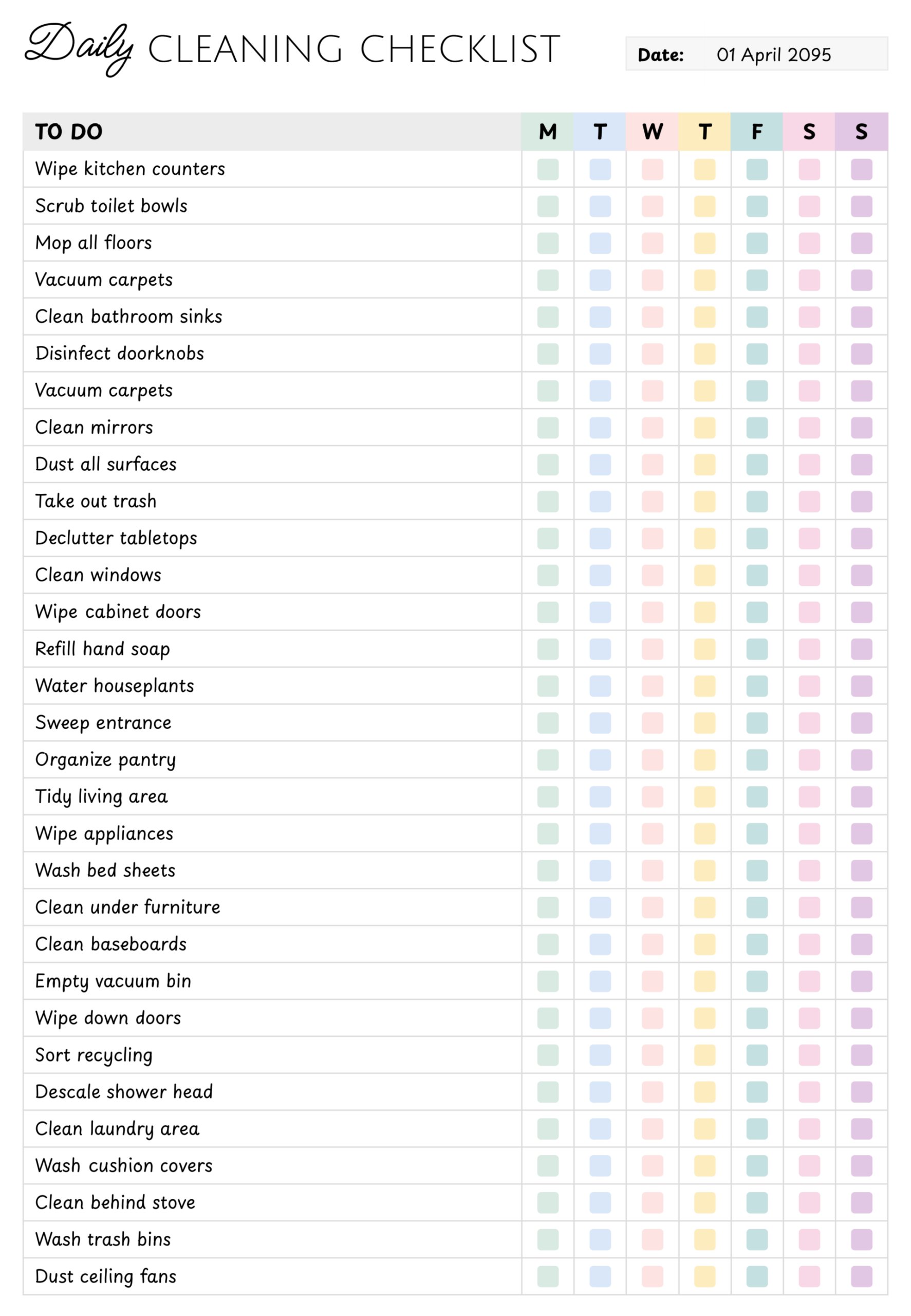

These cleaning schedule templates pair each task with how often it is due and the area it belongs to, so a kitchen’s daily wipe-downs, weekly scrubs, and monthly deep cleans each have a place and the schedule becomes the agreement everyone works from. That matters most when more than one person shares the work and ‘who does what, when’ would otherwise be re-decided every day.
Different spaces are cleaned differently, so the collection covers room-by-room home upkeep, a restaurant kitchen organised around daily close, and a commercial site run by a janitor’s zones. You list the tasks each area needs, sort each into daily, weekly, or monthly so the constant small jobs and the occasional deep cleans stay separate, mark who is responsible where the work is shared, and tick tasks off as they are done. The schedule sorts the work by place and frequency; you set what each space actually needs.
How a cleaning schedule is organised
The collection sorts cleaning by where and how often.
Daily, weekly, and monthly headings that sort each task by how often it is due, so routine upkeep and occasional deep cleans stay separate.
Tasks grouped by room or zone, kitchen, bathroom, floors, so the schedule reads the way a space is actually cleaned, area by area.
The specific jobs spelled out, wipe counters, clean the microwave, sweep floors, so nothing is left to a vague sense of cleaning up.
A box to tick each task as it is done and a place to mark who is responsible, so a shared household or team can see both what is finished and whose job it was.
Setting up your cleaning routine
From a blank checklist to a routine the household or team can follow.
A home version reads room by room; a commercial one is built around a kitchen or site cleaned by zone. Pick the one that matches how your space divides, then write the jobs each area needs under its own section so the schedule reads area by area rather than as one long list.
Sort every task into daily, weekly, or monthly, so the small constant jobs and the occasional deep cleans stay separate and nothing is done too often or too rarely.
Tip — Pin the monthly deep cleans to a set date, the first of the month or a fixed weekday, so they are not the tasks that quietly slip when the daily work crowds them out.
In a shared home or a team, mark a name against each task or area, so the work is divided on paper instead of falling to whoever notices.
Put the schedule where the work happens and check tasks off as they are done, so anyone can see at a glance what is finished and what is still due.
FAQs
How should I decide how often to clean each thing?
Sort tasks by how fast they matter. Surfaces that affect hygiene or safety, kitchen counters, bathrooms, belong in the daily or weekly columns; jobs like deep cleans behind appliances suit monthly. The frequency columns are there to make that split explicit so nothing is over or under done.
Do these cover a commercial kitchen or workplace?
Yes. The collection includes restaurant-kitchen and janitorial layouts that organise tasks by zone and tie them to daily close or a cleaning round, which is closer to how a commercial site is maintained than a home checklist.
Can more than one person share a cleaning schedule?
The layouts with an assignee column let you put a name against each task or area, so a shared household or a cleaning team can divide the work plainly rather than leaving it to whoever happens to notice it needs doing.