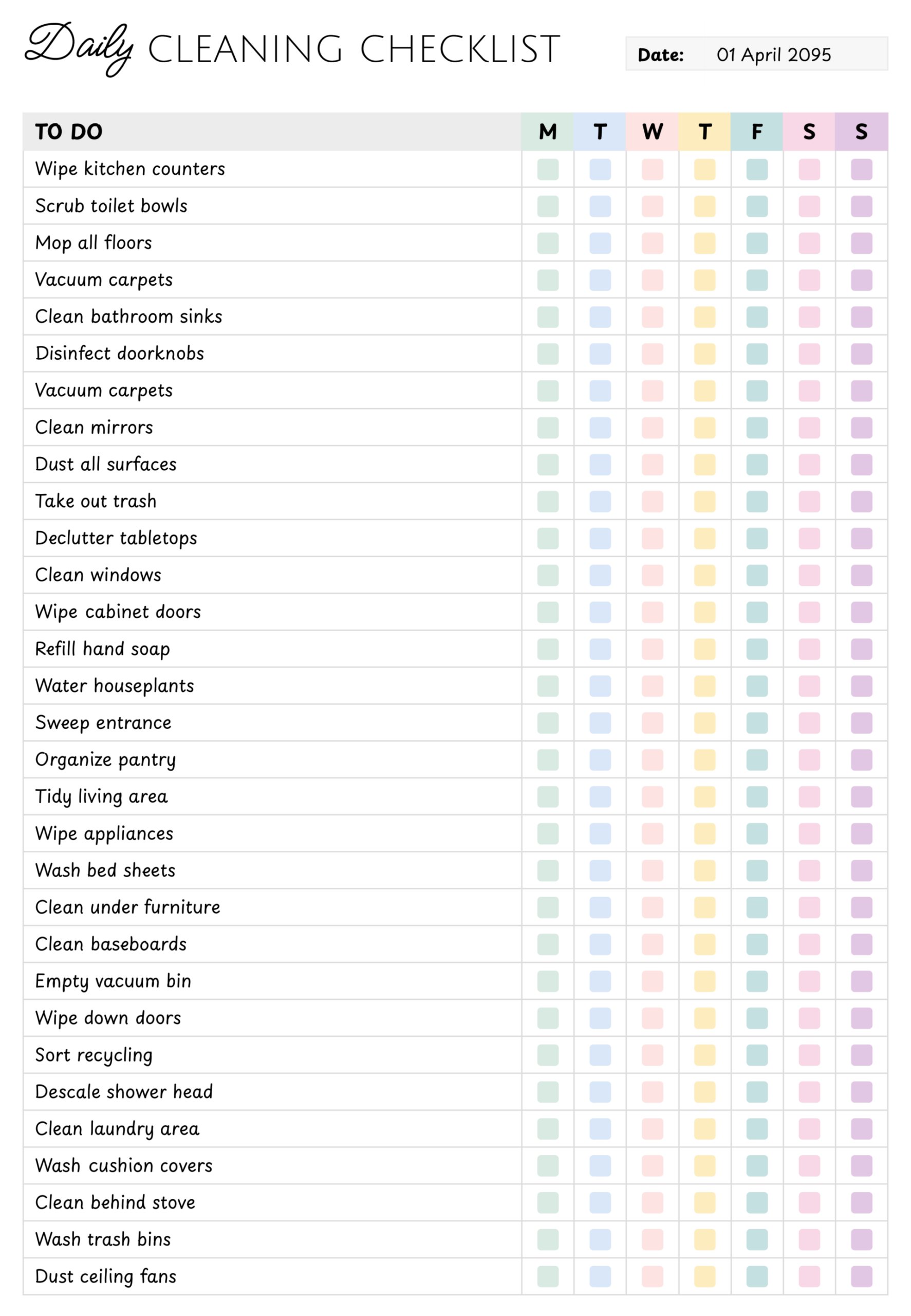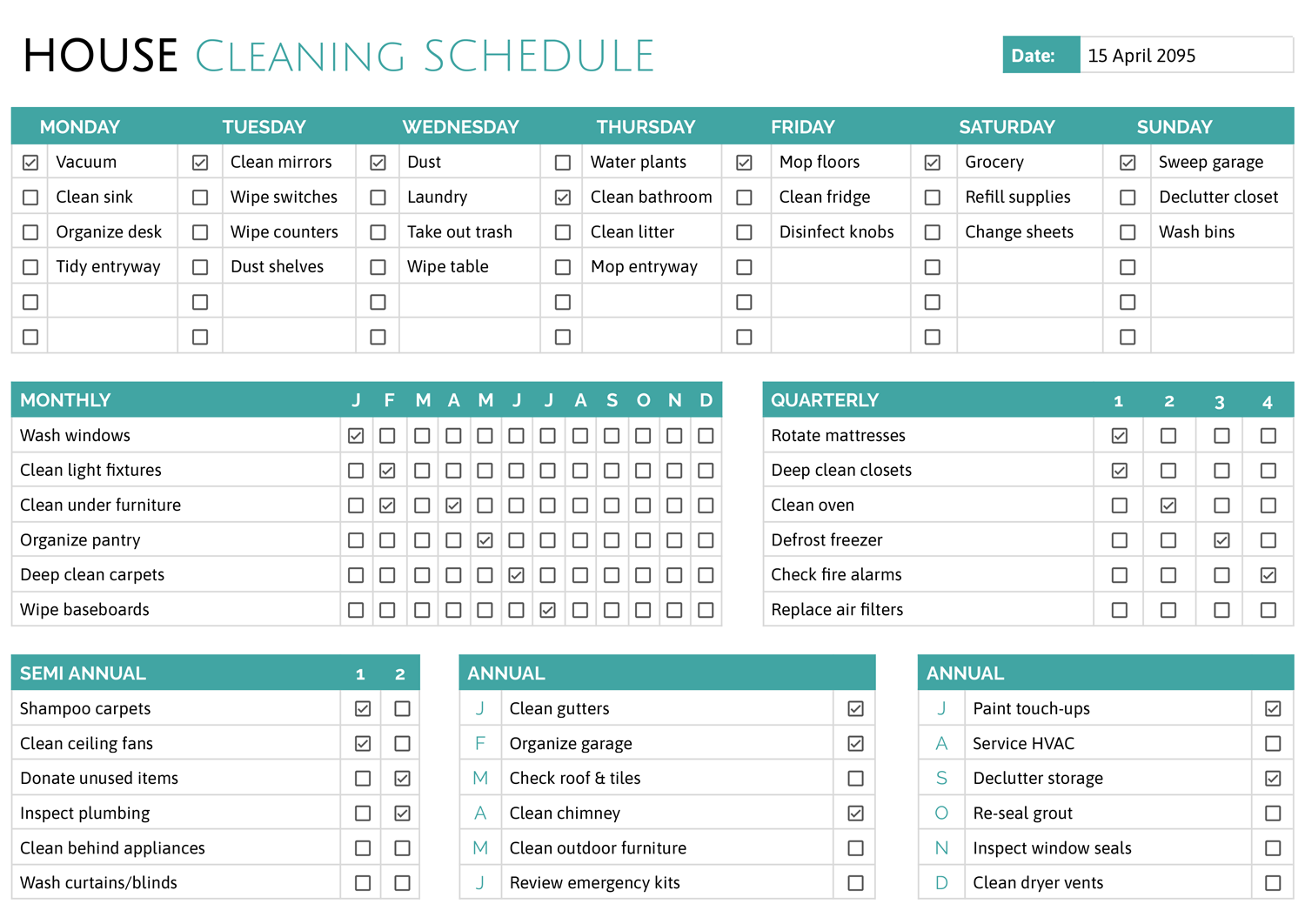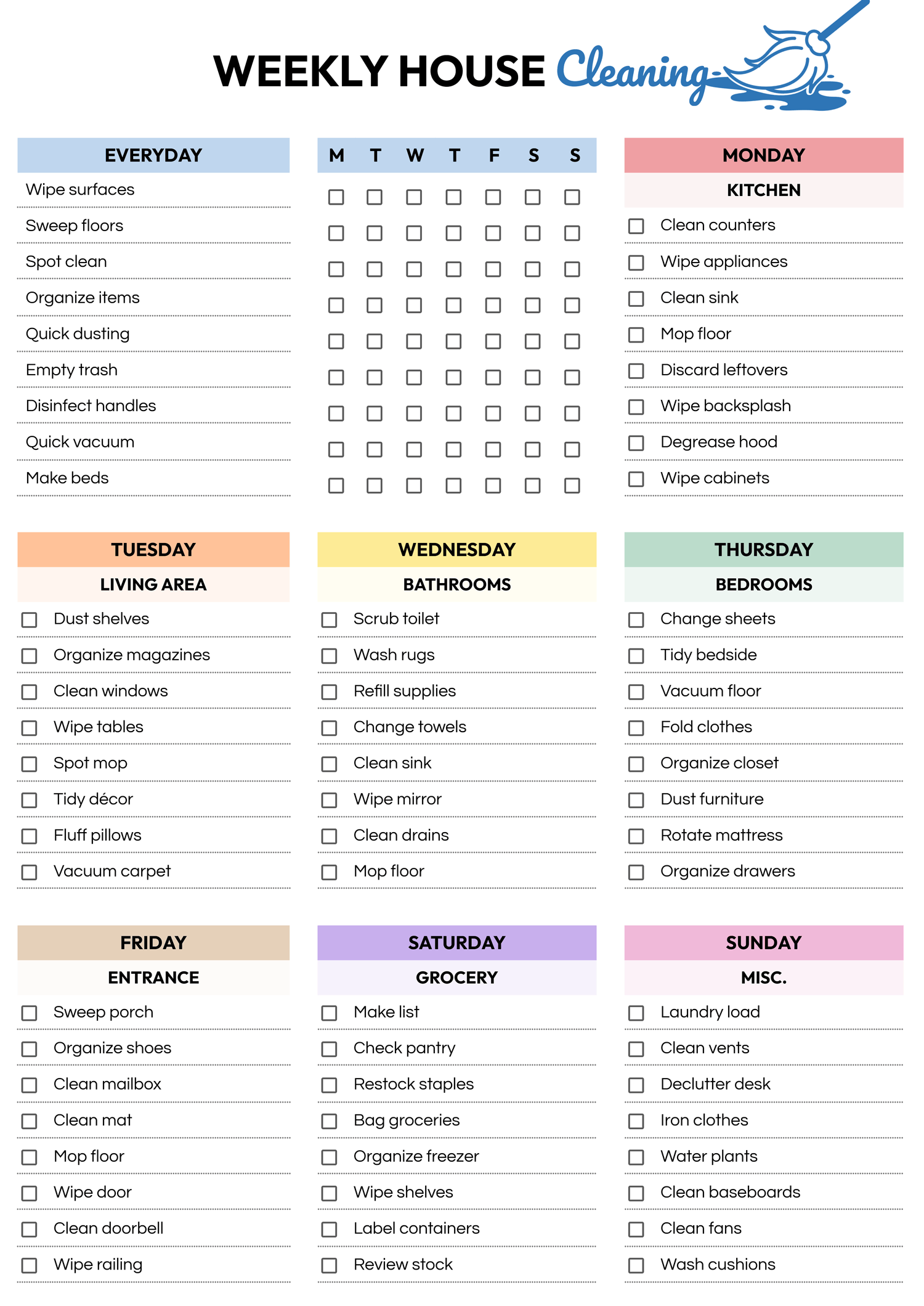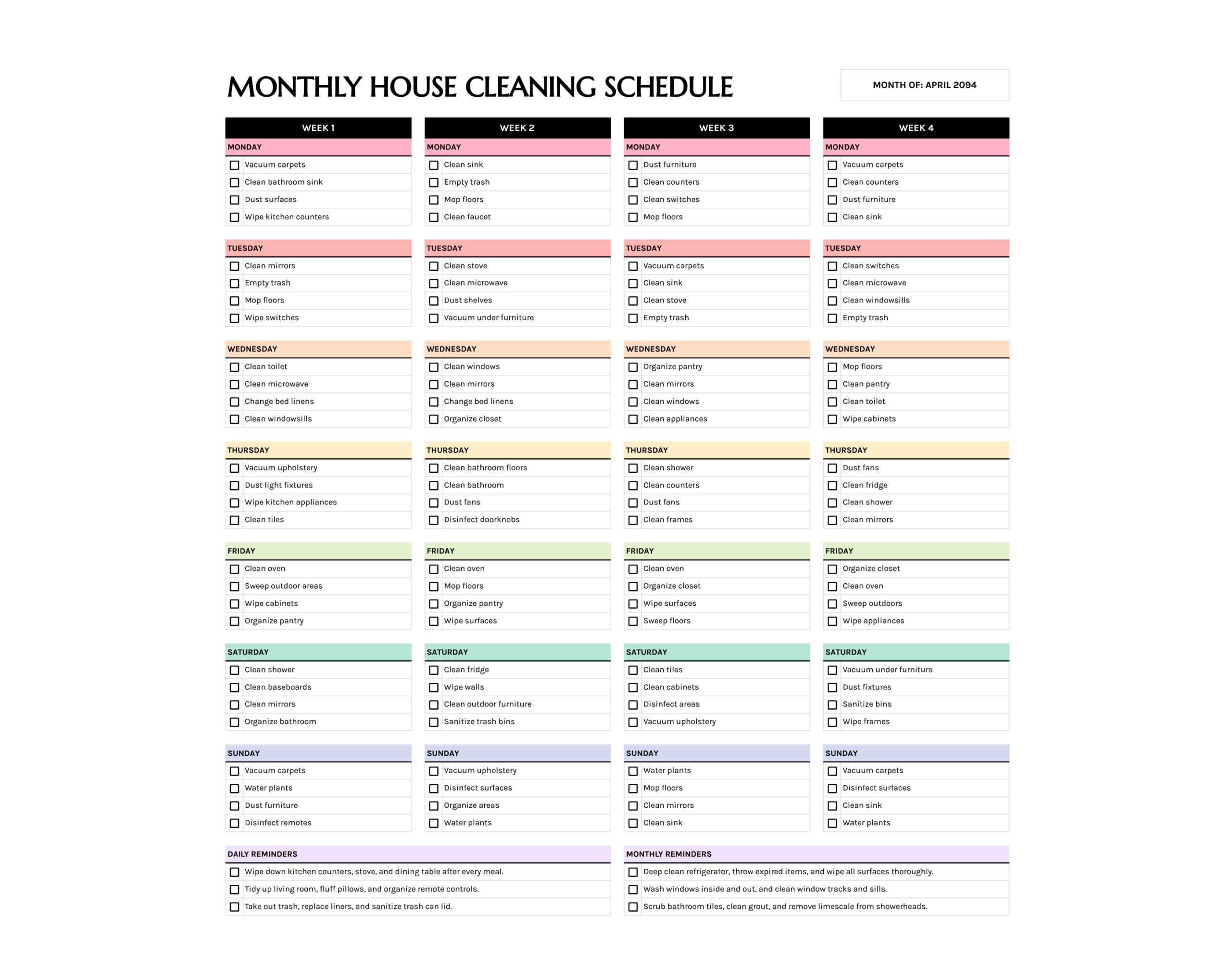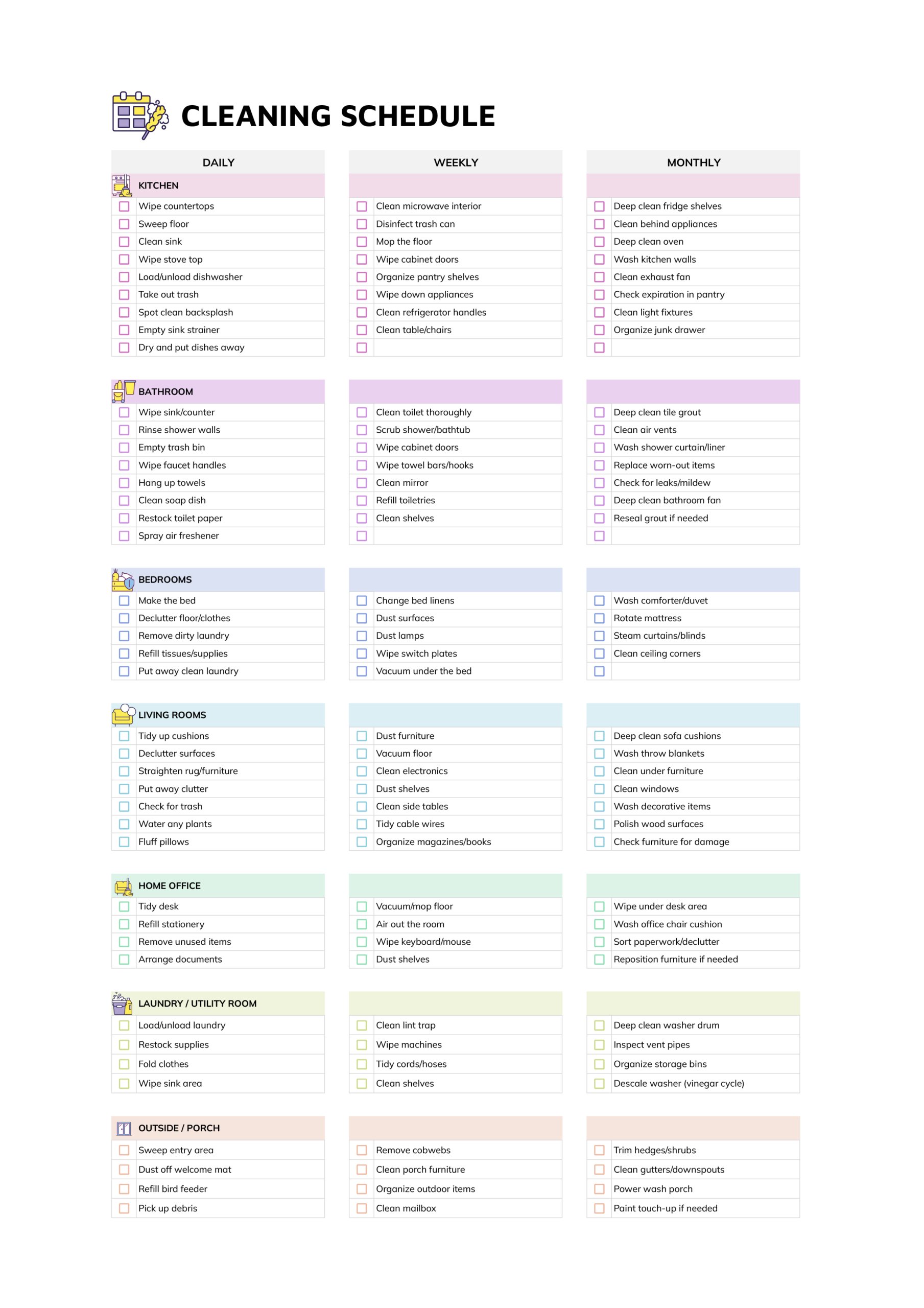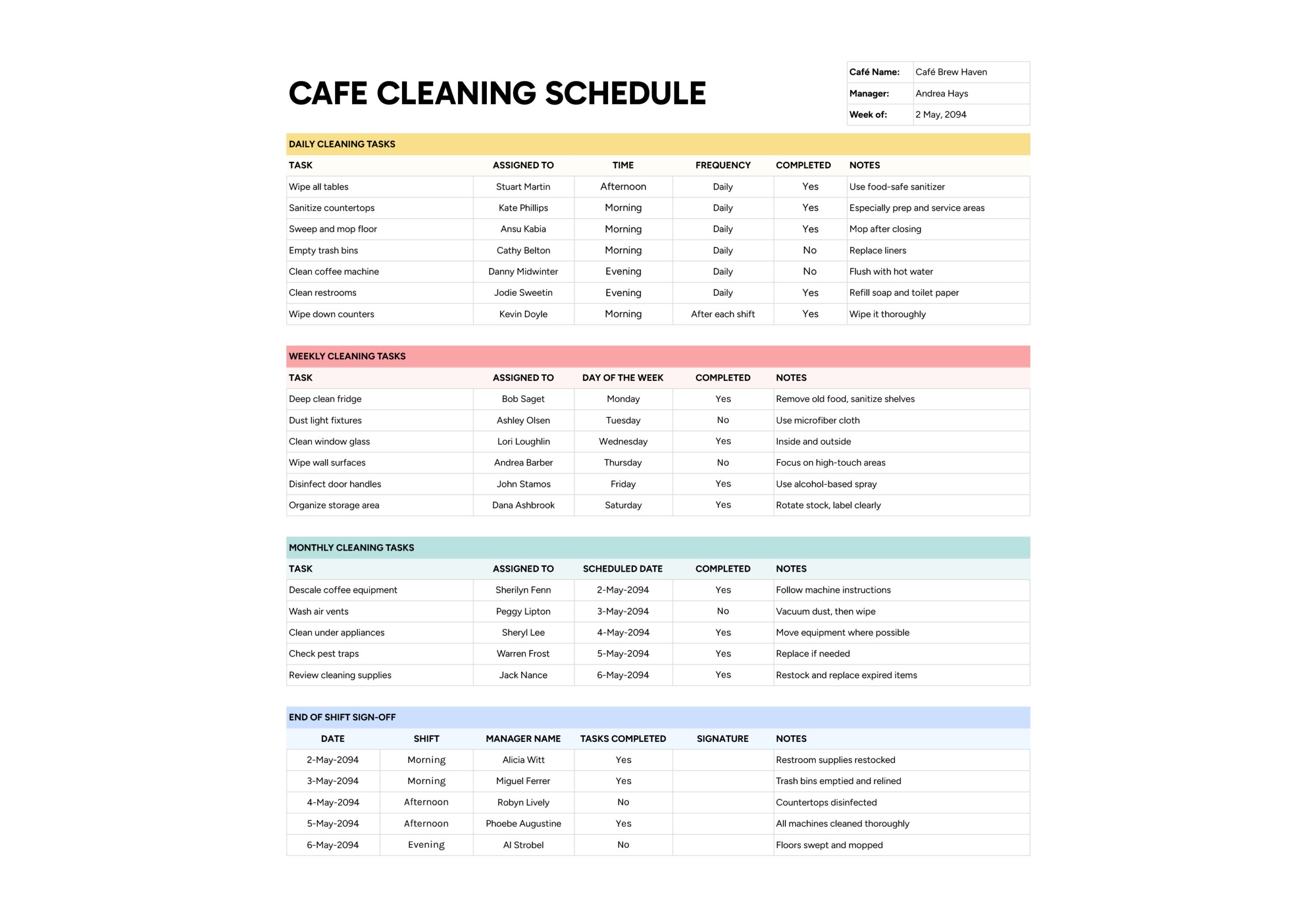



A household cleaning schedule template gives you one page where everyday chores and deeper cleaning jobs are listed by room and by frequency. This version divides work into three columns for daily, weekly, and monthly tasks, with checkboxes beside each item so you can track what has been completed. It is available in PowerPoint and can also be used in Google Slides, so you can adjust the wording, colors, or room names before printing or saving a PDF.
This household cleaning schedule template is intended for apartments, family homes, and shared housing where more than one person uses the same spaces. Kitchens, living rooms, bedrooms, bathrooms, the laundry room, home office, and porch each have their own section, so you can see at a glance which parts of the home need attention. You can keep the example chores, remove them, or replace them with routines that match the way you actually live, then use the checkboxes to turn the page into a practical checklist for your cleaning days.
How to Use This Household Cleaning Schedule Template
Start by reviewing the sections and deciding how closely they match your home. If you have more than one living space or no porch, you can rename or duplicate sections so the schedule reflects your real layout. Once the room list feels accurate, move on to the tasks in each column and adjust them to match your cleaning habits.
Use the daily column for quick reset tasks
The “Daily” column in each room is designed for small jobs that keep the space tidy from one day to the next. In the kitchen, for example, you might keep the existing tasks such as wiping counters, washing dishes, and emptying trash. In bedrooms, you might adjust the list to include making the bed, putting clothes in a hamper, and tidying nightstands.
Go room by room and decide what truly needs attention most days. If you find that a task in the daily column only needs to happen every few days, move it to the weekly column instead. The aim is to create a short list that you can comfortably complete during a normal day without feeling overloaded.
You can either tick the checkboxes each day and then clear them at the end of the week, or simply use the boxes to mark habits you want to focus on until they become automatic.
Plan weekly chores by area
The “Weekly” column gives you space for more detailed cleaning jobs that keep rooms fresh but do not need to happen every day. Typical examples include mopping floors, dusting shelves, cleaning appliances, changing bed sheets, or scrubbing toilets.
Decide when in the week you will handle these tasks. Some people prefer to choose one main “cleaning day” for the entire house, while others spread work across several evenings. You can print multiple copies of the cleaning schedule and write specific weekdays beside the weekly tasks if you want a more precise plan, for instance “Saturday” next to “vacuum carpet” or “Wednesday” next to “scrub toilet.”
If a particular job feels too large, break it into smaller items and list them separately. Instead of a single “clean bathroom” line, you might add “scrub toilet,” “wipe sink,” and “mop bathroom floor” on their own rows. That approach makes it easier to track progress and avoids the feeling that nothing counts unless every step is finished.
Reserve the monthly column for deep cleaning
The “Monthly” column in each room is intended for deeper maintenance and rarely remembered jobs such as cleaning cabinets, washing curtains, wiping baseboards, or decluttering storage shelves. These chores usually take more time but also make the biggest difference to how fresh a home feels over the long term.
Choose one week each month to focus on a specific area. For instance, week one can be kitchen deep cleaning, week two can be living spaces, week three bedrooms, and week four bathrooms and laundry. During that week, look at the monthly column for the selected rooms and work through those items first. This rotation keeps big tasks from piling up at the end of the season.
If some rooms do not need monthly deep cleaning, use their column for seasonal tasks instead. You might note “flip mattress” in bedrooms every few months or “power wash porch floor” during warmer weather.
Customize room sections for your home
The template is fully editable, so you can tailor every section to the way your home is laid out. If you do not have a separate home office, you might rename that section to “Kids’ Room,” “Dining Room,” or “Entryway.” If you have more than one bathroom or living room, duplicate the relevant rows and label them clearly.
You can also adjust the language of each task to match your usual routines. For example, if you live in a studio apartment with no separate porch, the porch section could become “Entry and Hallway,” with daily tasks like shoe check and quick sweep, weekly tasks like wiping railings, and monthly tasks like washing door mats.
Share tasks in a multi-person household
In homes with several people, this schedule can act as a chore board. Print the page and assign highlighters or initials to each person. They can mark which tasks they are responsible for in each room. As chores are finished, boxes can be ticked or initialed.
Another option is to create one copy of the template for each person. Keep the same room sections on every version but adjust tasks to match age, ability, and availability. For example, children might handle daily bedroom and living-room jobs, while adults take on bathroom and monthly deep cleaning tasks.
Use the template digitally or as a printable checklist
Because the schedule is built in PowerPoint, you can edit it directly, export it as a PDF, or upload it to Google Slides. Many people prefer to type their own tasks, print the final version, and place it on the fridge or a bulletin board. Others keep it in digital form and check it on a tablet or laptop during weekend cleaning sessions.
If you manage household routines year after year, consider saving a dated copy for each year. You can keep a “master” version with your preferred tasks and then create seasonal copies that reflect special projects such as moving, hosting guests, or spring cleaning.
Planning a Realistic Cleaning Routine
Try filling out the schedule during a walkthrough of your home. Move room by room with the template open and note any chores you often postpone, such as cleaning behind appliances or checking vents in the laundry room. Including those items from the beginning reduces the chance they will be forgotten.
Be realistic about time. If you notice that weekly lists become too long, shift some chores to the monthly column or spread them between different rooms on alternate weeks. It is better to have a schedule that you consistently follow than one that looks ambitious but rarely matches daily life.
If you rent, use the monthly and annual tasks to track maintenance that you might need to discuss with your landlord, such as exhaust fan cleaning or window seal issues. Keeping records of when you last cleaned and inspected these areas can make conversations about repairs easier.
FAQs
You can keep the divisions by room and still match them to specific days. One approach is to choose a focus day for each room (for instance, Monday for kitchen, Tuesday for bathrooms) and then work through the daily and weekly entries for that room on its assigned day. Another approach is to write the planned day beside each weekly task, such as “M” or “Sat,” so you always know when to handle that specific job without rewriting the schedule every time.
There are several options. You can tick boxes in pencil and erase them at the end of each week, or use different colored pens or markers to show progress for each person in the household. Another method is to print a new copy at the start of every month and keep old copies in a folder. This creates a simple record of how consistently chores have been handled and can highlight tasks that might need a different frequency.
You can assign specific sections to younger family members based on age and ability. For example, children might handle daily tasks in bedrooms and shared living spaces, such as tidying cushions, checking hampers, and sweeping small areas. Teenagers might take on weekly tasks in the kitchen or laundry room. Review the schedule together, agree on expectations, and display the printed version somewhere visible. Regular check-ins can reinforce the routine and teach time management and shared responsibility.
Yes. If you use a cleaning service, you can treat this schedule as a briefing sheet for each visit. Mark which tasks you expect cleaners to handle and which ones stay as household jobs. You can then adjust the daily, weekly, and monthly columns so that regular visits cover heavier chores, while lighter tasks remain on your own list.