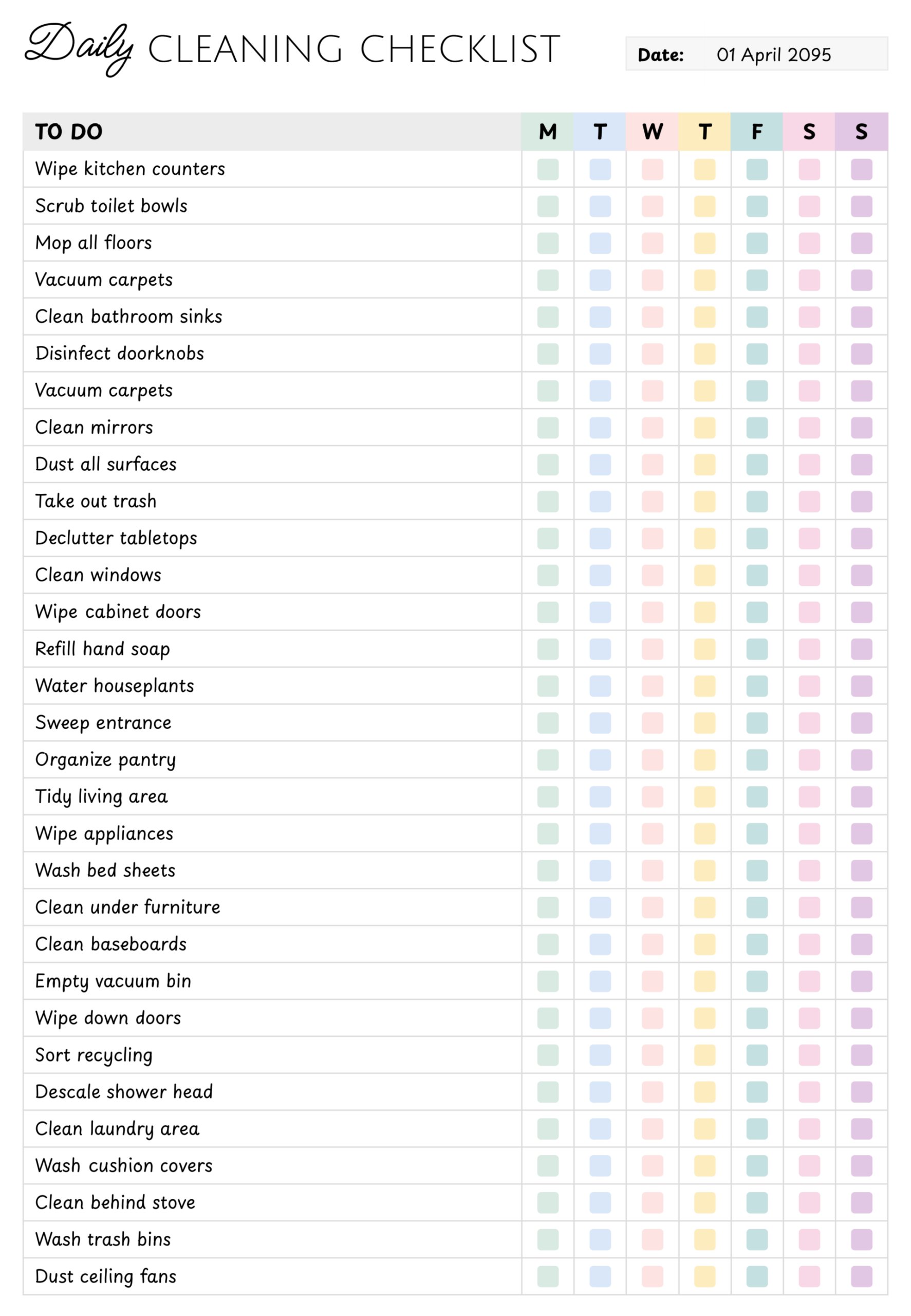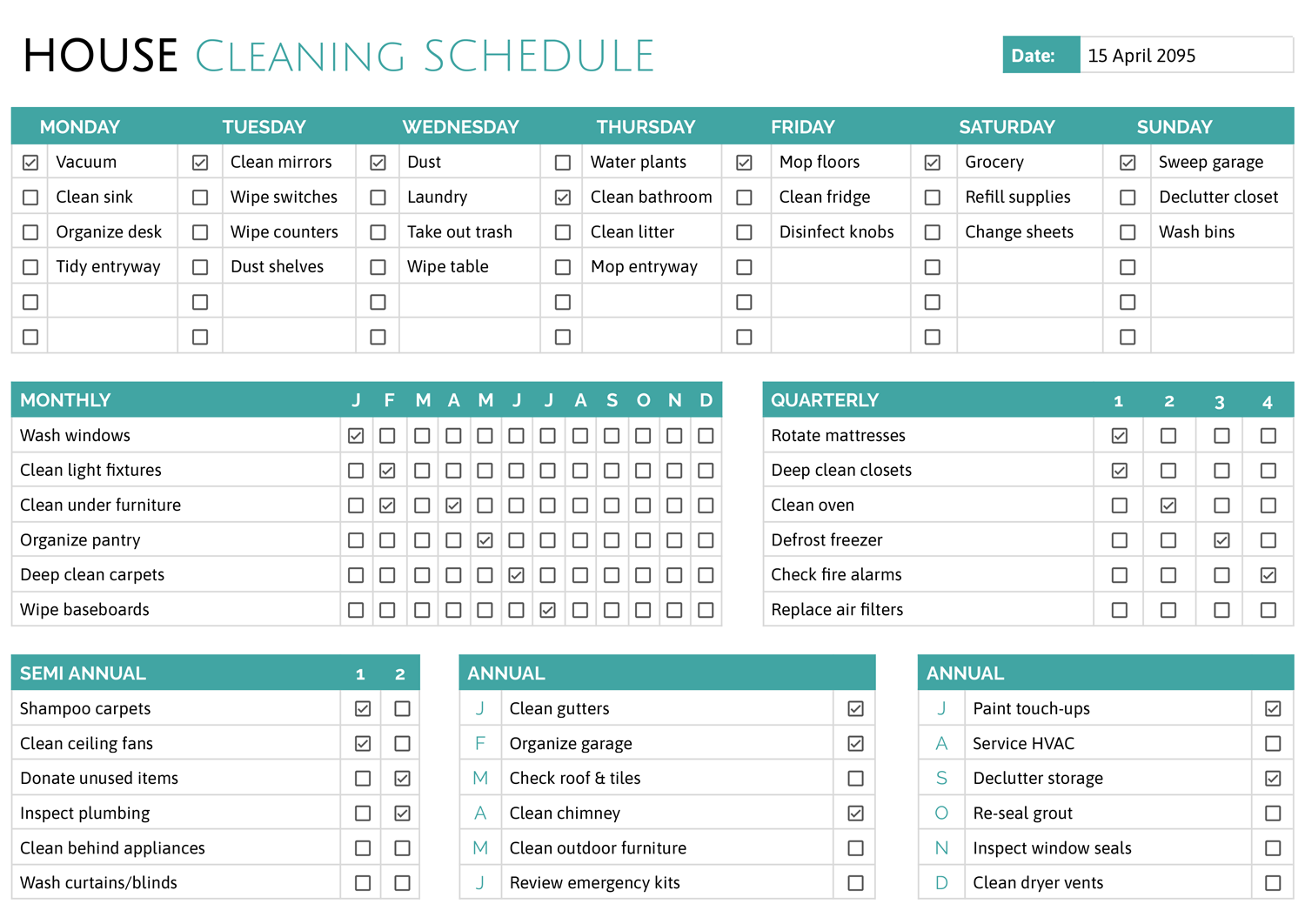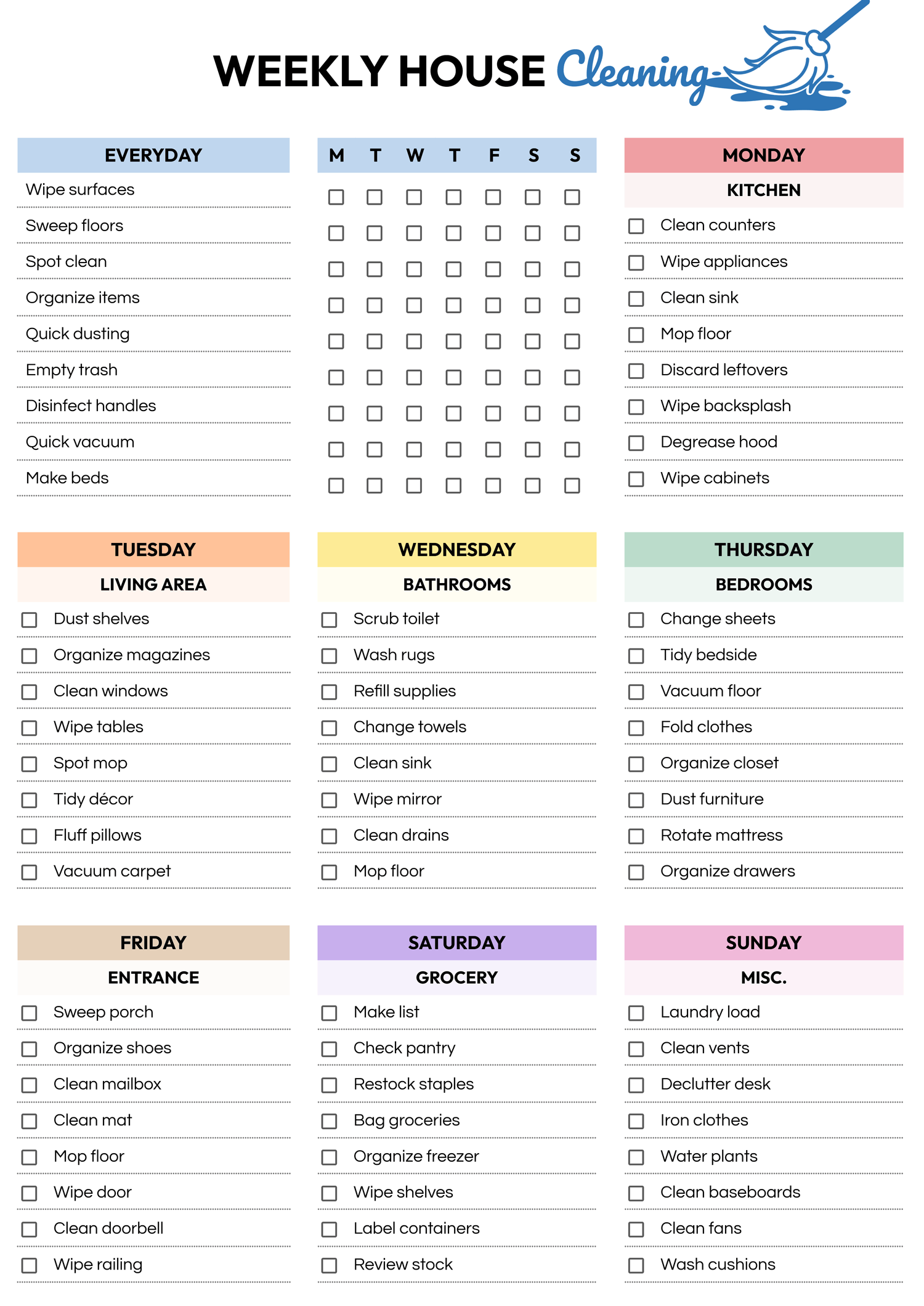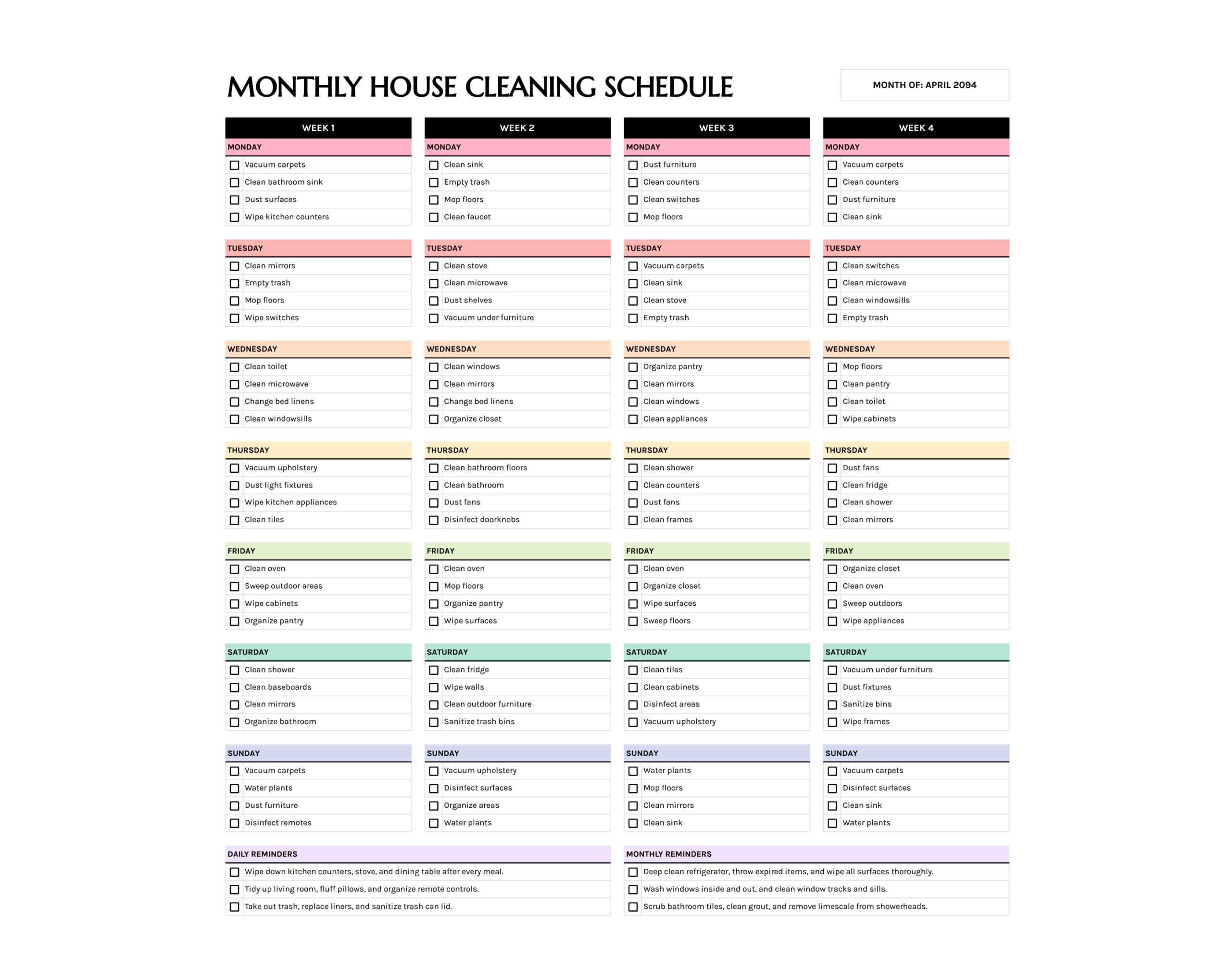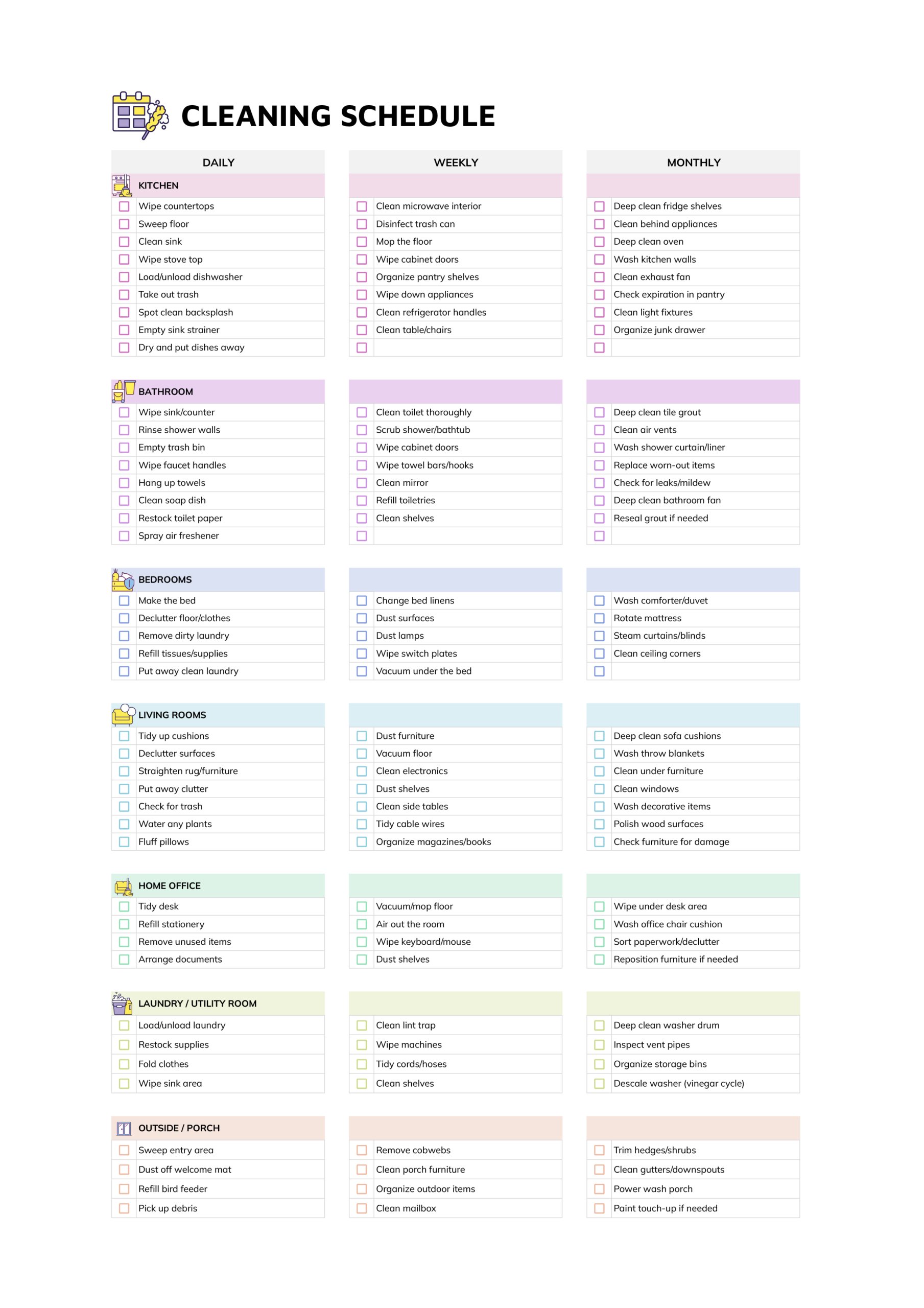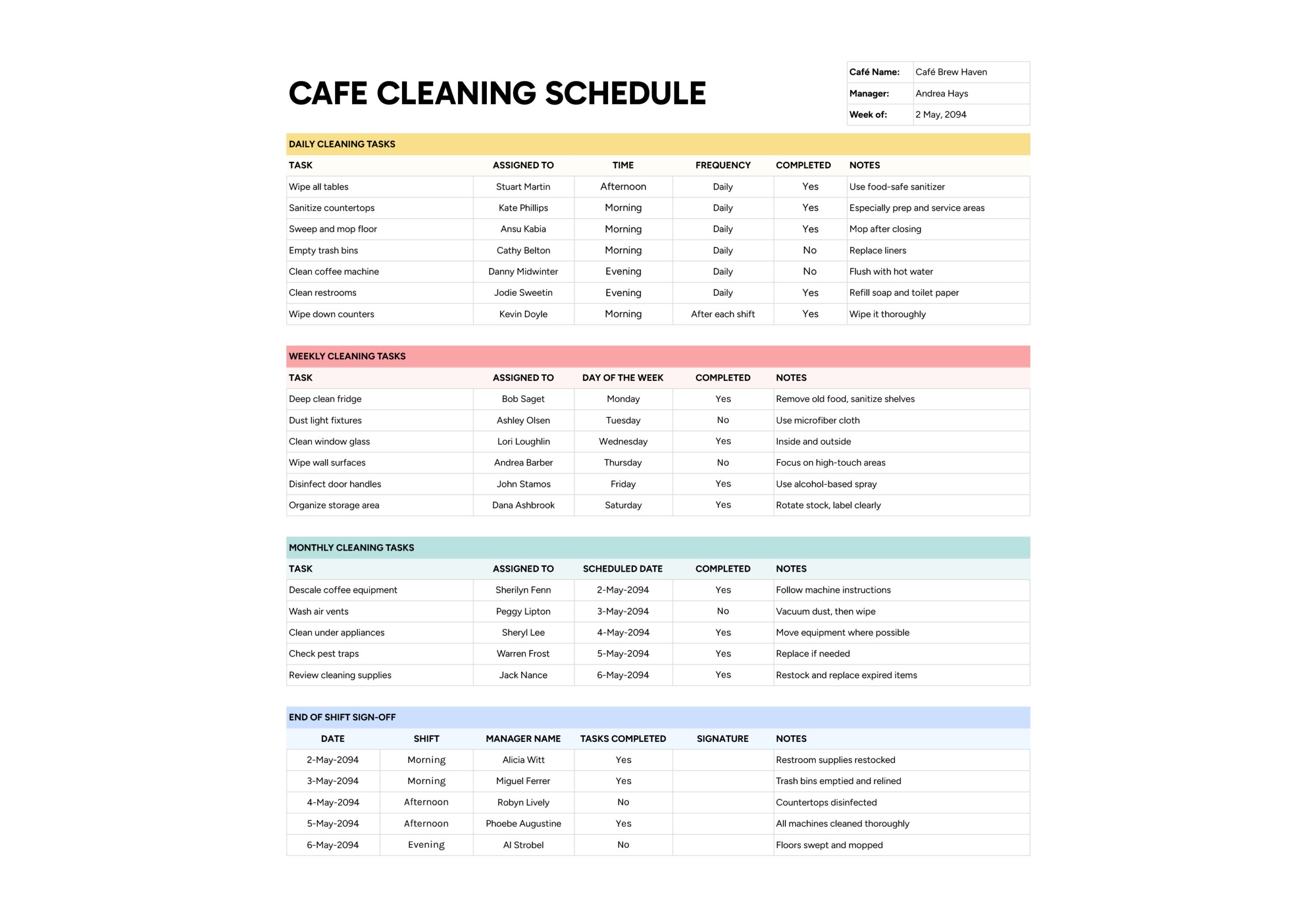



A weekly cleaning schedule turns a vague intention like “clean the house sometime this week” into a plan. This weekly cleaning schedule template keeps everyday tasks and room-by-room chores on one page, so you can see which jobs matter most and when they will be done. At the top, you have an “Everyday” section with checkboxes for each day of the week. Below that, each weekday gets its own box with a main room focus such as the living room, bathroom, kitchen, bedroom, pantry, or outdoor areas.
You can keep the sample tasks as a starting point or replace them with your own routines. Some households use it as their master plan for the whole week, while others print separate copies for different floors or family members. Either way, the page gives you a repeatable pattern so you are not deciding from scratch what to clean every day.
How to Use This Weekly Cleaning Schedule Template
Think of the template as two parts working together. Everyday tasks protect basic hygiene and order. The weekday blocks handle heavier cleaning and room-by-room upkeep. Start with the everyday section, then move down to the individual days.
Set up your Everyday routines
Begin at the top “Everyday” list. These rows are for short tasks that prevent mess from building up. Examples include wiping kitchen counters, emptying trash, loading or unloading the dishwasher, tidying the entryway, or sanitizing frequently touched surfaces. Each task has seven small boxes under S, M, T, W, T, F, and S so you can mark which days you complete it.
Review each suggested task and decide whether it genuinely needs to happen daily in your home. If not, move that item into one of the weekday panels instead. Aim for a concise set of everyday habits that you can realistically complete, even on busy days.
Mark the most essential everyday items with a small star or symbol. On weeks when time is tight, you can focus on those starred tasks first and let lower priority chores slide to another day.
Give each weekday a primary room
The blocks for Monday through Saturday are each labeled with a room focus. Monday is living room, Tuesday bathroom, Wednesday kitchen, Thursday bedroom, Friday pantry, and Saturday outdoor spaces. Treat each panel as that day’s main cleaning zone.
You can keep these assignments or rename them to fit your home. If you do not have a pantry, that panel might become “Office” or “Kids’ room”. If you live in an apartment without outdoor space, Saturday can become a general “Deep clean” day. The key idea is that you work more deeply in one area at a time instead of trying to clean the entire house in a single stretch.
Adjust the task lists inside each panel
Within each weekday box you will see example tasks tailored to that room. For the living room this might include dusting shelves, vacuuming the sofa and rug, and decluttering coffee tables. The bathroom panel covers jobs like refilling toiletries, scrubbing the bathtub, and disinfecting the toilet. The kitchen day focuses on the fridge, floors, appliances, and sink, while bedroom tasks address sheets, floors, and furniture. Pantry and outdoor panels handle storage shelves, expiry checks, patio sweeping, and garden jobs.
Go through each list and edit it so it matches your space. Add anything that regularly gets overlooked, such as cleaning behind the TV, wiping light switches, or checking outdoor bins. If a task feels too broad, break it into smaller lines so progress is more visible.
Use laundry lines to anchor your week
Several panels include laundry notes such as throws and covers, towels, kitchen towels, bedding, brights, and catch-up. You can keep these suggestions as they are or change them to reflect your own laundry system. Aligning laundry types with specific days spreads washing through the week and prevents everything from piling up on one day.
Share the schedule with your household
If more than one person cleans, this weekly cleaning schedule template can work as a shared agreement. One approach is to give each person a day as their main responsibility, for example one person handles kitchen day while another manages bathroom day. Another option is to divide tasks inside a panel and add initials next to each line.
Hold a quick check-in at the start of the week. Review any particularly busy days and swap responsibilities if someone has extra work or appointments.
Rotate the more demanding or unpopular jobs, such as scrubbing the bathtub or cleaning outdoor bins, every few weeks. A simple note beside those tasks that says “rotate monthly” keeps the workload fair without needing a separate chore chart.
Print and reuse through the year
After editing the template once, you can print a fresh copy every week or every month. Keep it on the fridge, in a command binder, or near your cleaning supplies so it stays in sight. Some people like to slip the printed sheet into a clear plastic sleeve and use dry-erase markers, then wipe everything clean at the end of the week and start again with the same plan.
FAQs
Treat the Everyday list as a short set of essential habits rather than every small chore you can think of. Start with three to five items that keep the home running smoothly, such as counters, dishes, and trash. Once you are comfortable with those, you can add more lines if needed. If the row starts to feel crowded, move some items into one of the room panels.
Yes. You can add one line at the bottom of each day’s box for a rotating task, such as “once this month, wash curtains” or “this week, clean oven.” When that project is finished, write the next one on the same line. Over a few weeks you will move through a cycle of deeper jobs without needing a separate chart.
Use unfinished tasks as information rather than a failure. At the end of the week, look for patterns. If a particular day is always overloaded, move one or two items to a lighter day or to the Everyday row. You can also mark one or two “non-negotiable” items in each box and treat the rest as optional for busy weeks. Over time, the schedule will match your real capacity instead of an ideal week on paper.