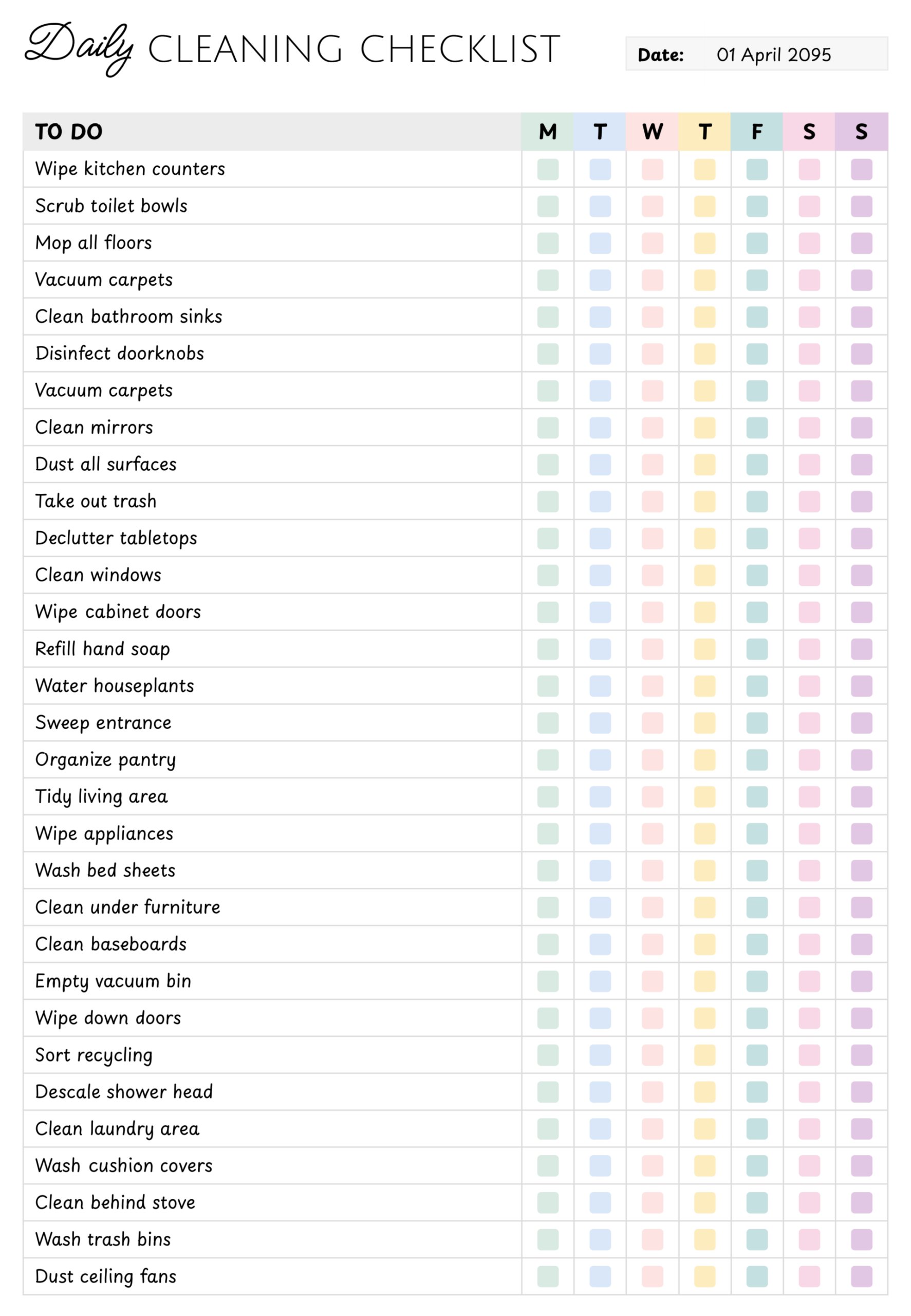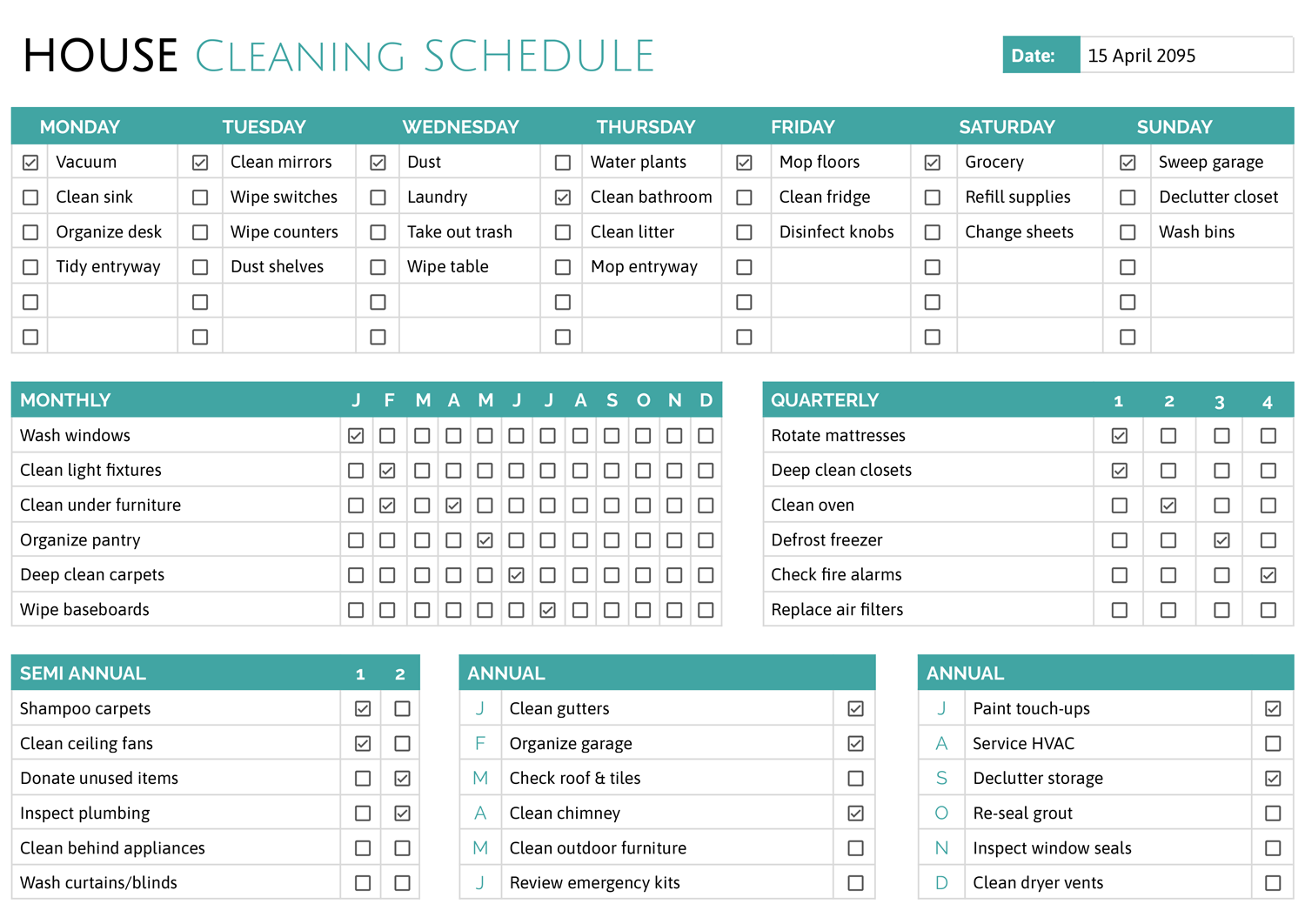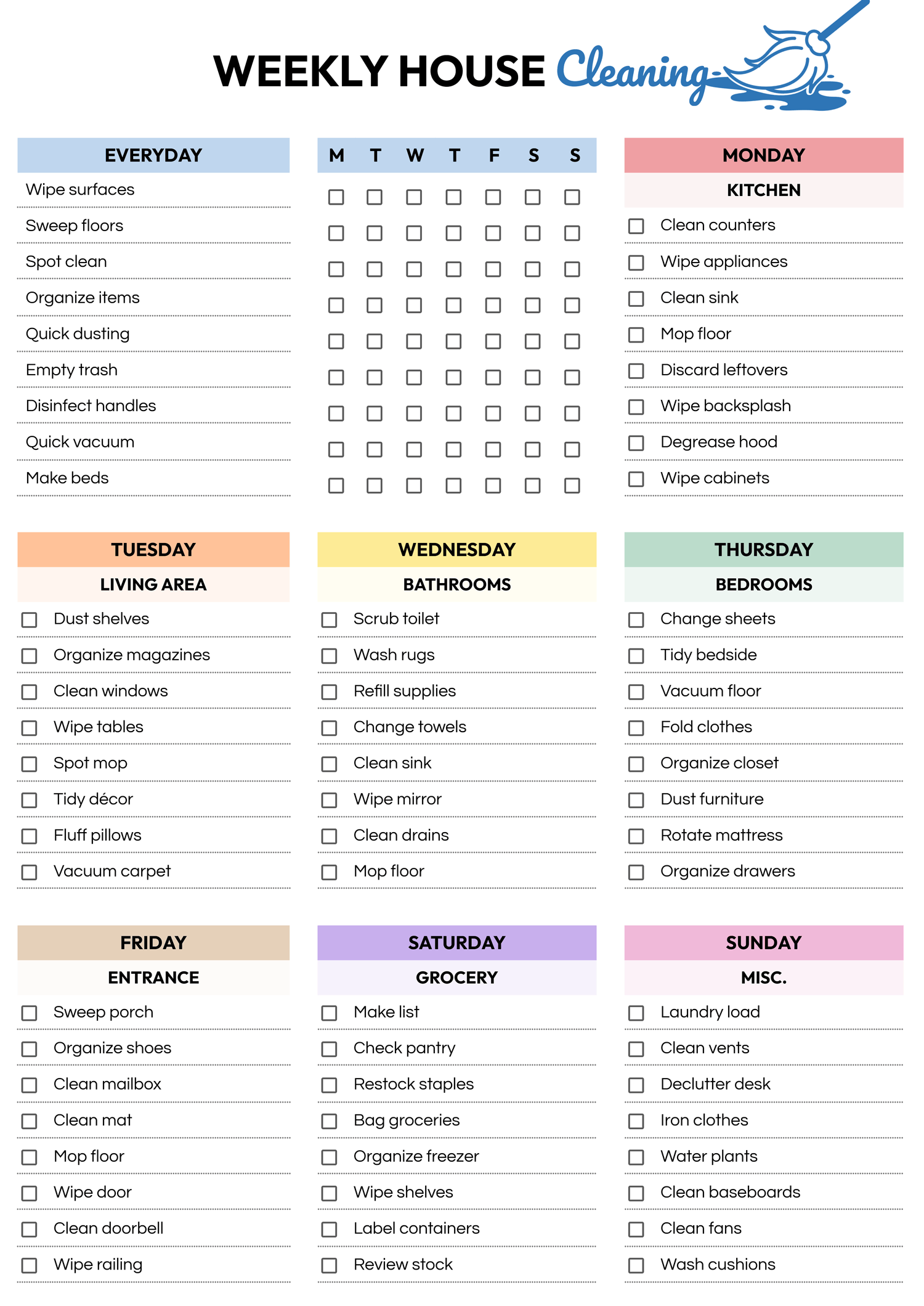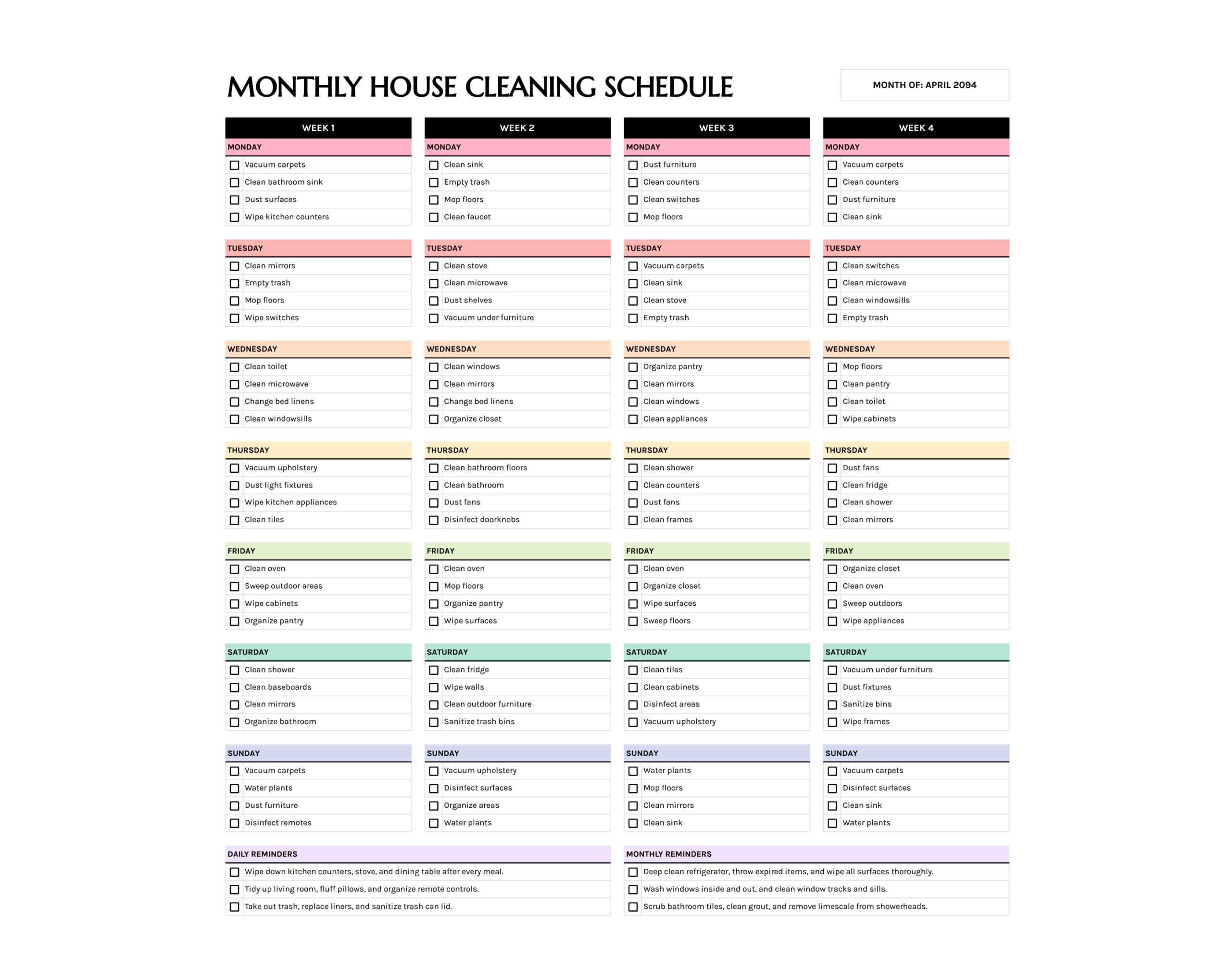
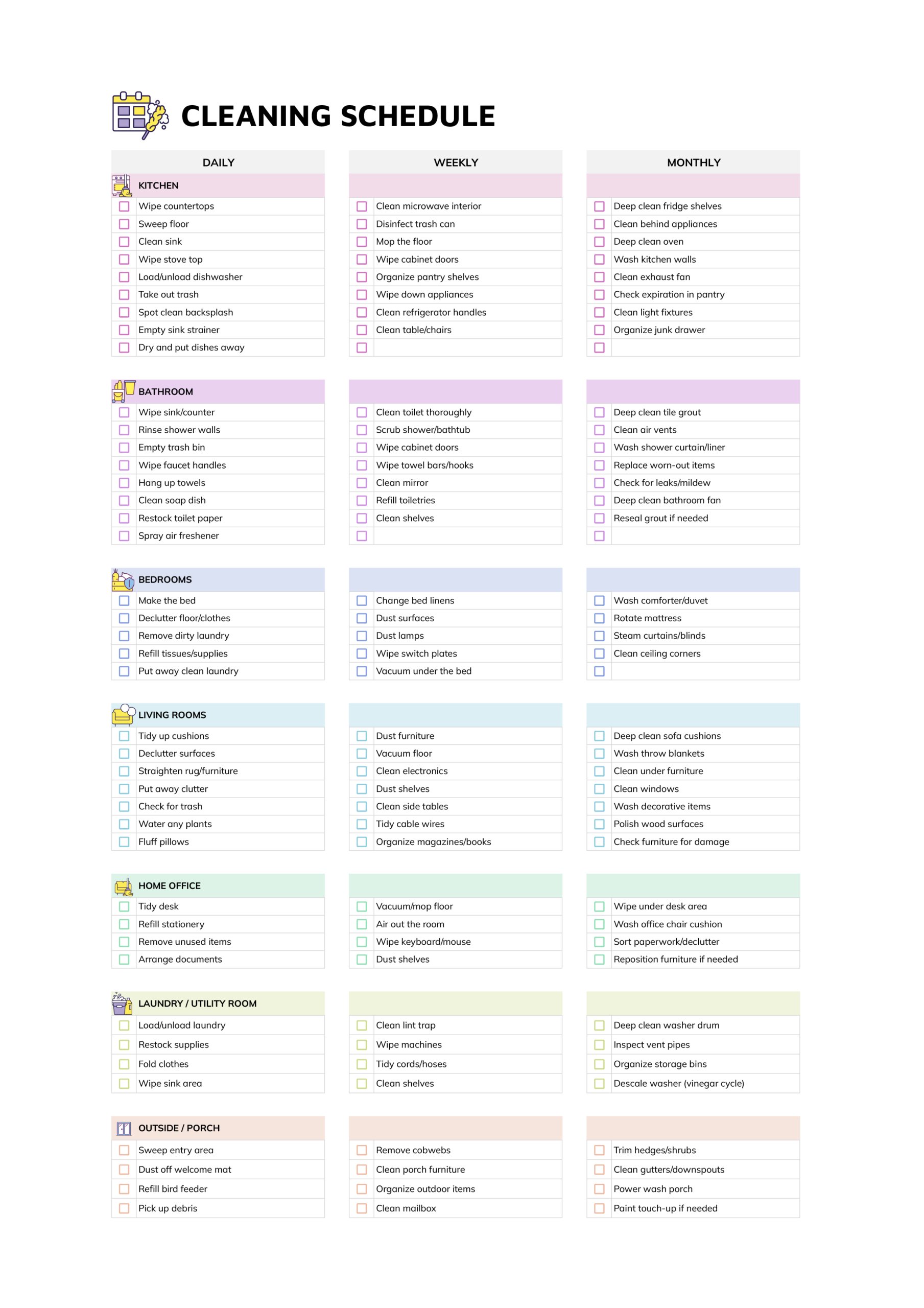



The daily, weekly, monthly cleaning schedule template is for people who want their home cleaning to follow a calm, predictable routine instead of last-minute scrambles. It gives you one place to decide what needs attention every day, which jobs can wait for a weekly reset, and which deeper tasks are better handled once a month.
You set up separate lists for the kitchen, bathroom, bedrooms, living rooms, home office, laundry or utility room, and outside or porch areas. For each room you decide which tasks are daily habits, which belong on your weekly cleaning day, and which are occasional deep cleans. As you work through the month, you tick the boxes, see what has been covered, and spot tasks that keep slipping. This makes it easier to share responsibilities with family members or roommates and to explain expectations to a housekeeper or cleaning service, because everyone can see the same plan room by room.
How to Use This Cleaning Schedule Template
The sheet is arranged by room, and each room has three columns titled “Daily”, “Weekly”, and “Monthly”. You fill these columns with tasks and then use the checkboxes to track what gets done.
Set Up Rooms and Routines
Work through one room at a time. Under “Kitchen”, “Bathroom”, “Bedrooms”, “Living Rooms”, “Home Office”, “Laundry / Utility Room”, and “Outside / Porch”, list the tasks that actually apply to your space. Short, specific phrases such as wipe countertops, sweep floor, empty trash, change bed linens, or sweep entry area keep the checklist easy to scan.
Think about how often each task genuinely needs attention in your household. Daily tasks keep mess from piling up. Weekly tasks reset each room so it feels fresh at the end of the week. Monthly tasks handle slow build up such as oven cleaning, vents, or furniture you rarely move.
If the house currently feels overwhelming, start with a shorter list. Treat the first month as a trial and add tasks only when you are comfortable with the ones you already have, rather than trying to capture every possible chore on the first day.
Fill the Daily Columns
In each room’s “Daily” column, list small actions that make the biggest difference if done consistently. For the kitchen this might be wiping counters, loading and unloading the dishwasher, and taking out trash. In the bathroom you might include wiping the sink, hanging towels, and a quick bin check. In living spaces, daily tasks might cover tidying cushions, putting away clutter, and watering plants.
Keep the sheet somewhere visible or print it for the fridge. At the end of each day, tick the boxes for tasks you completed. Over a week or two you will see which chores comfortably fit into your routine and which ones keep getting missed and may belong in the weekly list instead.
Plan Weekly Cleaning
Use the “Weekly” columns for jobs that take a little more time but do not need daily attention. In the kitchen this may include mopping the floor, cleaning the microwave interior, and organising pantry shelves. Weekly bathroom work often involves scrubbing the toilet and shower or tub, cleaning mirrors, and refilling toiletries. In bedrooms, weekly tasks might be changing bed linens and dusting surfaces.
Choose one or two days each week as your main cleaning days and aim to clear most of the weekly columns on those days. This creates a rhythm where you know which evenings or weekend hours are reserved for heavier tasks while keeping the rest of the week lighter.
Add Monthly Deep Cleaning
The “Monthly” columns hold deeper tasks such as cleaning fridge shelves, washing shower curtains, rotating mattresses, dusting high corners, cleaning under living room furniture, inspecting outside drains, or trimming hedges.
At the start of each month, read through all monthly columns and pick the tasks that matter most for that season. Outdoor work might be more important in spring and summer, while decluttering and dusting may take priority in winter. As you complete each monthly job, tick the box so you can see what is already covered before the month ends.
Use the Template in Day-to-Day Life
Once the sheet is filled, treat it as a guide rather than a strict list you must complete every time. You can move tasks between “Daily”, “Weekly”, and “Monthly” as you learn what genuinely fits your schedule. If you miss a day, you do not have to “repay” every box. Simply pick up again at the next opportunity. The aim is steady maintenance, not perfection.
If you live with others, agree on how to divide work. Some households assign rooms, while others let each person choose a set number of checkboxes per day. A brief weekly review of the sheet makes it easier to adjust tasks that feel unrealistic and to recognise the work people are already doing.
At the end of each month, take a quick photo of the completed sheet before clearing the checkboxes. Over time those photos give you a simple record of how often you kept up with your routines and which specific tasks you tend to skip. You can then either simplify your list or set a reminder to tackle those skipped items first in the following month.
FAQs
One approach is to assign each person to one or two rooms for a month, then rotate. For example, one person looks after the “Bathroom” columns while another handles “Living Rooms”. Another method is to let each person choose a fixed number of checkboxes per day or per week and write their name beside those lines. Reviewing the sheet together once a week helps you spot when someone is overloaded or when a task needs to be shared differently.
Yes. Keep daily chores for your household and use the weekly and monthly columns to describe tasks you expect the cleaning service to handle. Before each visit, share a copy, screenshot, or photo of the relevant sections. Afterward, quickly check which items were covered and adjust the list or your service agreement if certain tasks are repeatedly skipped or take more time than expected.
Start by thinking about how fast mess or dust builds up in each room. Anything that affects hygiene or comfort every day, such as dishes, trash, or bathroom sinks, usually fits in the “Daily” column. Jobs that take longer but reset the room for a few days, like mopping floors or changing bed sheets, fit in “Weekly”. Deep work that stays done for a while, such as cleaning the oven, washing curtains, or rotating mattresses, belongs in “Monthly”. If you are unsure, place a task in the higher frequency column and move it later if you notice it can wait.