
Wedding Schedule Templates
A wedding day runs to a clock that dozens of people quietly depend on, and when the morning slips, the slip follows everyone to the last dance. Wedding schedule templates set the order down in advance, so preparation, the ceremony, the reception, and every vendor behind them are timed rather than remembered. Between them they handle the day-of run sheet and the months of planning before it, down to the timing of individual pieces like hair and makeup.
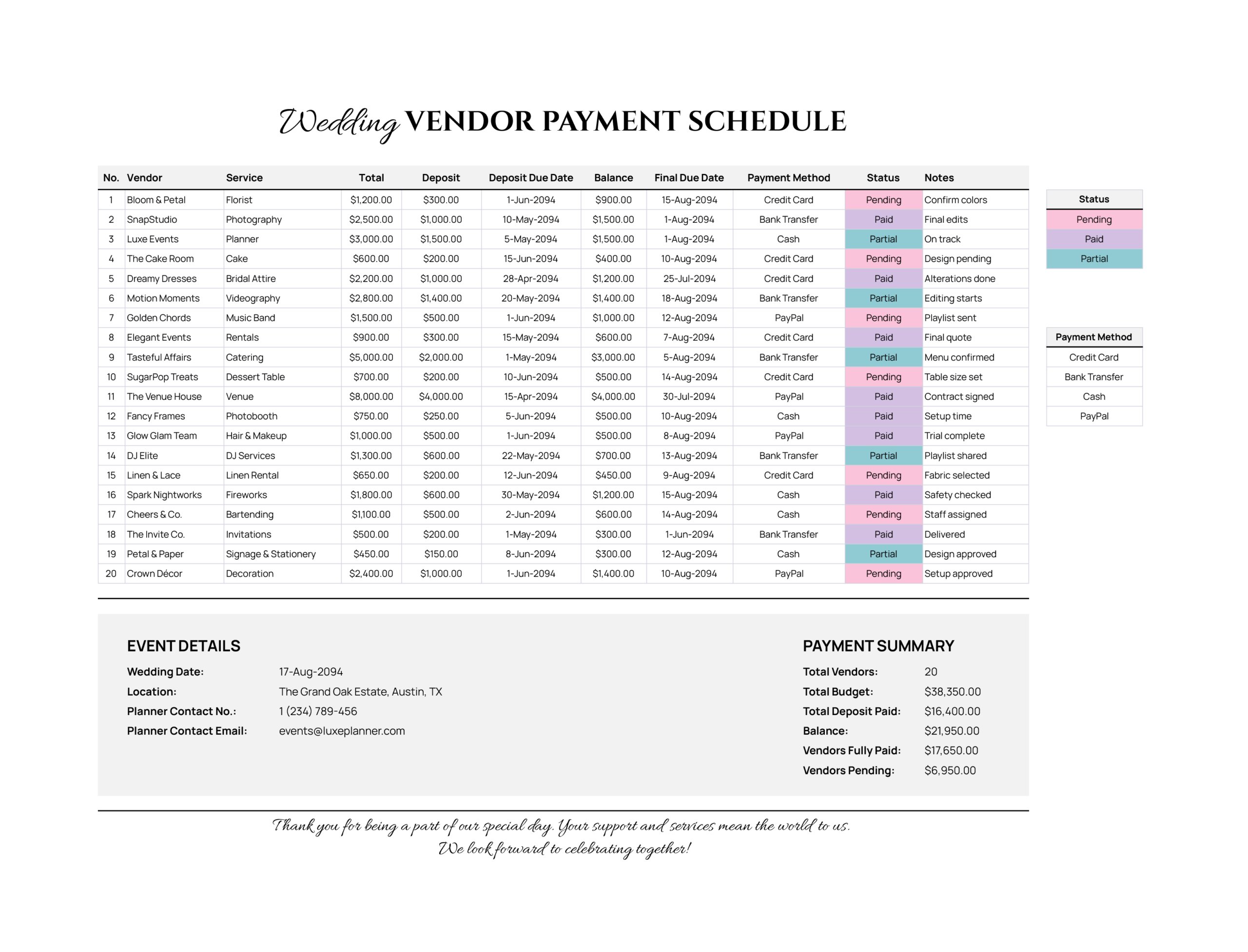








These wedding schedule templates run the day in the order it happens, from the morning preparation through the ceremony and reception to the last dance, each part with a time, so the couple, the wedding party, and the vendors all run to one plan rather than a rough idea that drifts from the first late start. Getting that order down on paper is what keeps an early slip from following everyone through the rest of the day.
A wedding is planned across more than one timeframe, so the collection covers the day-of run sheet, the months-long planning timeline that counts down to the date, and detailed timing for individual pieces like hair and makeup or the ceremony order, with a destination version that adds travel and arrival. You set the hours the day spans, list the order from the earliest start, mark which vendor each part needs and when, and hand the same schedule to everyone working the day.
Where to put your buffer: The part of a wedding day most worth protecting with buffer time is the preparation, since hair and makeup running long is the delay that pushes photographs, the ceremony, and everything after. A morning timeline with slack built in is what keeps the rest of the day on schedule.
What a wedding schedule covers
The collection covers both the day itself and the run-up to it.
The wedding day in order, from morning preparation through to the last dance, each part with its time so the day keeps moving.
The months before, laid out as tasks and deadlines, so the long list of arrangements is paced rather than left to the final weeks.
Detailed timing for individual parts, hair and makeup, the ceremony order, so the pieces that set the day's pace are planned to the minute.
Who is responsible for each part, photographer, catering lead, stylist, so every supplier's timing lines up with the day's.
For a destination wedding, the travel and arrival timings that a local day would not need, set out so guests and party are accounted for.
Slack left between the timed parts, especially across the morning preparation, so one segment running long does not push the whole day back.
Timing the day
From the date to a run sheet the whole party can follow.
Choose a day-of run sheet for the wedding itself, a planning timeline for the months before, or segment timing for a part like hair and makeup. A full wedding draws on all three.
For the day, mark the hours from the first preparation to the end of the reception, so the run sheet covers the whole day rather than only the ceremony onward.
List the day in sequence, preparation, photographs, ceremony, reception, each with its time, working from the earliest start so nothing in the morning is left unplanned.
Tip — Give the morning preparation more time than seems necessary, since hair and makeup overrunning is the single delay most likely to push the entire rest of the day.
Mark which supplier is tied to each part and when they are needed, so the photographer, catering lead, and stylist all work to the same timeline as the couple.
FAQs
What is a wedding day run sheet?
It is the day laid out in order, from morning preparation through ceremony and reception to the last dance, each part with a time. It gives the couple, party, and vendors one shared timeline so the day keeps moving without anyone guessing what comes next.
Why give hair and makeup extra time?
Because it comes first, so any overrun there pushes photographs, the ceremony, and everything after. Building slack into the morning preparation is the surest way to keep the rest of the day on schedule, which is why several layouts time it in detail.
How do these handle a destination wedding?
Yes. The destination version adds travel and arrival timings that a local wedding would not need, so guests and the wedding party are accounted for alongside the day-of schedule rather than planned separately.