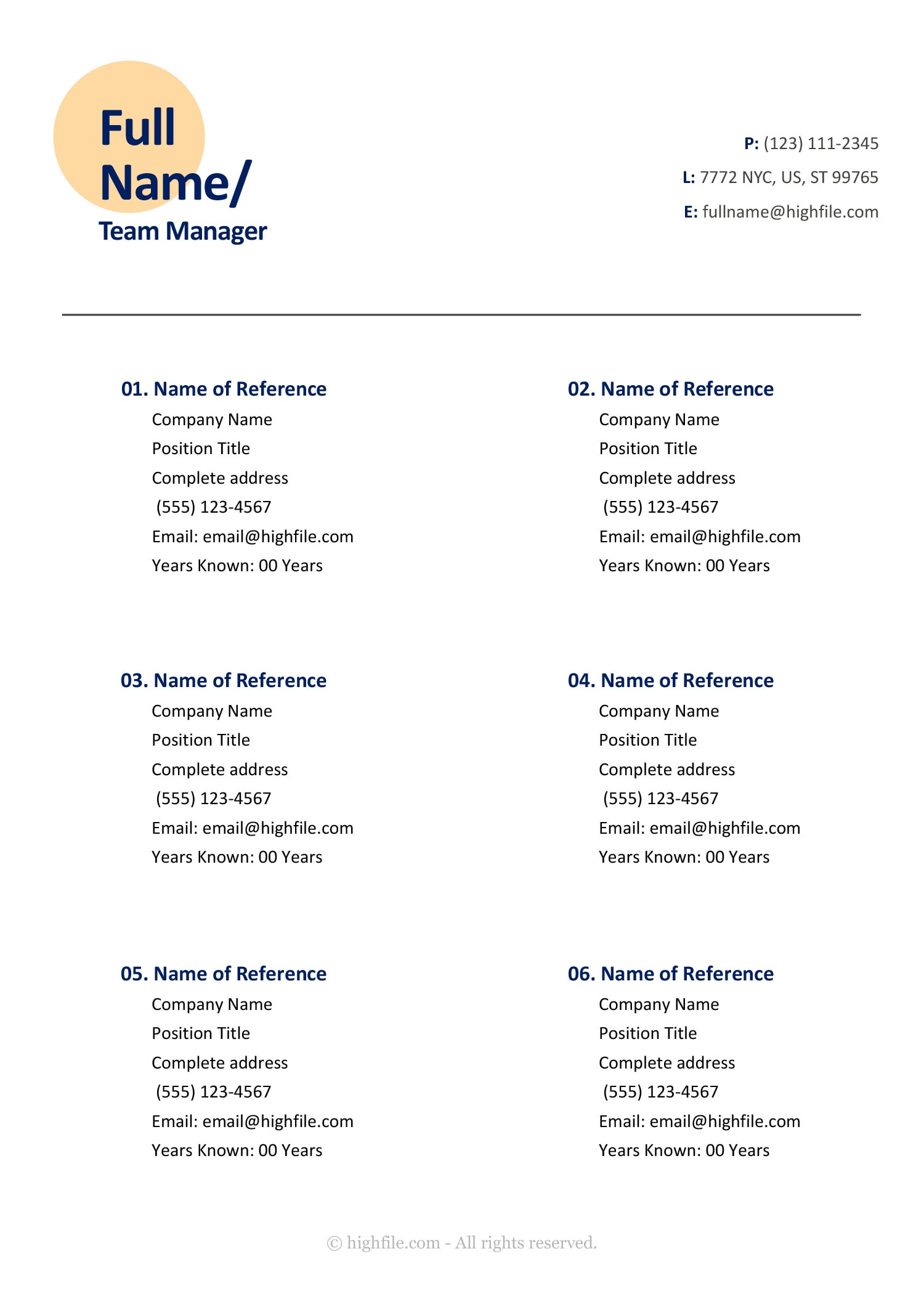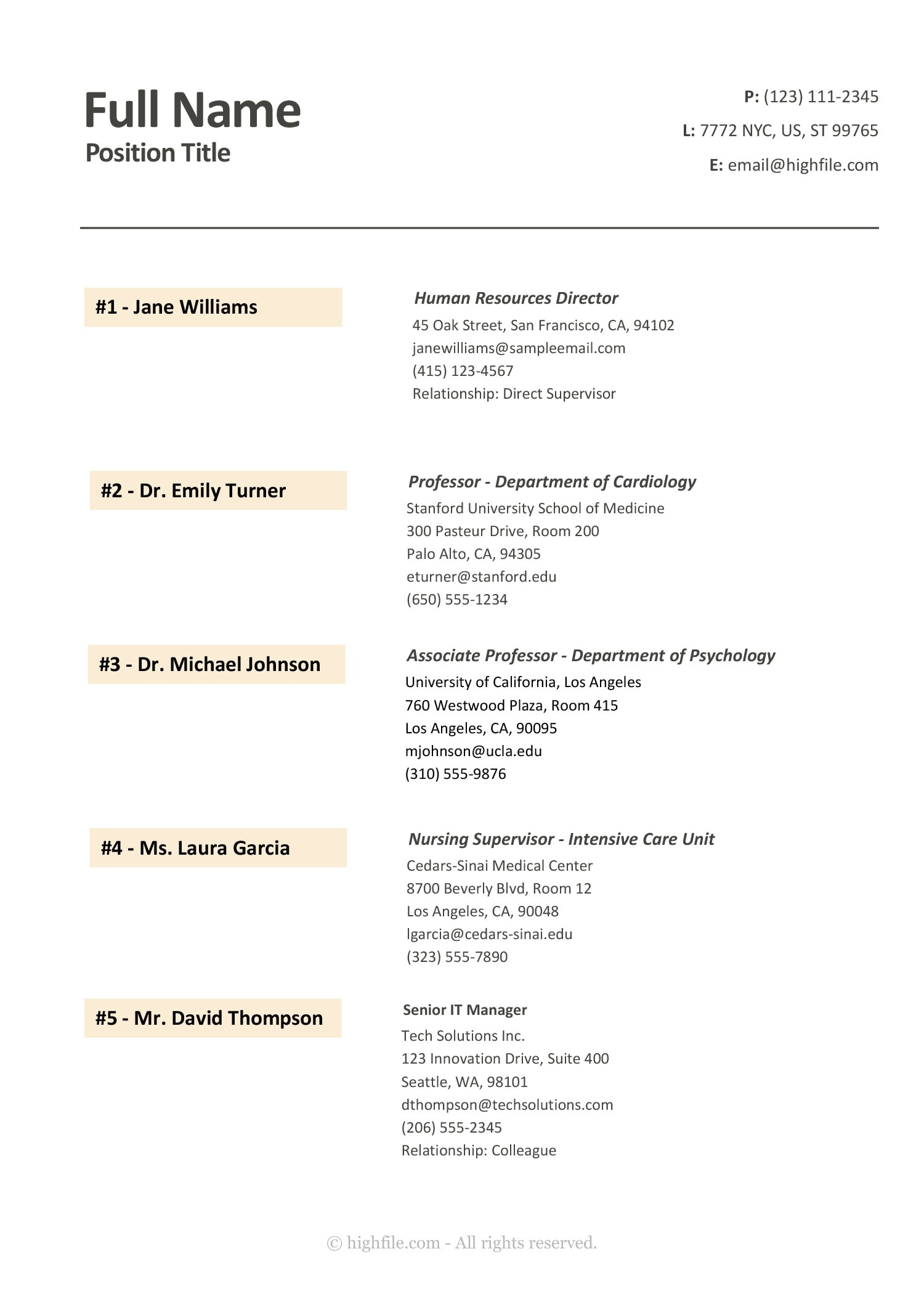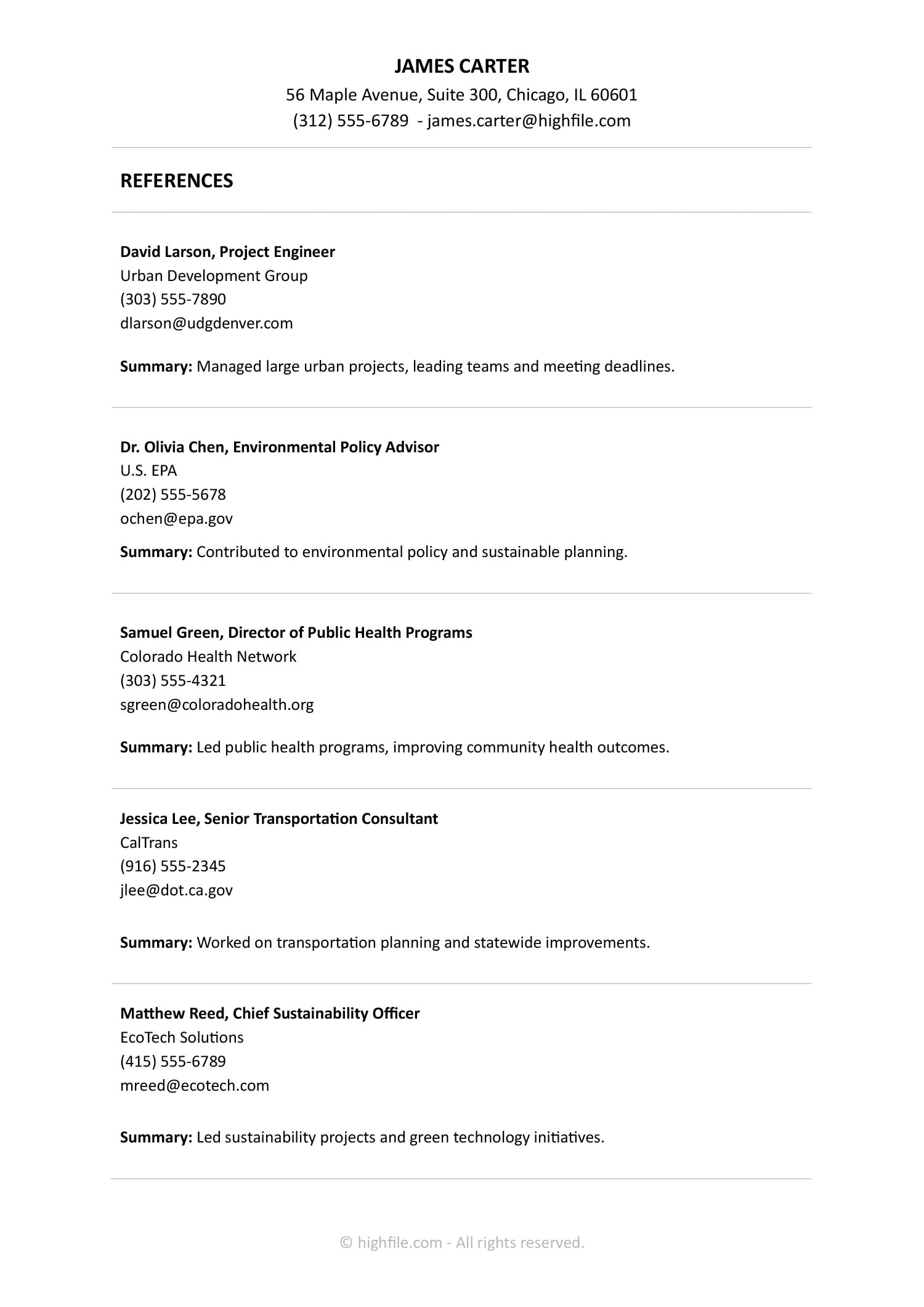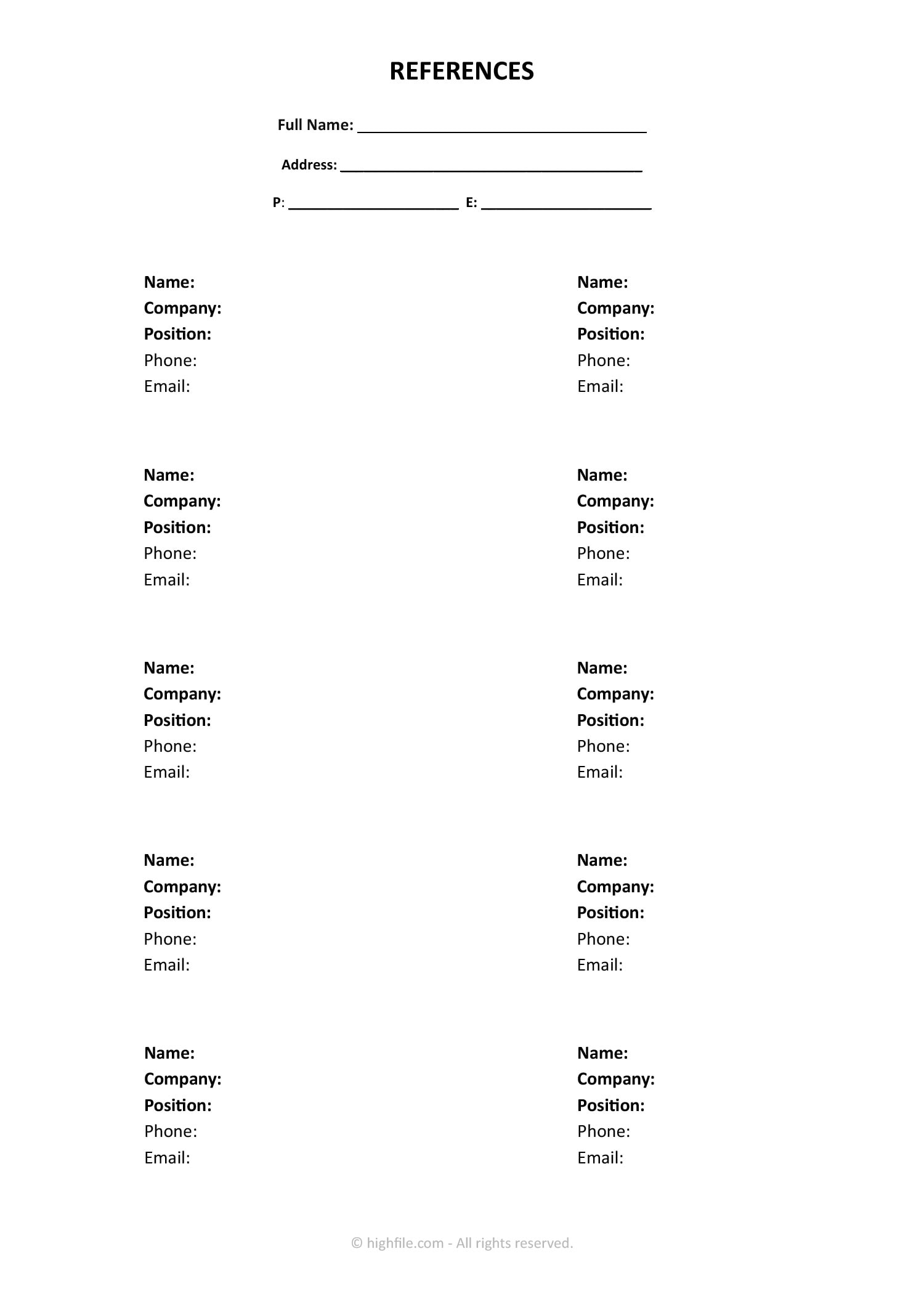




When someone asks for references, it usually comes with a short deadline and a long list of other things you are already juggling. This Reference Sheet Template is designed for job seekers, students, contractors, and volunteers who want a professional document ready to share as soon as it is requested. It separates your references from your resume, keeps each contact in a readable entry format, and reduces the chance of details getting missed when a recruiter is scanning quickly.
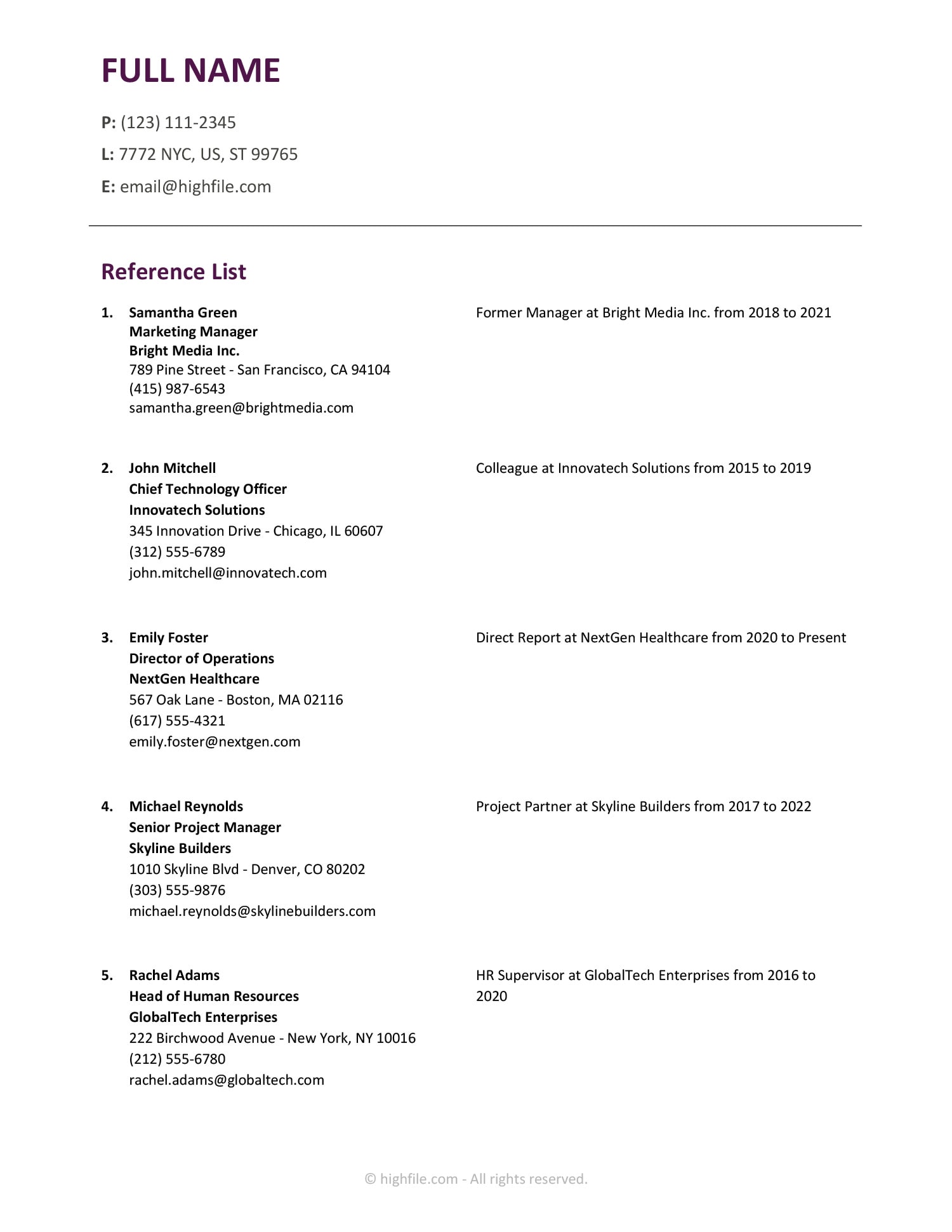
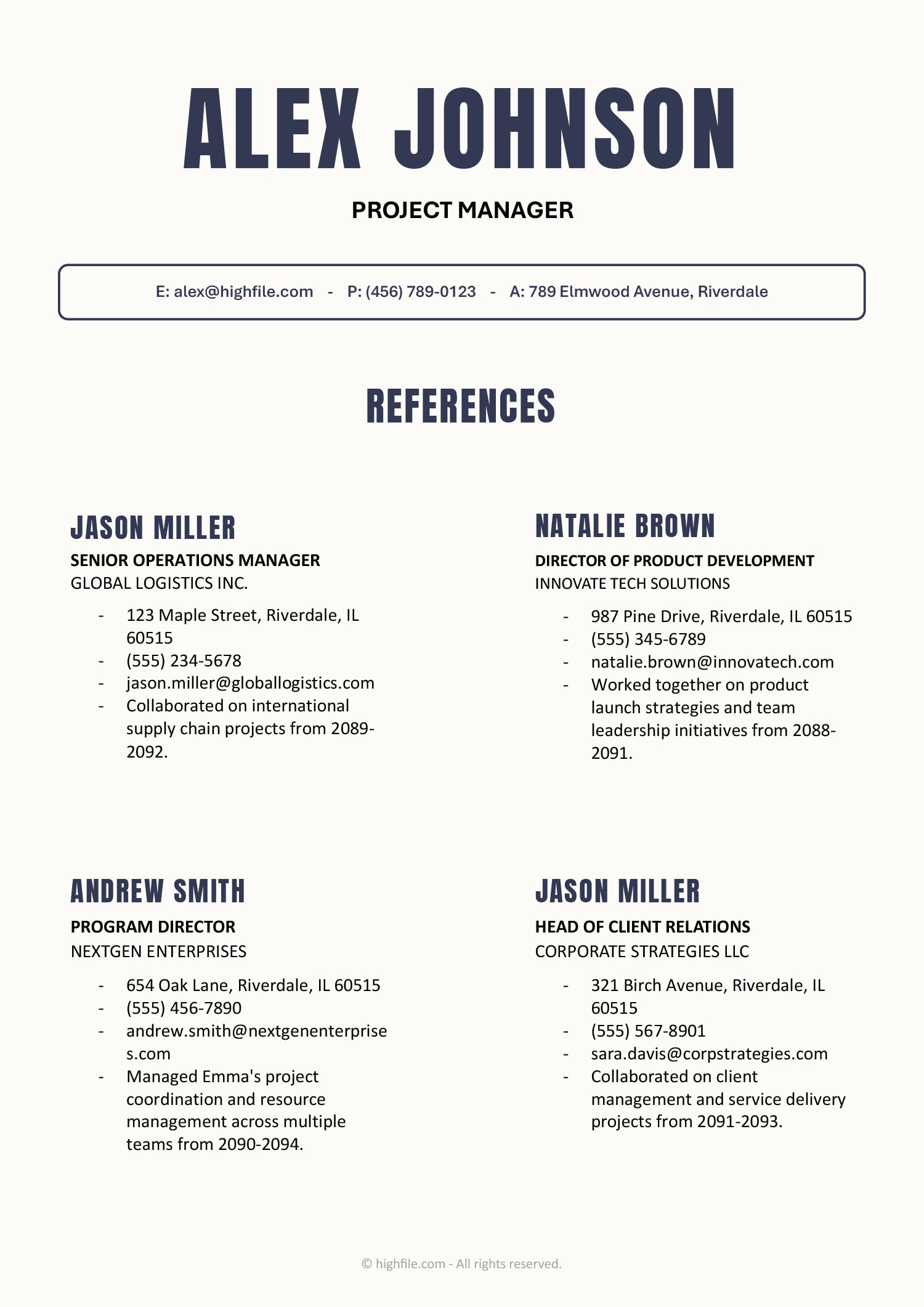
The layout gives you space for up to four references, plus your own name and contact details. Each reference entry follows a simple order so the reader can move from the person’s name, to their role, to the best way to reach them, and then understand your connection in one short line.
How to Use the Template
Start by replacing the name at the top with your own. Add your email and phone number in the contact line so the reference sheet can be matched to you even if it is downloaded, printed, or forwarded. If you include an address, keep it to what the application requests. Many situations only need city and state.
Next, replace the sample reference entries with your real references. Each entry is designed to hold the key information a reviewer looks for.
Use the name line for the reference’s full name as they prefer it in professional settings. The job title and organization lines should reflect their current role if possible, since this is what a recruiter will use to understand their authority and context. Add a phone number and email address that your reference actively checks. If your references may be contacted internationally, include a country code so the number is unambiguous.
The relationship note line is where this template becomes more than a contact list. Keep it short, specific, and job relevant. Mention how the person knows you, what type of work they observed, and a time range if it adds clarity. Avoid personal details and keep the wording factual.
If you need more than four references, duplicate one full entry and place it below the others. If you only need two or three, delete the extra entries and close the spacing so the page stays tidy. In Google Docs, paste using the existing formatting so the document stays uniform after edits.
Before You Send It
A reference sheet includes personal contact details, so a quick final check is worth it.
- Confirm permission and make sure each person knows they are listed and what role you are applying for.
- Verify contact details by checking spelling, phone digits, and email addresses.
- Order references by relevance so the most role related reference appears first.
- Use a clean file name such as your name plus “References,” then export to PDF if the portal asks for a locked format.
Choosing and Preparing References
Choose people who can speak directly about your work, reliability, and communication in a real setting. Managers, team leads, internship supervisors, professors, advisors, and volunteer coordinators are common choices because they can describe what you did and how you did it.
Before you share the sheet, send each reference a short message with the role title, the organization name, and two or three reminders of projects or responsibilities you want them to emphasize. If you have a job description, sharing it can make their feedback more targeted. If a reference is from your current workplace and you prefer discretion, you can keep them listed for later stages and use other references early in the process.
FAQs
Many employers request three to five references. If the application specifies a number, follow that instruction. If no number is provided, three strong references is usually enough, and you can keep one or two additional names ready in case the employer asks.
Write one sentence that explains your working or academic relationship and what the person observed. Mention your role or the type of work, and add a time range if it reduces confusion. Keep it professional and focused on performance.
Often, phone and email are enough. Include a full mailing address only if it is requested by the employer or commonly required in your field. If you want a lighter option, you can list city and state, then share a full address later if asked.
Yes, as long as you have a reliable way for an employer to reach them. Use the contact method the reference approves, such as a work phone, work email, or office main line with an extension. If they prefer email only, make sure the employer is likely to accept that.
It is a good idea during active interview stages. Share the role title, the organization name, and the general timeframe so they are not caught off guard. This also gives them a moment to recall relevant projects and results.