
Reference List Templates
Someone reads your reference list to decide if they can trust you, a hiring manager calling a former boss, or a grader checking that your sources are real. These reference list templates keep each entry consistent and complete, the contact details a recruiter needs or the citation parts a style guide demands, so nothing reads as missing or sloppy. Start from the one that matches your purpose, employment, academic, or personal, and fill it with your own entries.
 ×
× ×
× ×
×

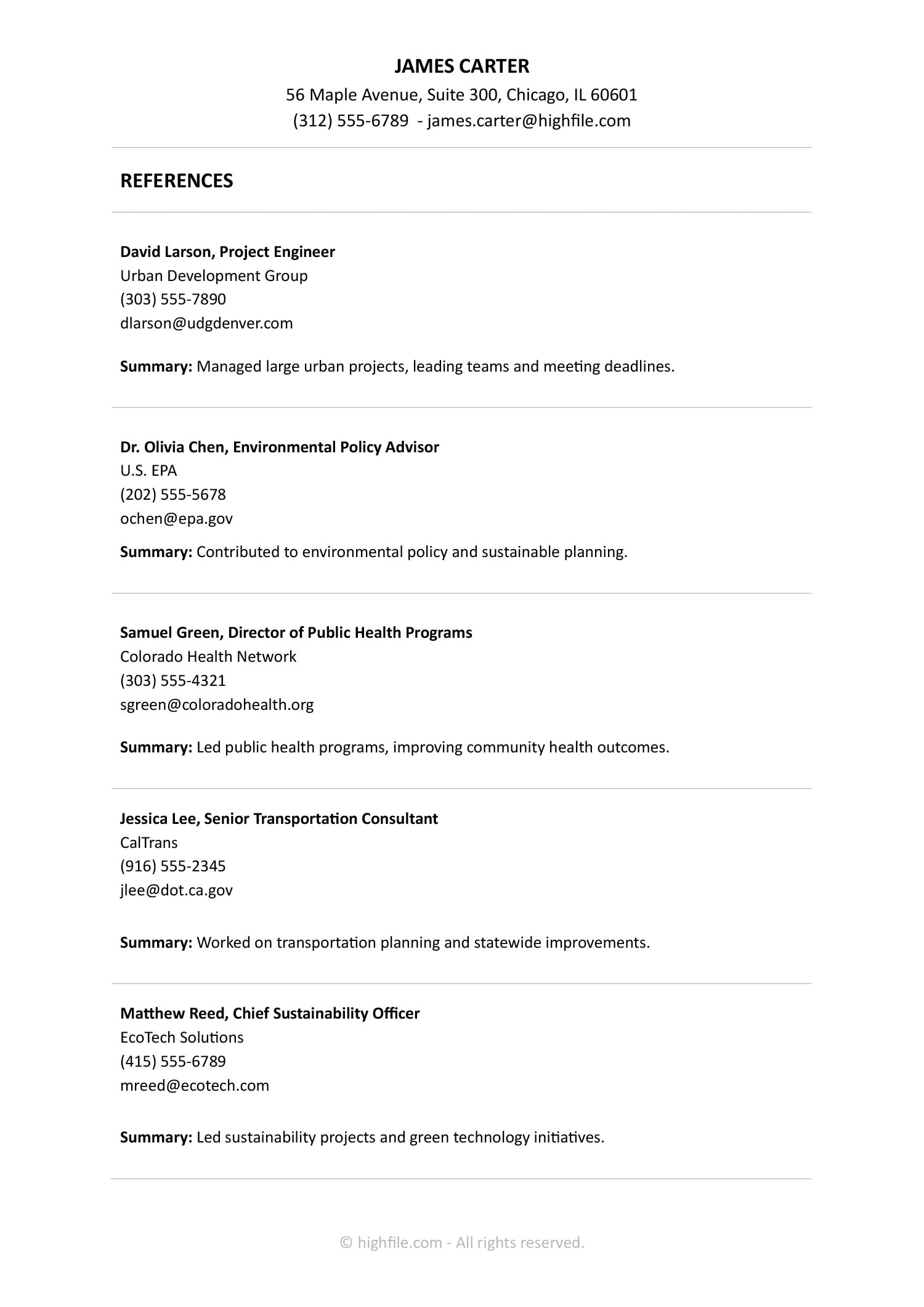
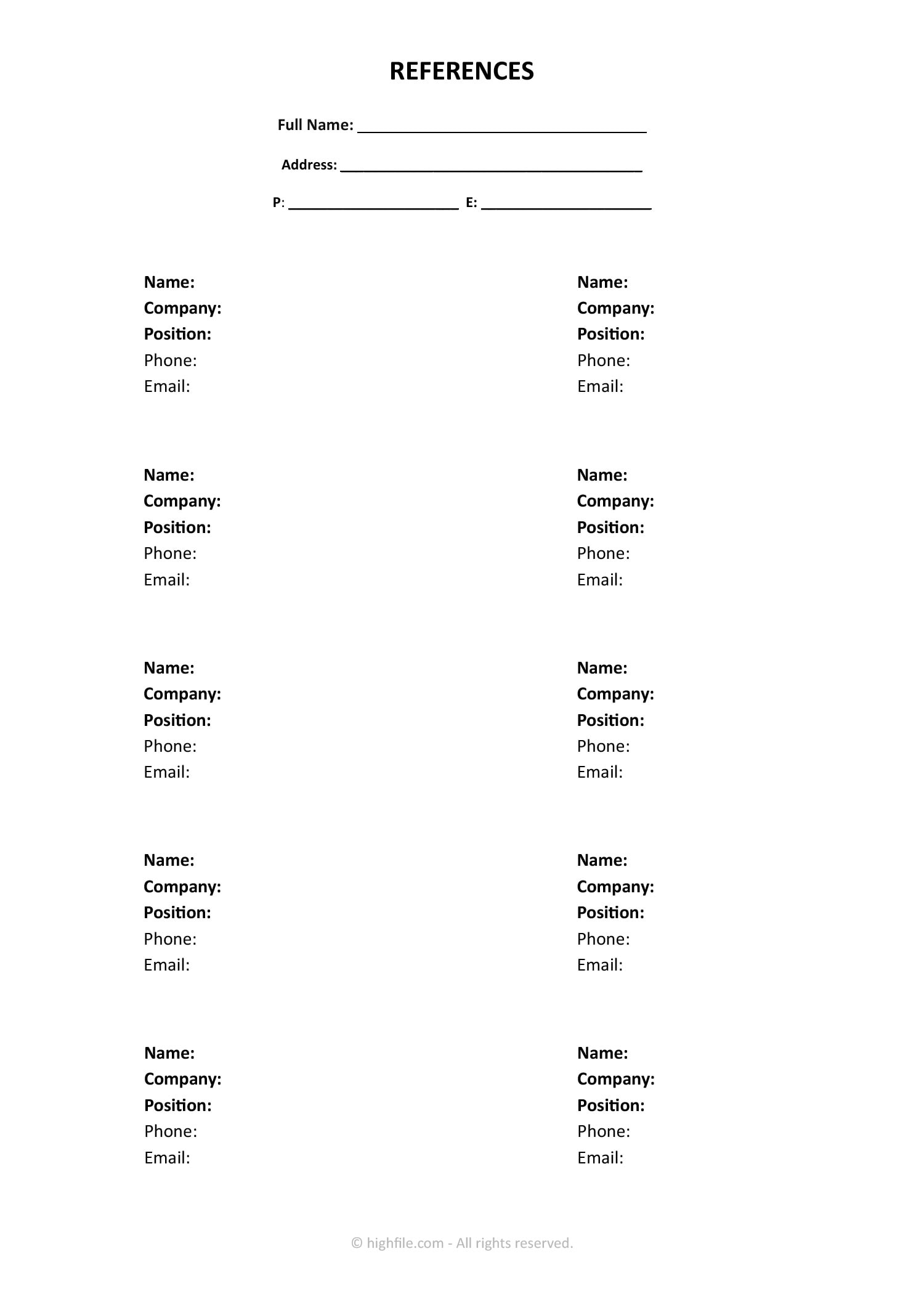


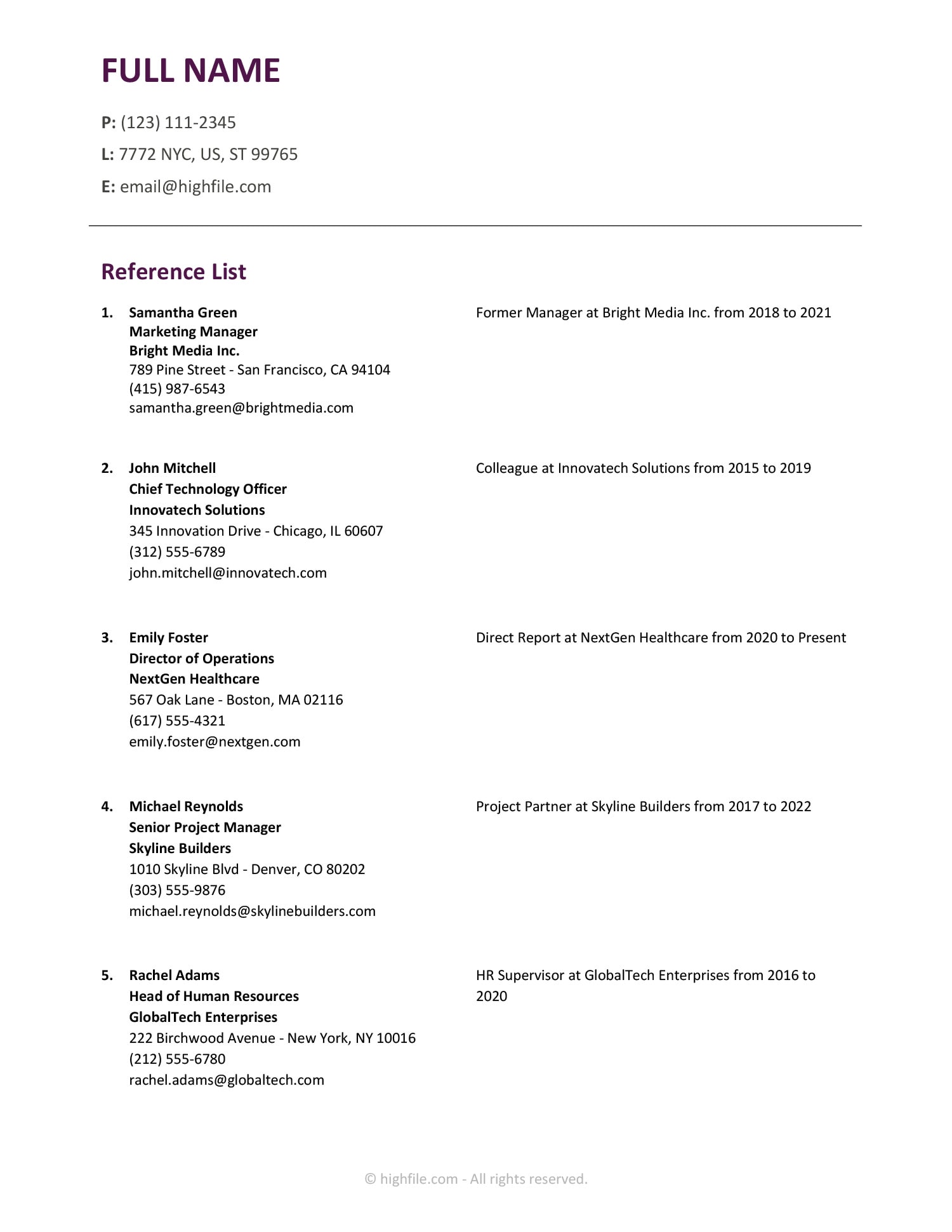

A reference list does its job when the person reading it can act on it without friction. For a job application, that means a recruiter can reach each contact and knows at a glance how they worked with you. For a paper, it means a reader or grader can find every source you cited and see that the formatting follows the required style. The two purposes look different on the page, but both fail the same way, through a missing detail or an inconsistent entry that makes the whole list read as careless.
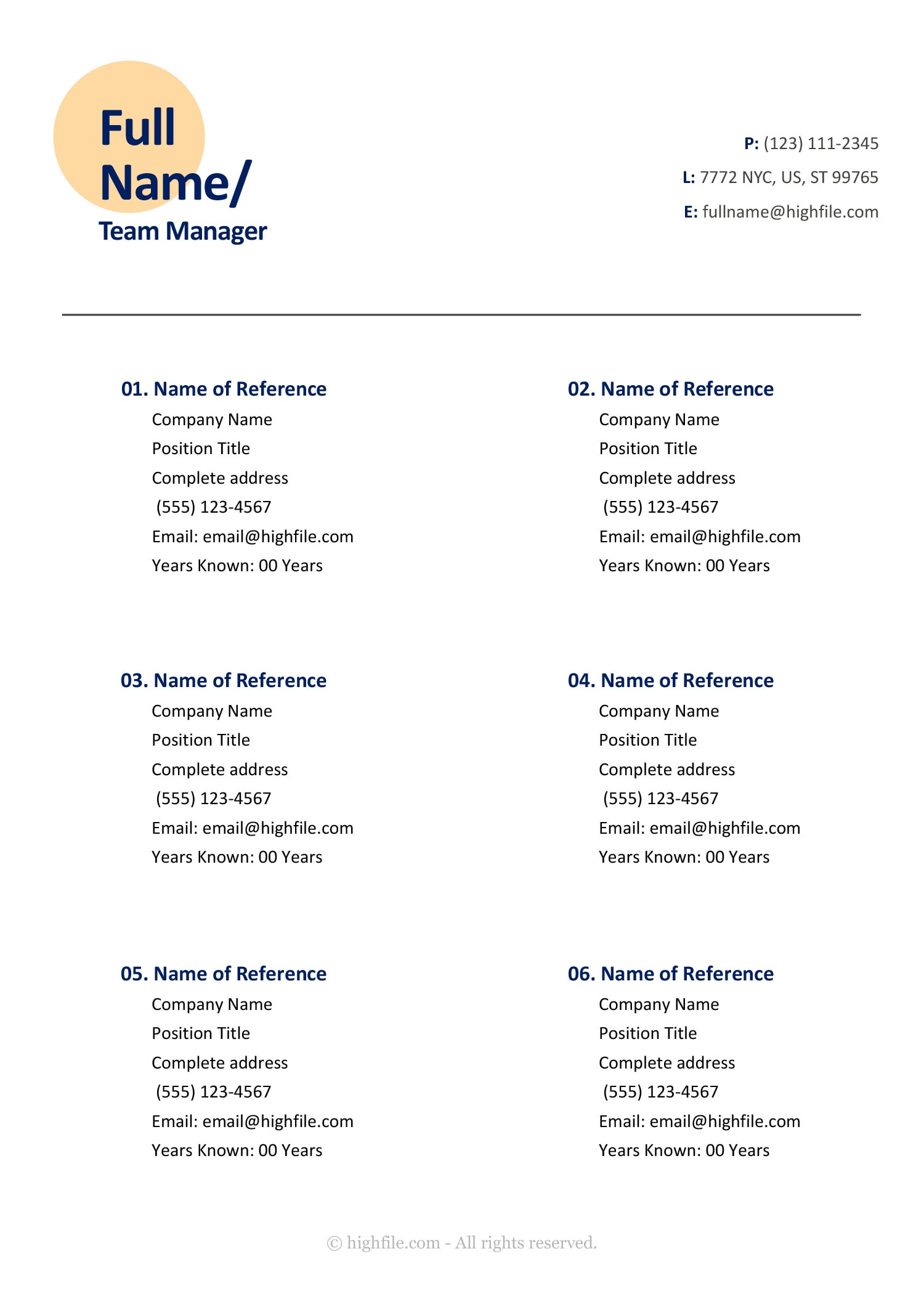
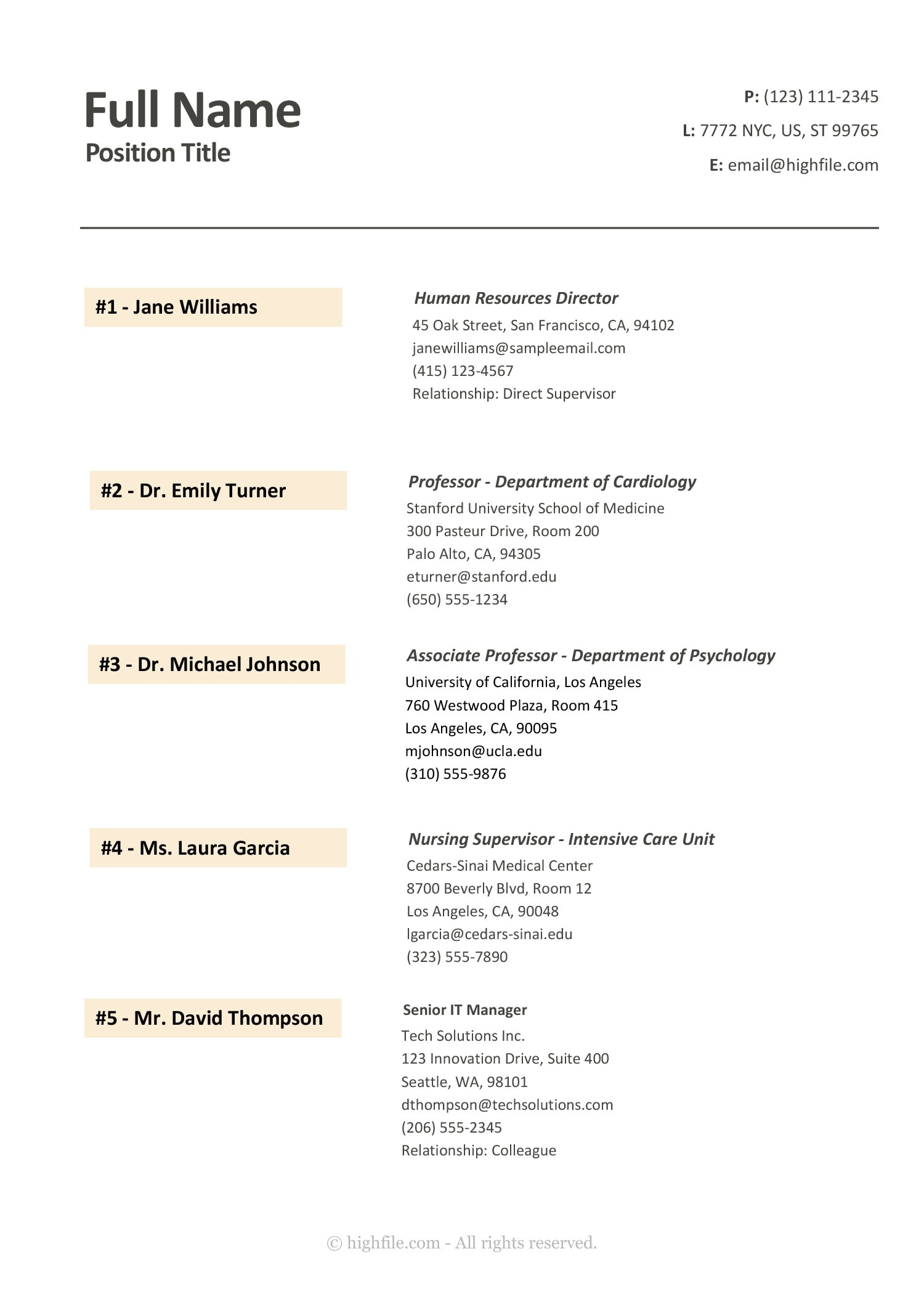
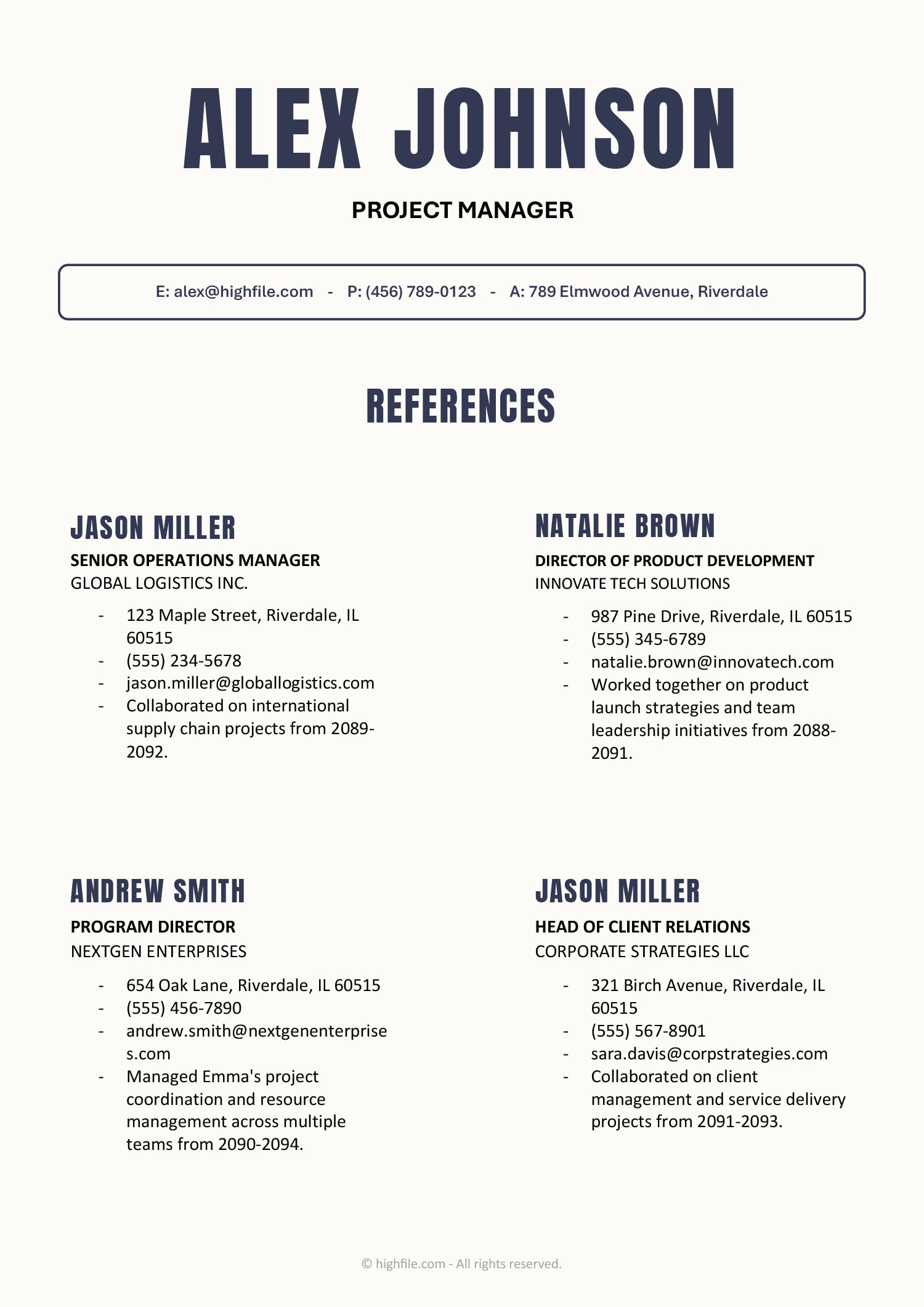
An employment reference list names people who can confirm your experience, usually three to five, with their title, company, and the contact details that let someone actually reach them, plus a line on how you worked together. An academic reference list documents the sources behind a paper in a citation style such as APA, MLA, or Chicago, where punctuation, order, and indentation each follow rules a grader checks. These reference list templates handle both, and a personal version for character references too, so the entries stay uniform and complete for the kind you are building.
Worth knowing: Ask a reference before you list them, and tell them what role you are applying for. A contact caught off guard by a recruiter's call gives a hesitant, vague answer, while one who expected it and knows the job can speak to the experience that matters.
What goes in a reference list
The fields an employment list needs and the parts a citation requires.
The reference's complete professional name, so a recruiter knows exactly who they are calling and the entry matches how the person introduces themselves.
Their role and organization at the time you worked together, which tells the reader the level and context the reference can speak to.
A reliable phone number and a professional email, the part the list exists for, since a reference no one can reach adds nothing to your application.
A short line on how you worked together, such as a direct supervisor during a two-year role, so the reader knows what experience the contact can confirm.
For academic lists, the author, year, title, and source details a style guide requires, arranged in the order and styling that guide sets out.
Page ranges, edition numbers, DOIs, or URLs that let a reader locate the exact work, included or omitted according to the source type and citation style.
Building a reference list that gets used
From picking the right kind to a list a recruiter or grader can act on.
Decide first if you are building an employment, academic, or personal reference list, since each follows different conventions for what to include and how it appears. Building the wrong kind means redoing it.
For a job, pick contacts who can speak to the experience the posting asks for, not just the most senior names you know. A direct supervisor on relevant work beats an executive who barely saw you.
Reach every reference before listing them, confirm the best contact details, and tell them the role so they can prepare. This is the step that turns a name on a page into a useful endorsement.
For academic lists, follow the required style, APA, MLA, or Chicago, down to the punctuation, capitalization, and order of elements. A grader checks these, so a near-miss still costs marks.
Tip — APA, MLA, and Chicago each style the same source differently, so confirm which one the assignment or journal requires before you format a single entry, rather than converting the whole list later.
Put academic entries in alphabetical order by author surname with hanging indents, and keep employment entries in a consistent, readable order. Uniform spacing is what makes a list read as careful.
Format an employment list to match the look of your resume and cover letter, the same font and header, so the documents read as one set rather than pieces assembled at the last minute.
FAQs
What is the difference between a reference list and a reference letter?
A reference list is your set of contacts or sources, names, titles, and contact details for people who can vouch for you, or the citations behind a paper. A reference letter is a written endorsement composed by one of those people. The list points a reader to who can speak for you; the letter is what they say. Reference letters are a separate kind and sit under the letter templates rather than here.
How many references should an employment list have?
Three to five is the usual range. That gives an employer enough voices to confirm your experience without padding the list with contacts who barely knew you. Choose people who can speak to the specific role over those with the most impressive titles, and only list someone you have asked first.
Which citation style should an academic list use?
The one the assignment, journal, or institution requires, since they are not interchangeable. APA is common in the sciences and social sciences, MLA in the humanities, and Chicago in history and some publishing. The required style governs punctuation, ordering, and indentation, so confirm it before formatting and apply it consistently across every entry.
Should I put references on my resume?
Usually no. A separate reference list keeps your resume focused and you share contacts only when an employer asks, which also gives you a chance to brief each reference first. “References available on request” is no longer needed either; just have the list ready as its own document.