
Class List Templates
A class list is the one place a teacher can find every student’s name, contact, and standing without hunting through three other documents. These class list templates give that record a fixed shape, with a row for each student and columns for the details a classroom actually runs on, so a roster is ready before the first day rather than rebuilt each term. Set the class details at the top, add your students, and the roster is yours to use all year.






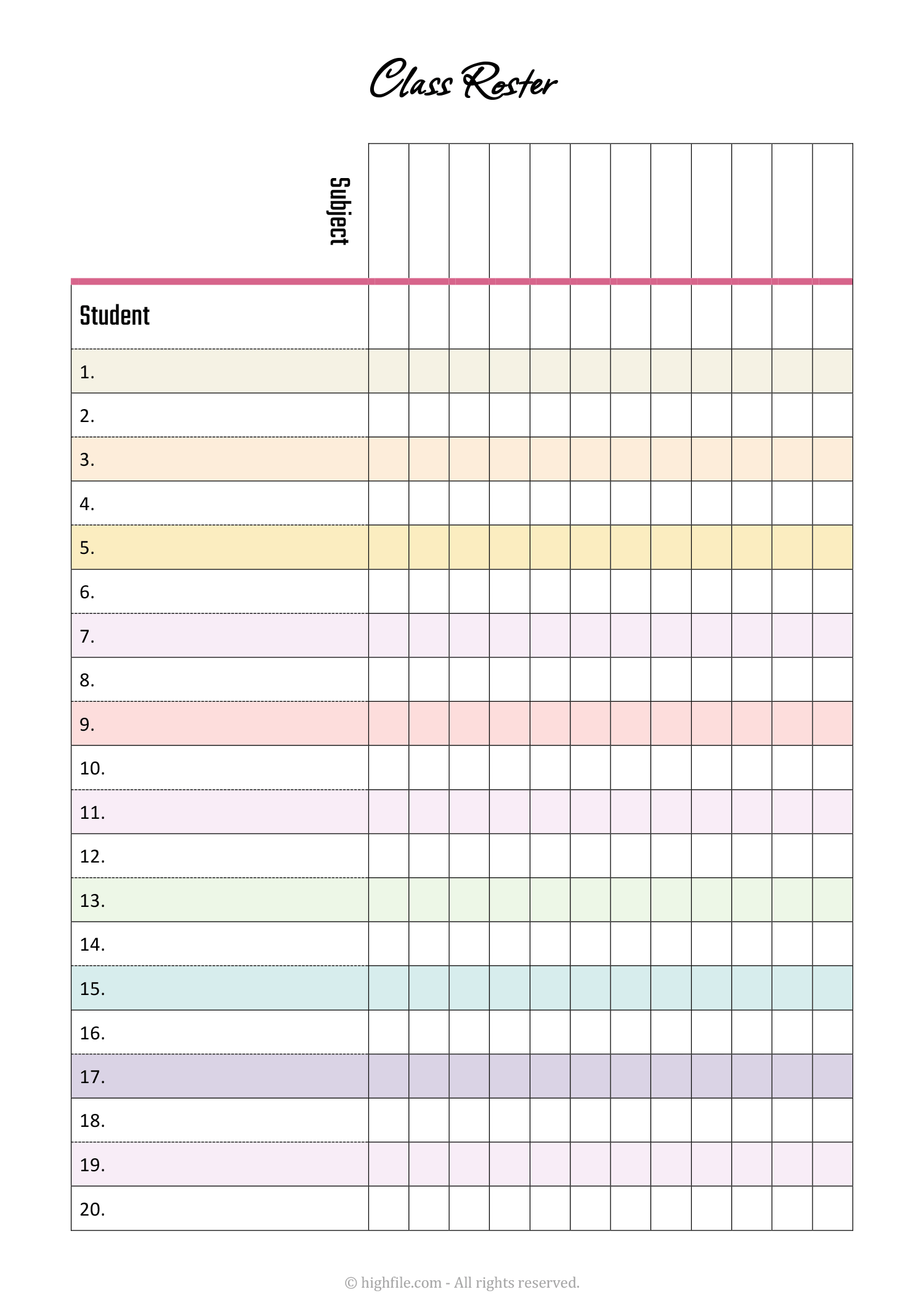

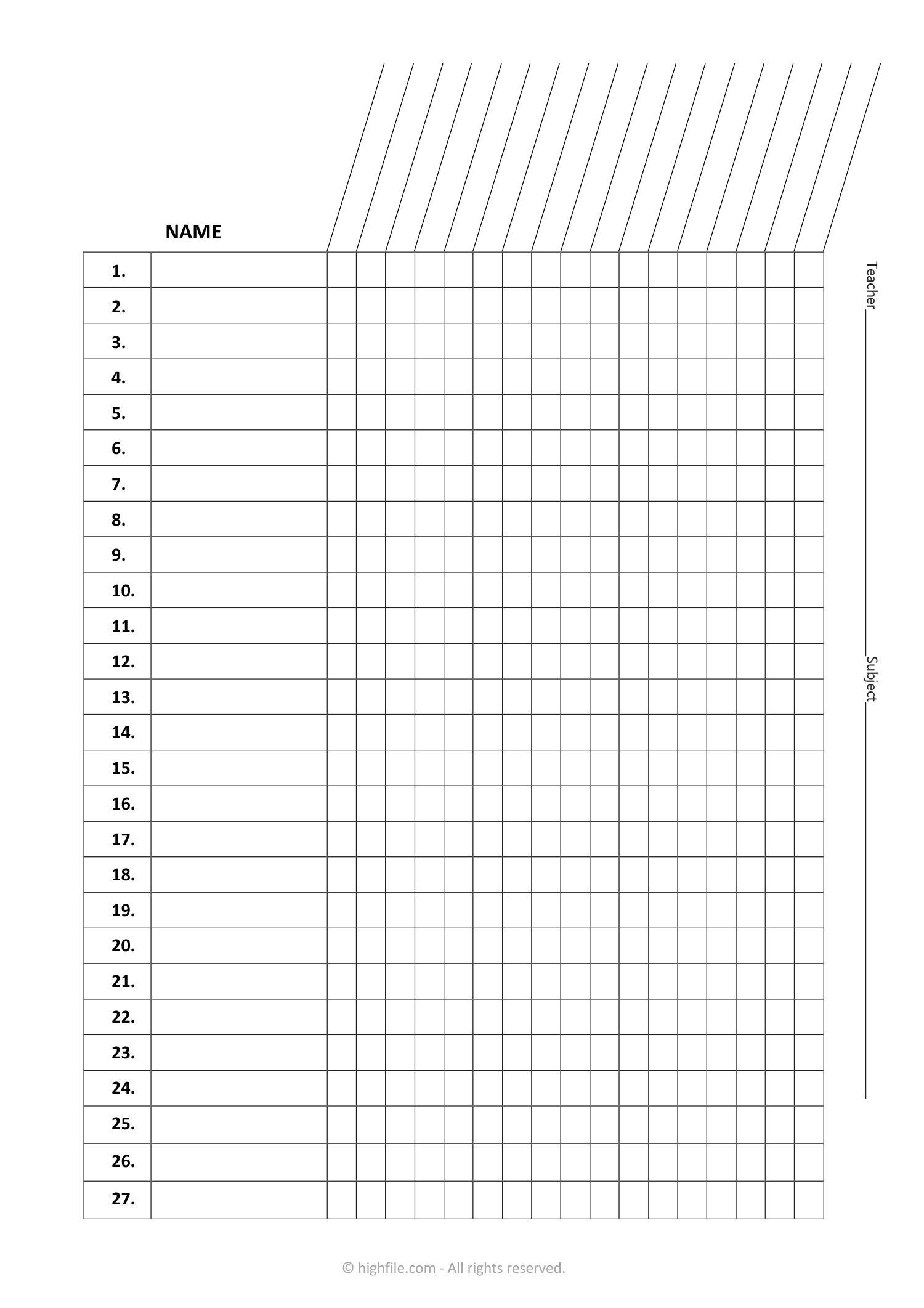

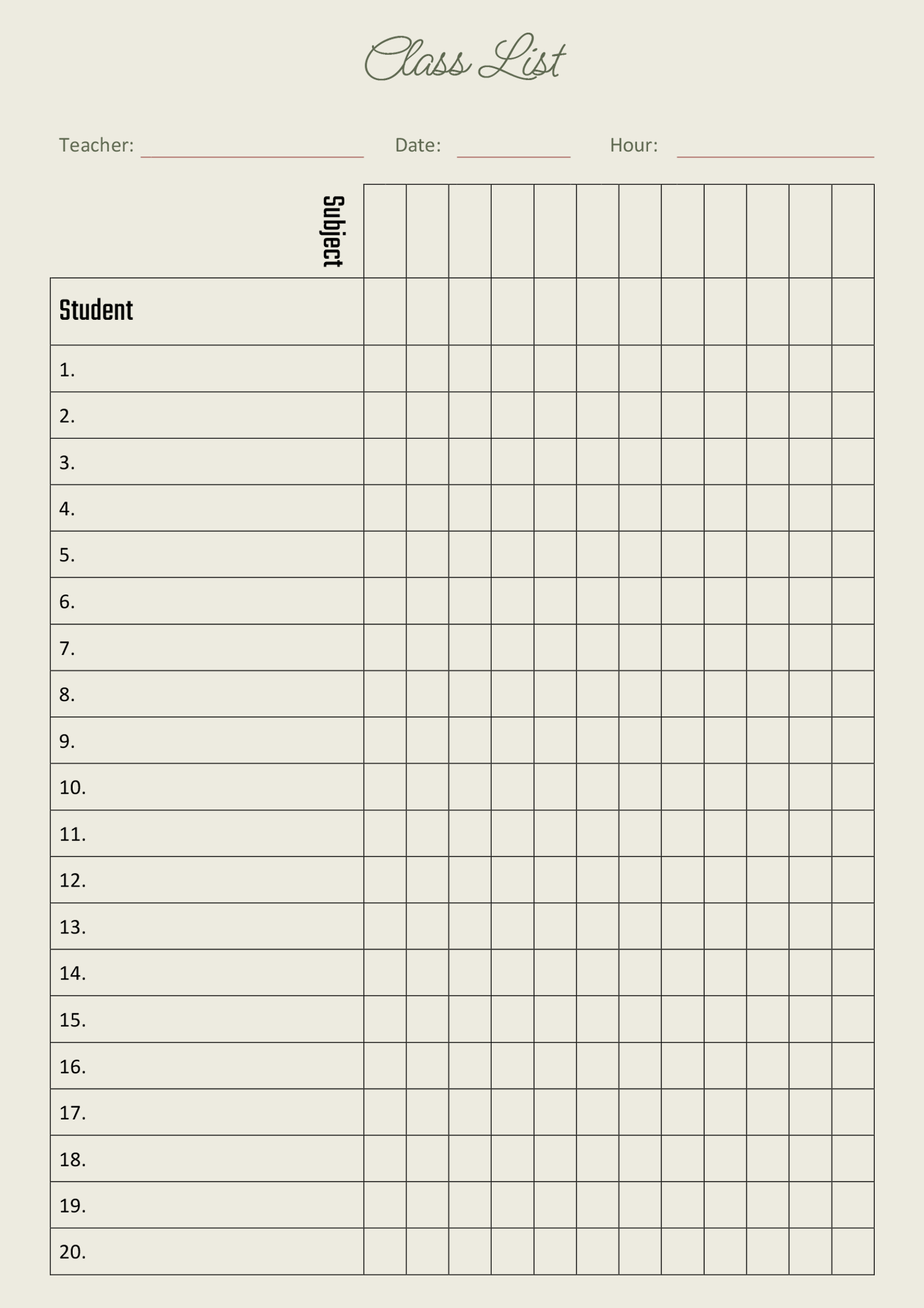



A class roster does more work than its plain look suggests. It is the reference a teacher reaches for to take attendance, contact a parent, check the seating, and record how each student is doing, so the information it keeps has to be both complete and quick to read at a glance. These class list templates are built around that daily use, giving each student a row and each detail its own column, so nothing important is kept in someone’s head or scattered across loose notes.
Who keeps a class list reaches well past the homeroom teacher. Substitutes need one to run a room they do not know, club and activity leaders track who belongs to the group, tutoring centers and co-ops keep their own rosters, and front offices hold a master copy for the whole grade. Because student details include things a school is responsible for protecting, a good roster also keeps that information in one controlled document rather than spread across emails and sticky notes. You fill in the level of detail your setting calls for and leave the rest blank.
Worth knowing: Student records include information a school has a duty to protect, so keep the roster to what you actually use and store the filled copy where only staff can reach it. A birthday column is handy for a homeroom; a home address is not something to leave on a shared classroom desk.
What's on a class list template
The columns that turn a list of names into a working roster.
A row per student, the spine of the roster that every other column reads against. Some layouts split first and last name so the list can sort either way.
An identification number beside each name, so a student can be matched to grade and attendance systems without relying on spelling alone.
Student email, and parent or guardian name and phone, so reaching a family takes one look at the roster rather than a search through separate files.
The subject, section, or grade level the list belongs to, named at the top so a roster is never mistaken for another class.
Dated columns across the week for marking present or absent, turning the roster into an attendance record without a second sheet.
Space for reading level, accommodations, or a short note on each student, the context that does not fit a single box but matters during the term.
Building your class roster
From a blank table to a roster you can rely on for the year.
Set the subject, section, and term at the top so the roster identifies itself. A teacher with several sections wants to tell them apart at a glance, not by counting names.
Keep the columns to the details your room actually uses. A homeroom may want birthdays and parent contacts; a single-period class may need only names and IDs. Fewer columns make a roster faster to read and easier to protect.
Enter one student per row, last name first if you want it to sort that way. On the spreadsheet layout the list reorders itself once the names are in.
Tip — Paste a class list straight from your school's system into the spreadsheet version rather than retyping, then add only the columns the export left out.
Label the dated columns for the days you meet, so the same roster records attendance instead of a separate sheet. A weekly layout gives each student a row of marks at a glance.
Note reading levels, accommodations, or seating in the notes column. These are the things a substitute or a new aide needs to run the room without you in it.
Print a clean copy for the wall or a clipboard, and store the version holding contact details where only staff can reach it. A roster of student data is not a document to leave face-up on a shared desk.
FAQs
What should a class list include?
At a minimum, each student’s name and a way to identify them, such as an ID number. Beyond that, add only what your room uses, such as contact details for reaching families, an attendance grid, and a notes column for levels or accommodations. A roster crowded with columns you never fill is slower to read and keeps more student data than you need.
Which layout suits attendance versus contact details?
For attendance, the weekly roster gives each student a row of dated marks, so a glance shows who was in. For contact and reference details, the spreadsheet or student roster layout has the columns for IDs, emails, and parent phone numbers. Some teachers keep both, one on the clipboard and one in the office.
Can I sort or reorder the list after I fill it in?
On the spreadsheet version, yes. Enter names with last name first and the list sorts alphabetically, and you can reorder by any column you add. On the document versions the order is fixed as typed, so decide the order before entering a long class.
How should I handle student contact information?
Treat it as data the school is responsible for. Keep the copy with emails, addresses, and phone numbers to staff access, and use a plain names-only print for anything posted or carried around. Collecting only the contact fields you actually use also keeps the roster easier to protect.