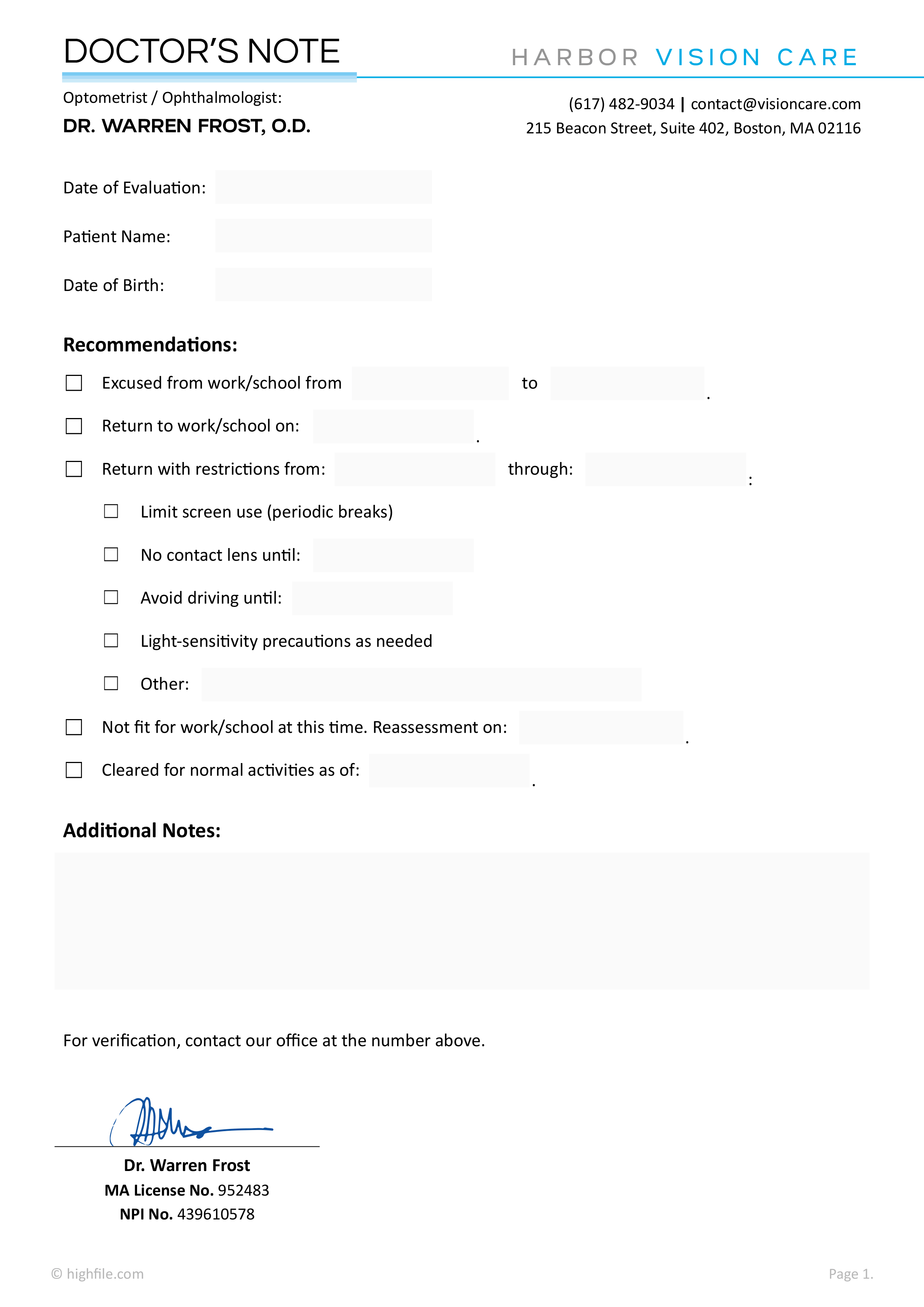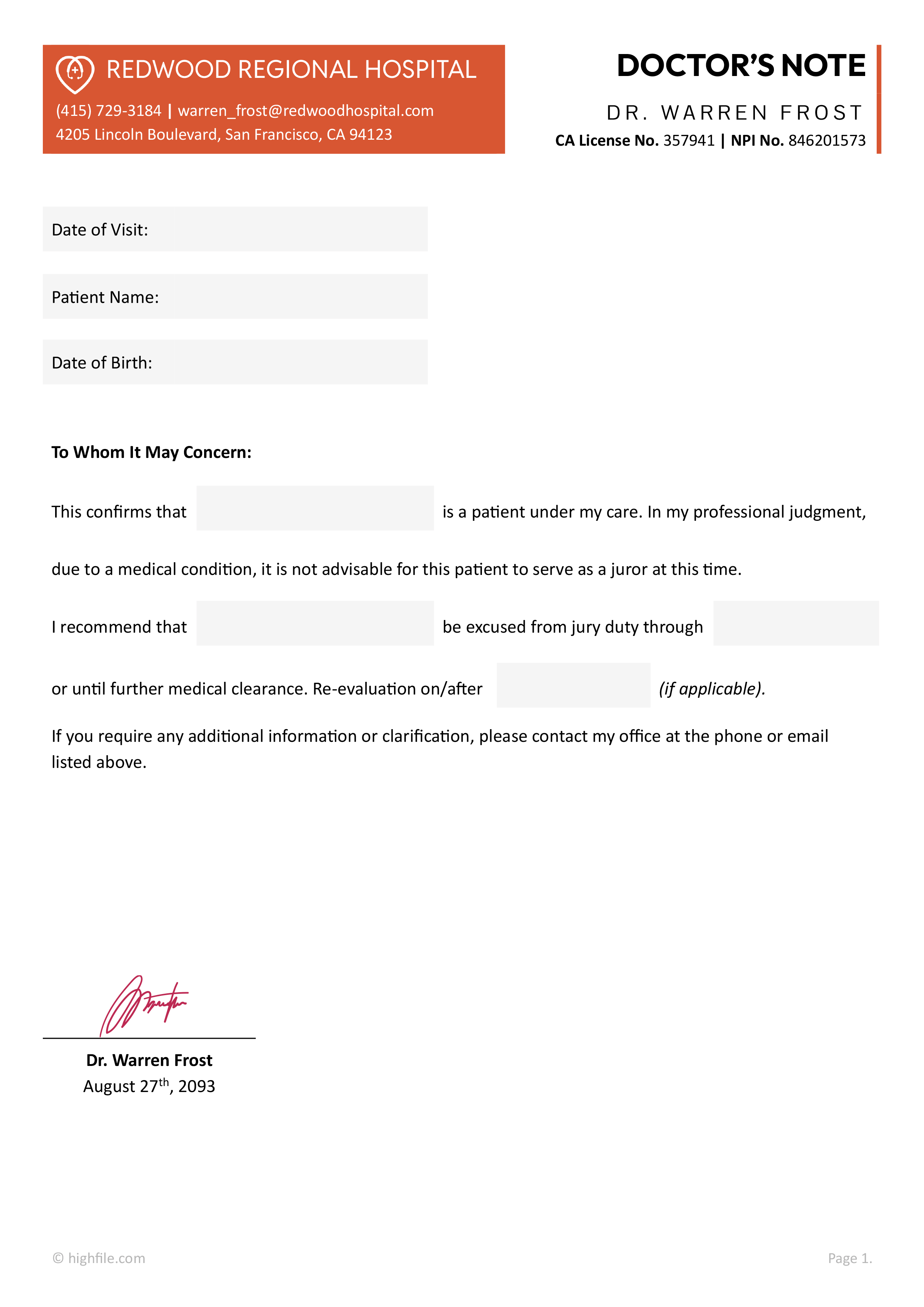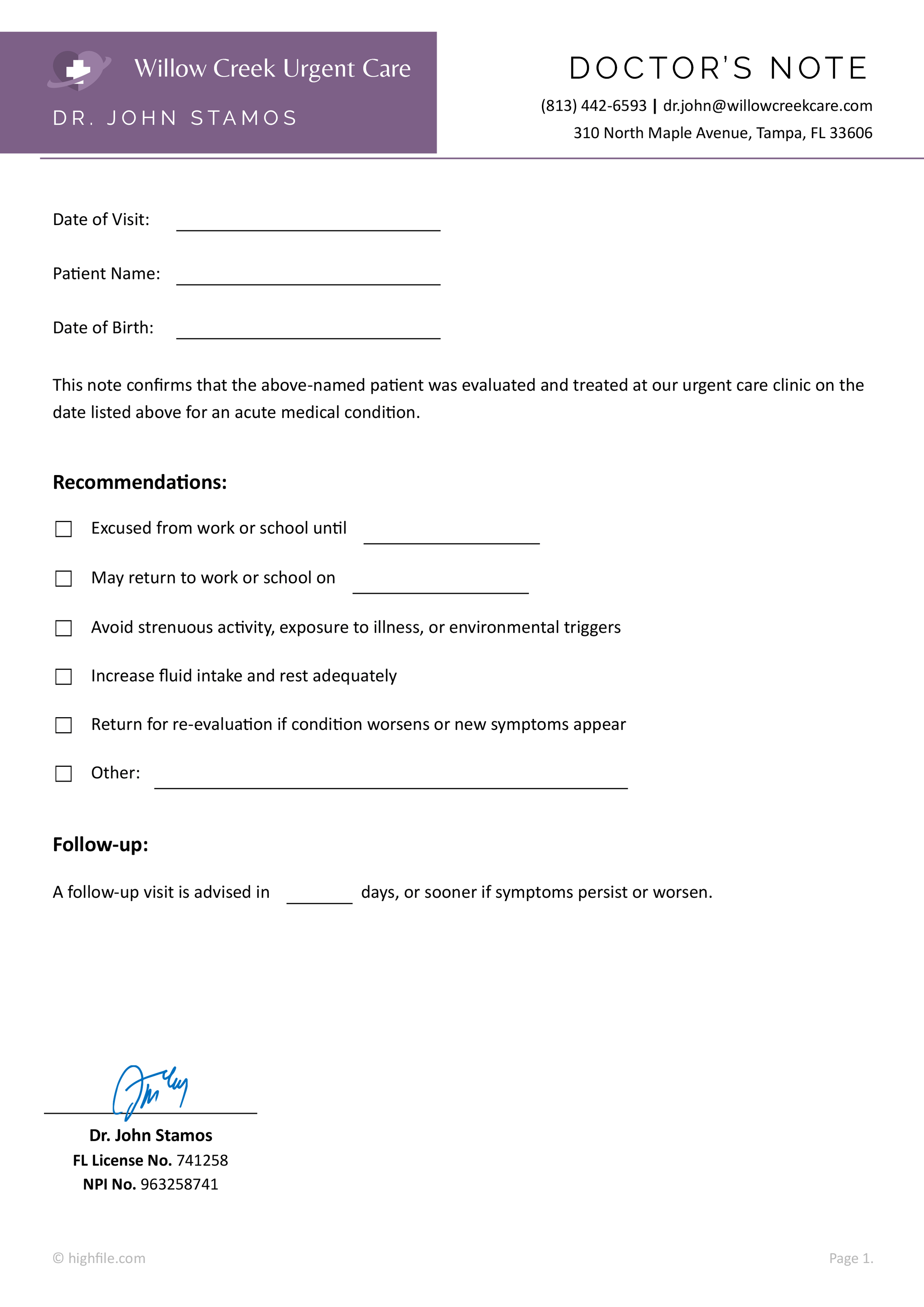




An urgent care visit may leave an employee needing written documentation for work. A supervisor, HR department, or attendance office may ask for a note that confirms the patient was seen by a medical provider and given guidance about time away from work or a return date. This urgent care doctor’s note for work is designed for that purpose. It gives clinics a formal format for documenting the visit, confirming treatment, and recording the provider’s work-related recommendation in a way an employer can review easily.
The template is intended for short-term medical situations that affect attendance, such as an illness, minor injury, or another condition treated in urgent care. Instead of turning the note into a long medical letter, it keeps the focus on the details a workplace usually asks for after an absence. The note confirms the date of care, identifies the patient and provider, and records the instruction given after the visit. The sections below explain how each part should be completed and used.
Clinic and Provider Information
The header identifies the clinic and the provider issuing the note. This section should show the clinic name, provider name, phone number, email address, and office address. These details tell the employer where the patient was seen and who issued the documentation.
Before regular use, the clinic should replace any sample branding or placeholder details with its own information. A work note may be questioned if the contact details are incomplete, outdated, or inconsistent with other clinic paperwork.
Patient and Visit Details
The next fields record the date of visit, patient name, and date of birth. These details connect the note to the patient encounter and should match the chart and any discharge instructions issued during the same visit.
The visit date is especially important in work documentation because it shows when the patient was actually evaluated. If the provider excuses the patient for additional days, that recommendation still needs to be tied back to the date care was given.
Visit Confirmation Statement
The main statement confirms that the patient was evaluated and treated at the urgent care clinic for an acute medical condition. This wording is useful because it verifies the medical visit without disclosing diagnosis details that may not be necessary for workplace review.
That makes the template suitable for common urgent care situations such as flu symptoms, stomach illness, migraine, dehydration, infection, allergic reaction, or a minor injury that affects the patient’s ability to work for a short period. The note confirms that care was provided and that the provider issued medical guidance connected to attendance or work activity.
Work Status Recommendation
The recommendations section is the main part of the note for employment use. It gives the provider space to excuse the patient from work until a stated date or confirm that the patient may return to work on a stated date. These fields should be completed carefully so the timeline is easy to follow.
If both fields are used, the dates should align. A patient excused through one date should return on the next appropriate date unless the provider intends something different and writes it clearly. Employers often focus on this section first because it affects scheduling, attendance records, and payroll decisions.
A specific return date is often more useful to an employer than a general instruction to rest. A dated work status instruction leaves less room for confusion.
Temporary Restrictions and Recovery Instructions
The checklist also includes brief recovery and restriction guidance, such as avoiding strenuous activity, avoiding exposure to illness or environmental triggers, increasing fluid intake, resting adequately, and returning for re-evaluation if symptoms worsen or new symptoms appear.
These entries are useful when the patient does not need a long absence but still should not resume regular duties immediately. They can also help explain why a patient may return to work with short-term limits after treatment. For example, a physically demanding job may call for different instructions than an office role, even when both employees were seen for an acute condition.
Other Instructions
The “Other” line is there for work guidance that does not fit the preset checklist. It can be used for instructions such as light duty, limited lifting, no prolonged standing, no driving after medication, remote work for a short period, or another restriction tied to the provider’s judgment.
This section should stay brief and job-focused. An employer usually needs the restriction itself, not a full medical explanation. A short instruction such as “No lifting over 15 lbs through [date]” is more useful than a longer clinical sentence.
When adding a written restriction, include an end date when possible. That makes the note easier to apply in a workplace setting and reduces follow-up questions.
Follow-Up Guidance
The follow-up section records that another visit is advised within a stated number of days, or sooner if symptoms persist or worsen. This section shows that the patient was given additional medical direction at the time of the visit.
It can also be useful if the patient later returns for further care or asks for updated work documentation. The note does not promise extended absence, but it does show that follow-up care was anticipated if recovery did not progress as expected.
Provider Signature and Credentials
The final section should be completed by the provider issuing the note. The signature line, printed provider name, license number, and NPI number identify the person responsible for the medical recommendation.
This part should never be left looking incomplete. In workplace documentation, provider identification matters because it gives the note authority and allows the employer to verify that it came from a licensed medical office if needed.