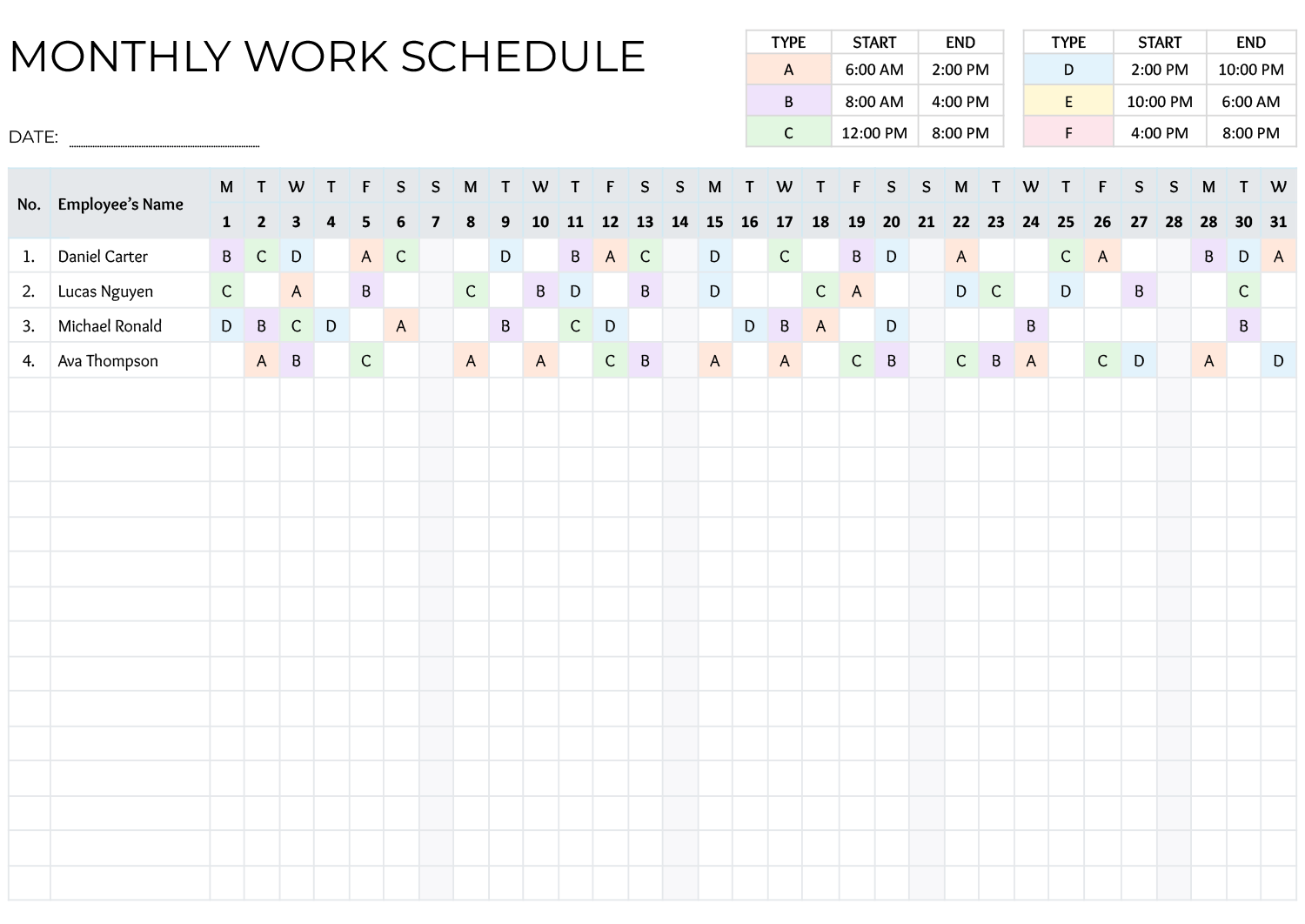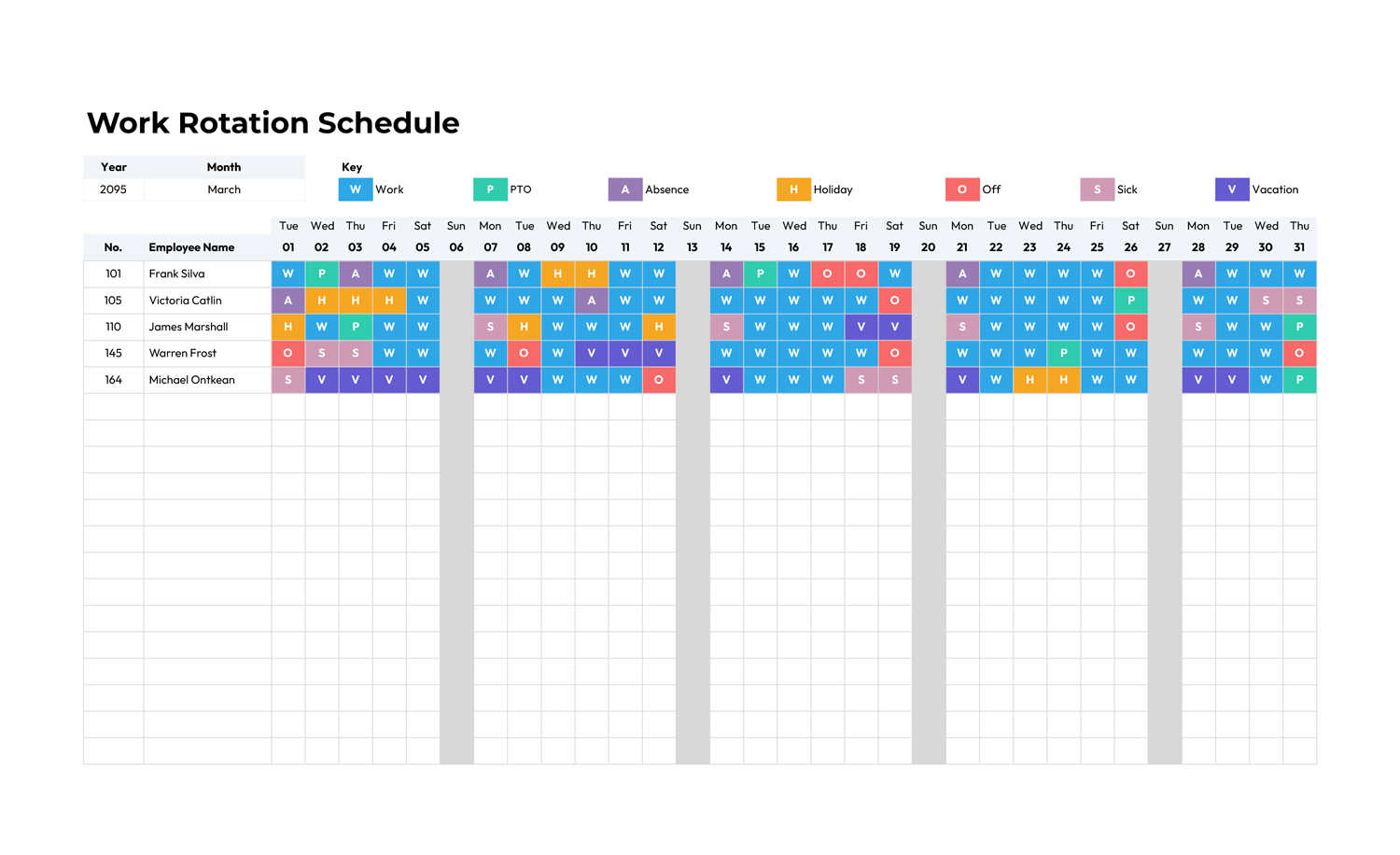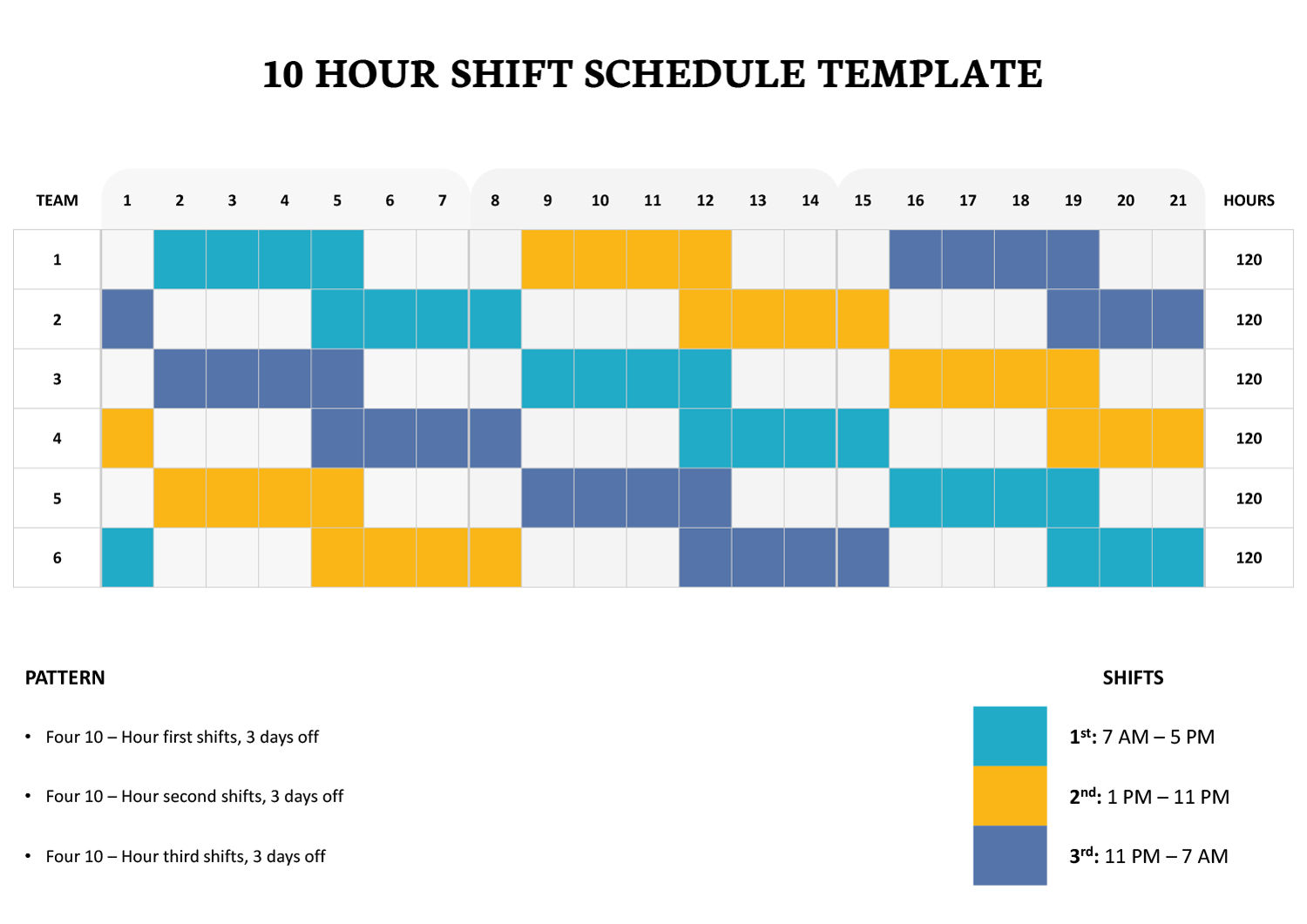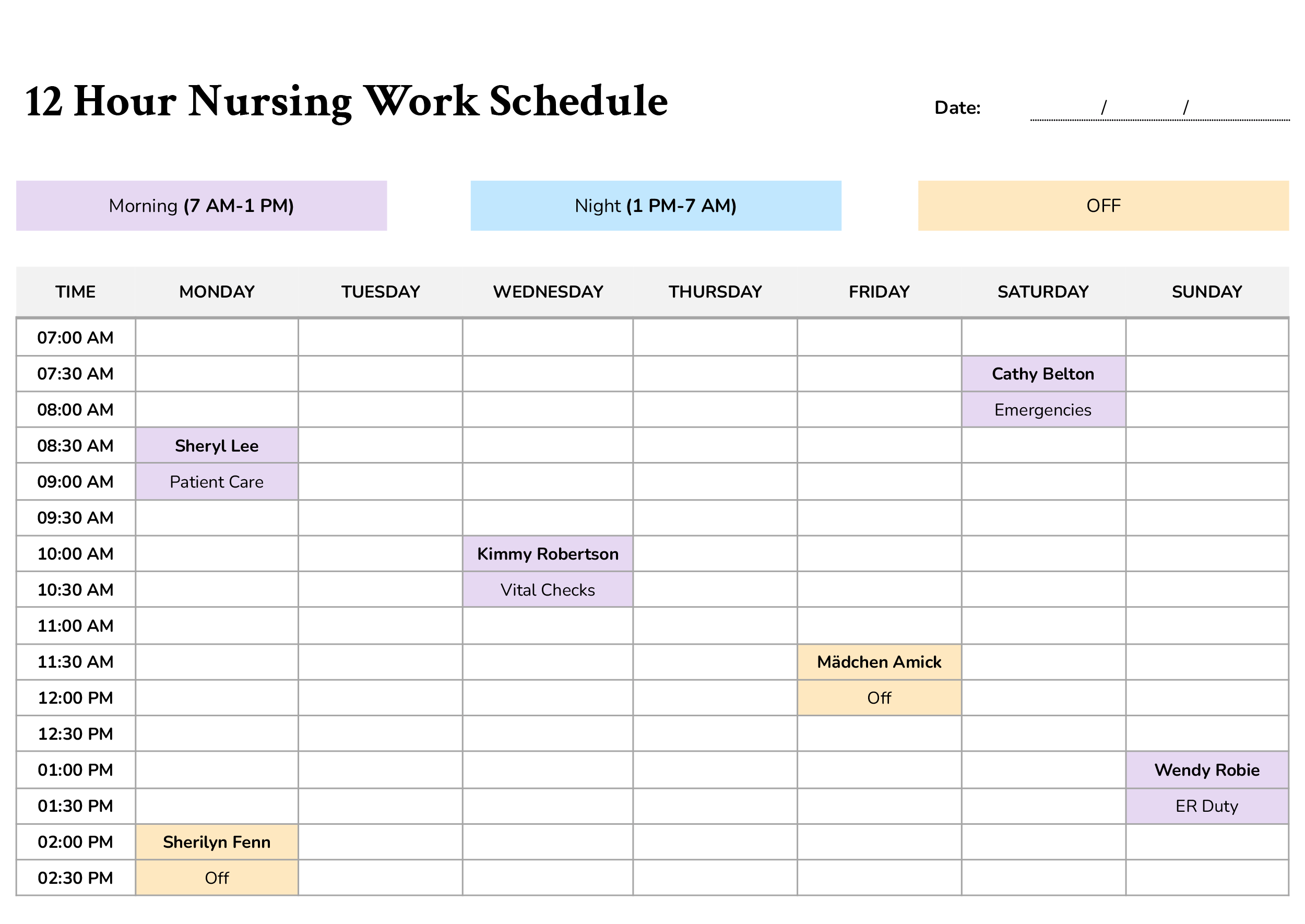



Running a 12-hour, round-the-clock operation gets complicated fast when you are rotating teams between days and nights, trying to keep coverage steady, and still giving people enough recovery time. This 2-2-3 (Panama) shift schedule template is designed for that reality. You can use it to post a clear monthly rotation for crews that alternate between day shift and night shift, using simple shift codes that are easy to read at a glance.
The shift schedule is built around a 30-day cycle with teams listed down the left and each day shown across the top. In the schedule area, the template uses D for day shift and N for night shift, with off days left blank. The legend at the top defines the standard 12-hour times shown in the file, with day shift listed as 7 AM to 7 PM and night shift listed as 7 PM to 7 AM.
Understanding the 2-2-3 Rotation in This Template
A 2-2-3 (Panama) pattern is usually chosen when you need 24/7 coverage and you want a predictable rhythm. Teams typically rotate through blocks of workdays and rest days, with a mix of two-day and three-day work stretches. In this template, that rhythm is represented directly in the grid, so a supervisor can confirm coverage quickly, and employees can check their upcoming shift type without reading a long roster.
How to Use This Panama Shift Schedule Template
If you plan schedules month after month and want to avoid typing every shift cell manually, the spreadsheet version is the better starting point. It is designed to display the full rotation with D and N codes across the month, while still leaving room for practical edits, such as renaming teams, adjusting the start point of a cycle, or adding extra rows when you have more crews than the sample list.
Add your company details and confirm shift times
Start at the top of the sheet and enter your company name and the schedule date. Then review the shift time labels for day shift and night shift. If your site uses different 12-hour times, update the labels so the posted schedule matches what employees actually work.
Review how the schedule fills D and N for each team
In the spreadsheet file, the D and N entries are generated using formulas tied to each team’s rotation pattern. This is useful when you want the month filled automatically instead of typing each shift cell by cell. The visual formatting is applied through conditional formatting so day shifts and night shifts are visually separated when the letter D or N appears in a cell.
Keep your shift codes as single letters if you want the default formatting to behave predictably. If you later add codes like PTO or TRN, you can create new formatting rules for those codes, and keep D and N as your base shift indicators.
Add, duplicate, or rename teams
Use the team name column on the left to label each crew. If you need more crews than the current list, duplicate an existing team row, then rename it. When you copy the full row across the schedule area, the formulas and the conditional formatting extend with it, which saves a lot of manual work.
Adjust the rotation pattern when your cycle differs
The spreadsheet stores each team’s rotation as a hidden text pattern, and the grid reads that pattern across days 1 through 30. If you need a different rotation, you can edit the stored pattern for that team, and the displayed D and N assignments will change across the month.
When you change the pattern, check the first week and the last week carefully before you post the schedule. A small pattern edit can shift several days later in the month, especially if you are swapping day-to-night transitions.
Match the schedule to a real calendar month
The template shows day numbers 1 to 30 and the weekday labels repeat across the top row. If your posting period starts mid-week, update the weekday labels to match your real calendar. If your month has 31 days, add one more day column and extend the formulas and formatting into the new column.
Using the Word and Google Docs Versions
The Word and Google Docs version is designed for situations where you want a document-style schedule that is easy to print, share as a PDF, or post in a workplace area. You will type in your company name and date, then edit the team names and the shift cells directly.
Because document files do not calculate rotations automatically, the best approach is to treat this version as a publishing layout. Once you finalize the shifts for the month, export it as a PDF so the posted copy does not get edited accidentally.
If you are preparing multiple months at once, duplicate the schedule table and update only the header date and the shift assignments. This gives you a reliable format for posting schedules in the same visual style every month.
When This Template Is a Strong Fit
This schedule type is commonly used in operations that require continuous coverage and clear handoffs, such as manufacturing, security teams, utilities, logistics, emergency response, and certain healthcare staffing plans. It is also useful when you need a predictable rotation that employees can learn quickly and reference without extra explanation.
FAQs
Update the shift time text in the legend area at the top so the posted schedule matches your site’s standard hours. In the spreadsheet version, this change is only a label change, so it will not affect the D and N placements. In Word or Google Docs, it is also a label change, but you should still re-check the schedule if your workplace treats “day shift” as a different time range than what employees expect.
In Excel or Google Sheets, copy an existing team row across the full schedule area, paste it below the last team, then rename the team in the left column. After that, confirm the new row displays the D and N pattern correctly. In Word or Google Docs, add rows to the table and then type the shift codes manually for the new team.
Yes. In the spreadsheet version, you would adjust the team’s stored rotation pattern so more days are marked N before switching back to D. After editing, confirm the change across the full month so the transition points land where you expect. In Word or Google Docs, you would edit the shift codes manually in the grid.