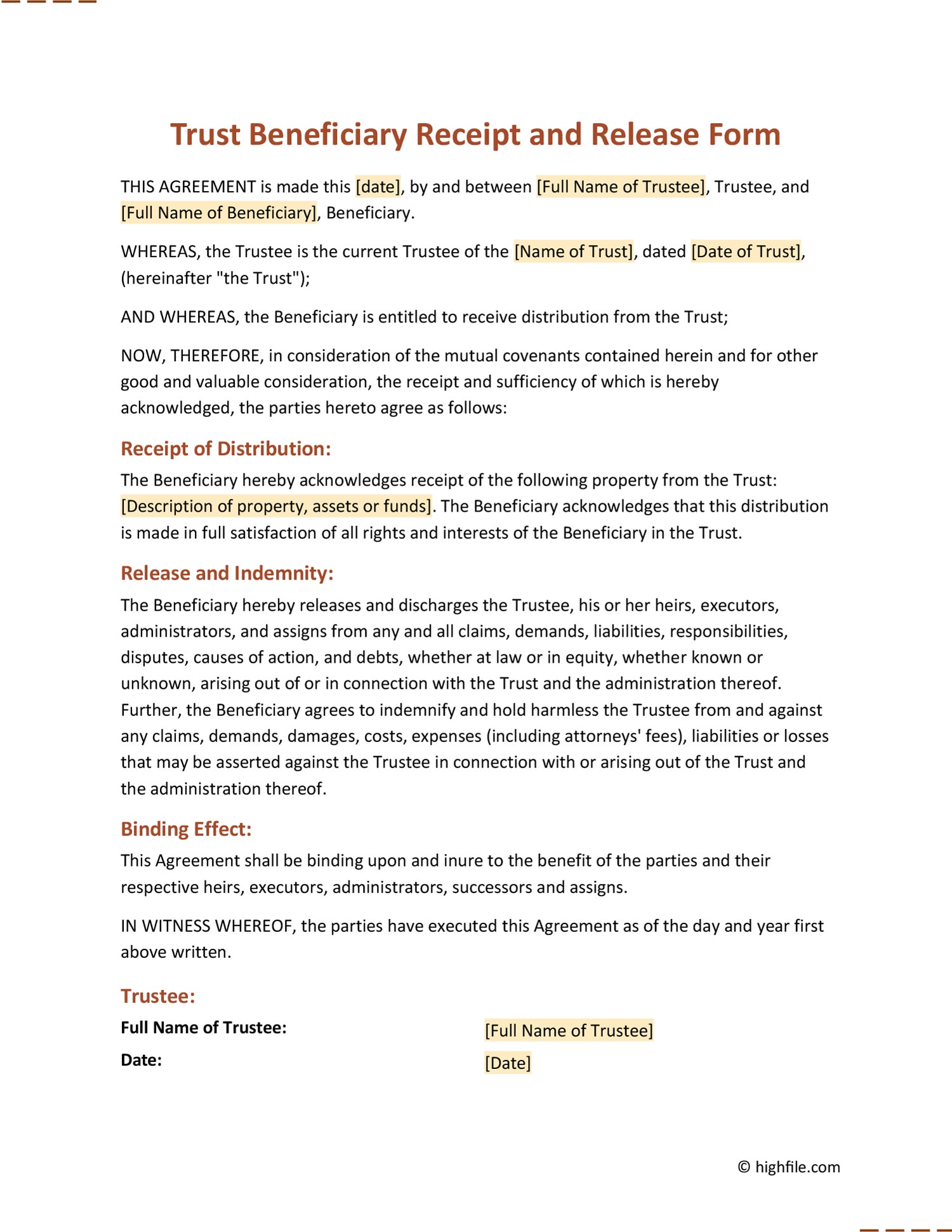




When money, property, or other assets are distributed from a trust, it is often important to document more than the transfer itself. The trustee may want a signed record showing what the beneficiary received, which trust the distribution came from, and whether the beneficiary is accepting that distribution as satisfaction of their interest under the trust. This trust beneficiary receipt and release form is designed for that purpose. It gives the trustee a formal written record of the distribution and gives the beneficiary a place to acknowledge receipt, while also addressing release language that may be relevant when the distribution closes out a trust matter or settles the beneficiary’s claim to the assets being transferred.
This template is especially useful when a trustee wants the trust file to show that a distribution was made and accepted in writing. It can be used when funds are paid out, when property is transferred, or when a final distribution is being completed and the trustee wants a signed acknowledgment tied to release and indemnity terms. Because the document goes beyond a basic receipt, each part should be reviewed carefully so the trust details, distribution language, and legal effect match the actual circumstances of the distribution.
Here’s a closer look at how to use the template and what each part is meant to do.
Start With the Parties and Trust Details
The opening paragraph identifies the date of the agreement, the full name of the trustee, the full name of the beneficiary, the name of the trust, and the date of the trust itself. This part connects the receipt and release to the correct legal relationship. If the family has more than one trust, or if the trust has been amended over time, those identifying details should match the trust records exactly so there is no uncertainty later about which trust the document refers to.
When filling in this part, use full legal names instead of shortened names or informal references. The trust name should also appear exactly as it appears in the trust instrument or related records. If a successor trustee is signing, make sure the trustee name used in the form matches the person currently acting in that role.
Describe the Distribution Carefully
The receipt paragraph is where the beneficiary acknowledges what has been received from the trust. The template leaves a bracketed space for the description of property, assets, or funds distributed. This is one of the most important parts of the form because it ties the signed acknowledgment to a specific transfer.
If the distribution is cash, write the amount received and, if relevant, the date or method of payment. If the distribution involves securities, real estate, personal property, or another asset, describe it with enough detail that someone reviewing the trust file later can understand what changed hands. A vague entry can create confusion if questions come up about what the beneficiary accepted.
Review this paragraph closely if the transfer is only part of the beneficiary’s interest. The current wording says the distribution is made in full satisfaction of all rights and interests of the beneficiary in the trust. That language reads like a full settlement, so it should be revised before signing if the trustee is only making a partial distribution.
Review the Release and Indemnity Language With Care
The next paragraph moves beyond acknowledgment of receipt and into legal release language. It states that the beneficiary releases and discharges the trustee from claims, liabilities, disputes, causes of action, and related matters connected with the trust and its administration. It also states that the beneficiary agrees to indemnify and hold the trustee harmless against claims, damages, costs, expenses, and losses tied to the trust.
This part deserves close review because it can carry legal consequences. Before anyone signs, confirm that the beneficiary understands what rights are being released and that the trustee is using wording appropriate for the trust administration involved. If there has been conflict over accounting, questions about valuation, tax issues, or disagreement among beneficiaries, this is a point where legal review can be especially valuable.
Check the Binding Effect Language
The binding effect paragraph states that the agreement will apply to the parties and their heirs, executors, administrators, successors, and assigns. In plain terms, it confirms that the document is meant to remain effective beyond the immediate signing event and continue to matter for those connected to the parties under the language of the agreement.
You usually will not need to edit this paragraph unless counsel wants language tailored to the trust or state law involved. Still, it should be reviewed with the rest of the document so the final text matches the trustee’s intent.
Complete the Trustee and Beneficiary Signatures
After the operative language, the template includes separate signature details for the trustee and beneficiary, including full name and date for each. This part turns the document from a draft into a signed acknowledgment. Dates matter here because they can show when the distribution and release were accepted. Trust Beneficiary Receipt and R…
Before signing, compare the names in the signature area with the names used in the opening paragraph. They should match fully. If the document is being signed after the assets were already delivered, make sure the dates still reflect the actual signing event and trust records stay aligned with that timeline.
Finish the Notary Acknowledgment
The final portion of the template includes a notary acknowledgment with spaces for the state, county, day, month, year, the names of the appearing trustee and beneficiary, the notary public’s name, seal, and commission expiration date. That means the template is already prepared for formal execution before a notary when that step is desired or required for the transaction.
This part should not be filled casually in advance if the parties have not yet appeared before the notary. Notary wording is meant to reflect the actual acknowledgment event. If local practice or counsel has a preferred notary certificate, compare that wording before final execution.
A Few Points to Review Before Signing
Before this form is finalized, compare it against the trust records, the distribution records, and any accounting shared with the beneficiary. The names, trust date, and asset description should match those records. If the beneficiary is receiving property with tax consequences, or if the trust administration has been disputed, outside review may be appropriate before the release is signed.
It is also worth deciding at the outset whether the document is meant to confirm a final distribution or only a specific transfer. That distinction affects how the receipt paragraph and release language should read. A form tied to a final payout can read much differently from a document meant only to confirm one payment or one asset transfer.
Wrap-Up
This template is available in Word, Google Docs, and PDF, which gives you options for editing, sharing, printing, and signing based on how the trust file is being handled. You can revise the bracketed fields for the trust details, distribution description, signatures, and notary information before final use. For trust matters involving unusual assets, disputes, or state-specific execution questions, a final legal review is worth considering before the document is signed.