


An emergency room visit can leave you needing quick documentation for an employer, school, airline, or another party that requires proof you were evaluated on a specific date. This emergency room doctor’s note template is a simple form that a licensed clinician can complete after an emergency department visit, with space for the visit date, basic patient identifiers, and written medical recommendations.
How To Use This Doctor’s Note Template
Start by entering the facility and provider details so the note can be tied to the correct emergency center. Then fill in the patient fields exactly as recorded during intake. After that, write recommendations in plain, professional language that matches what was advised during the visit.
Emergency Center Details
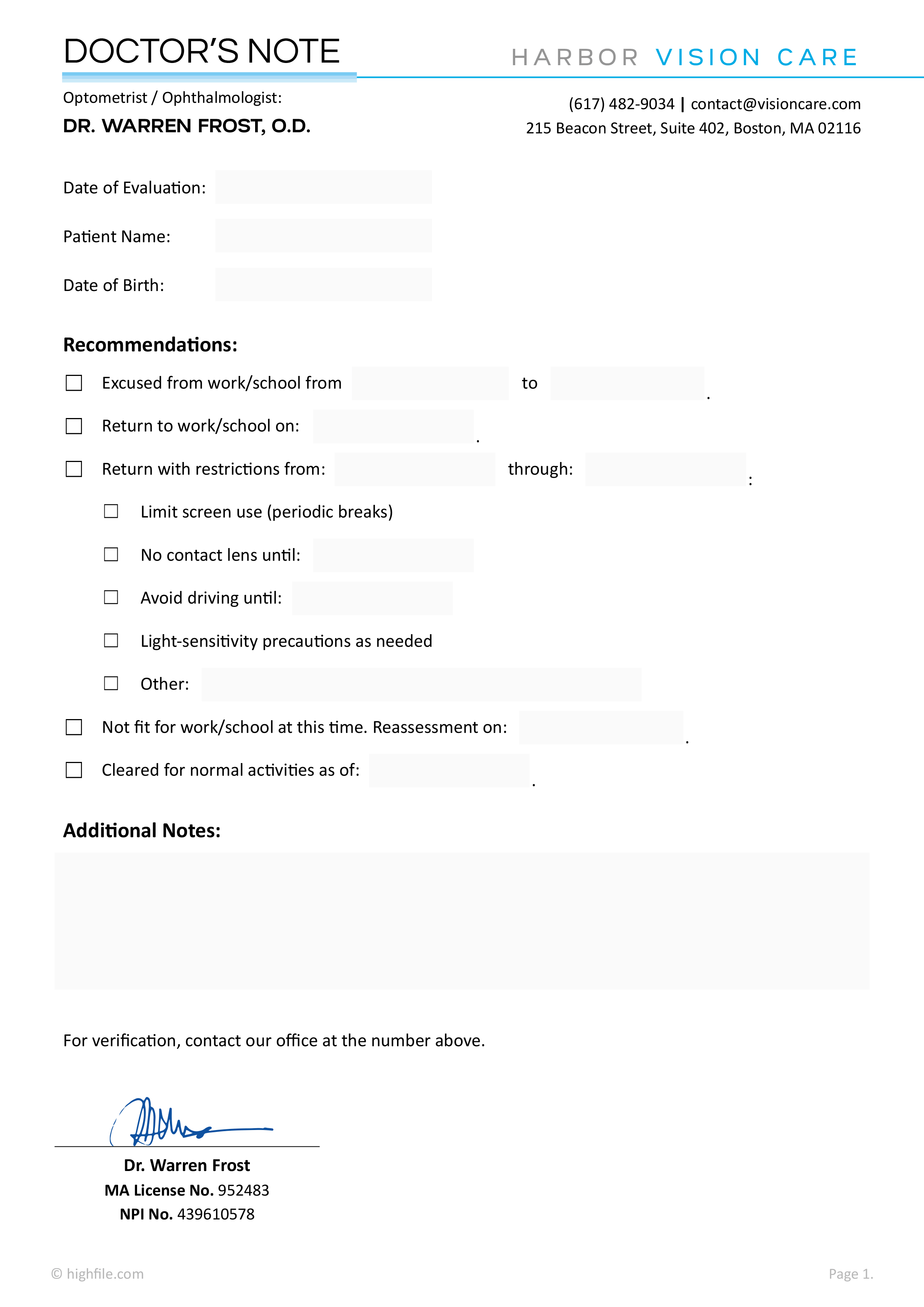
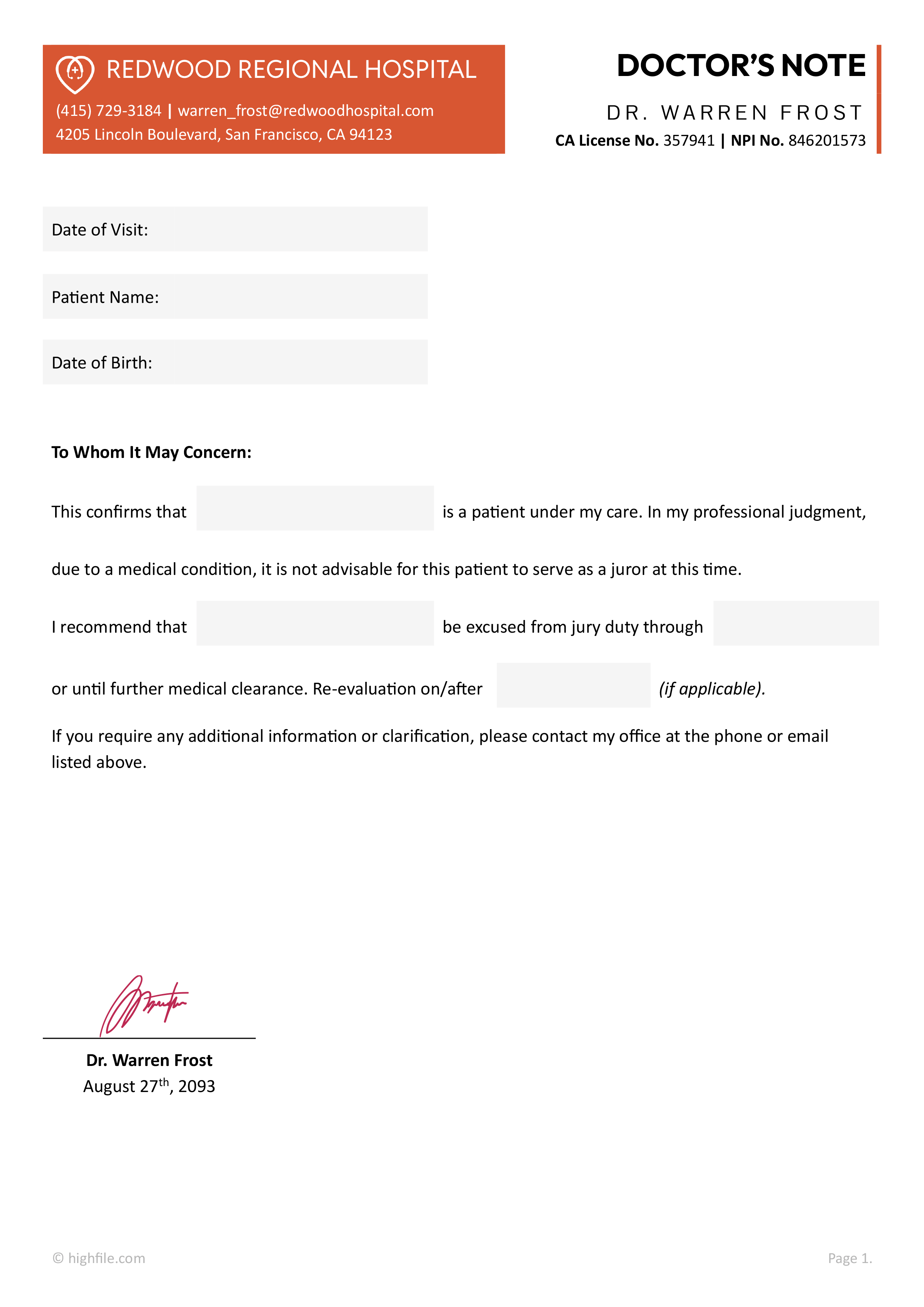
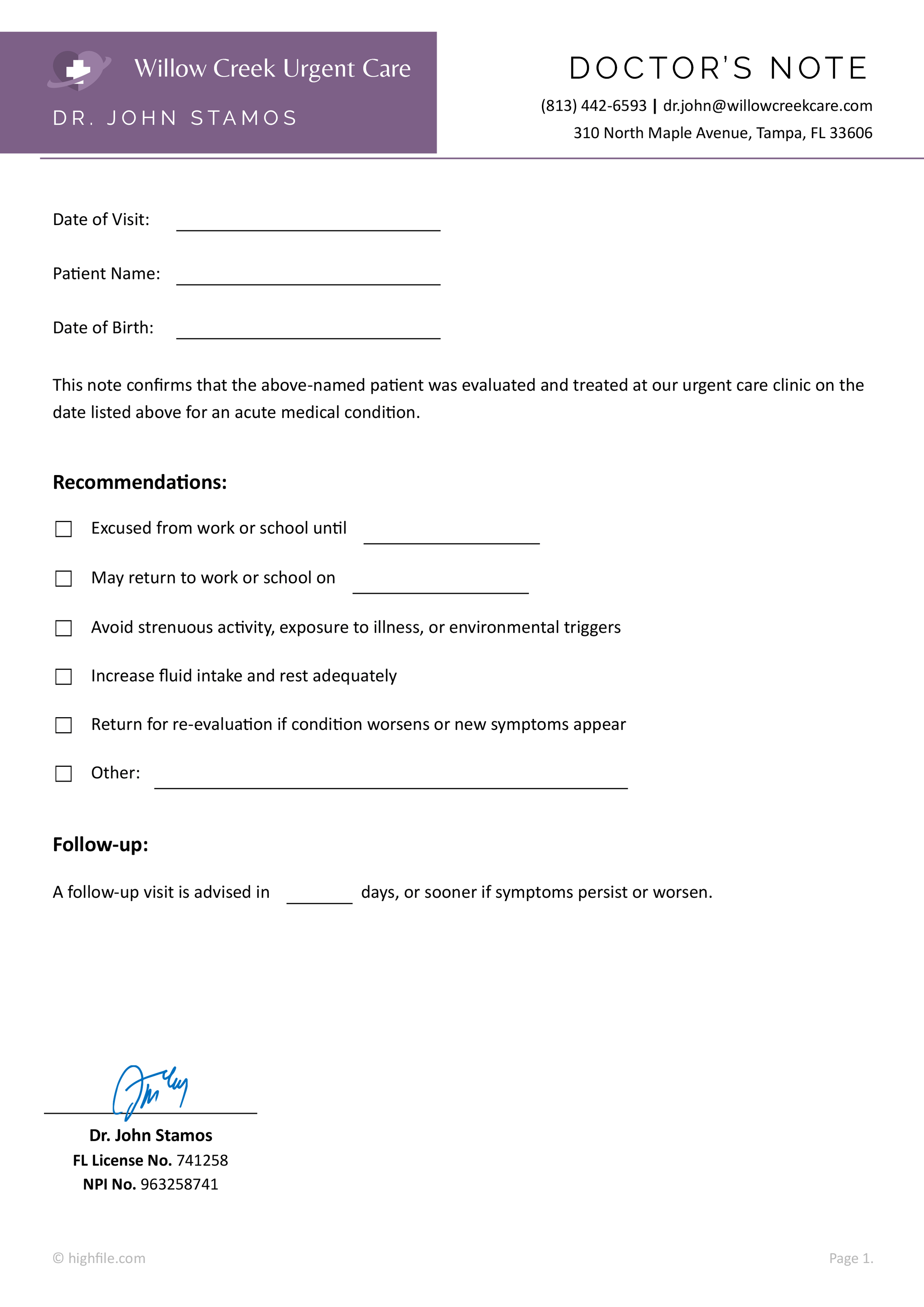
This section is where the emergency center or clinic information goes, along with the provider name and contact details. If you are using the version with sample branding, replace the name, address, email, phone, and website with the correct facility information before using it for real patients.
Patient Information
Enter the patient’s name, the date of the visit, and the date of birth. These fields are usually enough for basic identification in workplaces and schools, and they avoid collecting extra information that may not be necessary for verification.
Visit Confirmation Line
The template contains a short statement confirming the patient was evaluated in the emergency department on the date shown. This is the key line many recipients look for when they are verifying an absence or missed obligation.
Recommendations
Use the recommendations area to document what the patient was told to do next. This can cover time away from work or school, activity limitations, return date guidance, follow-up instructions, or symptoms that should prompt urgent reassessment. Keep wording specific enough to guide the recipient, but only include diagnosis details if the patient has agreed to share them.
If the note is for work restrictions, it often reads better to state functional limits, such as no lifting over a certain weight, no prolonged standing, or limited screen time, instead of describing medical conditions.
Provider Signature, License, and NPI
The bottom area is for the clinician’s signature and date, along with a license number and NPI. These details make it easier for the recipient to validate the note if they have a standard verification process.
This template should be completed by an authorized medical professional. Altering medical documentation can create serious employment, academic, and legal consequences.
FAQs
They can ask for documentation of the absence, but they usually do not need your diagnosis. If you want to keep details private, the recommendations can focus on work or attendance needs, such as excused dates, a return date, and any restrictions.
That is still a valid ER visit. The note can confirm the evaluation date and state whether the patient may return the same day, the next day, or after a short recovery period, based on what was advised.
Sometimes. A workplace may accept documentation that someone was at the hospital for caregiving or transport. If used for that purpose, the recommendations should be written to confirm attendance for caregiving and the dates involved, without adding patient medical details.
Avoid adding diagnosis details, test results, medications, or procedure descriptions unless the patient specifically requests that information to be shared. For most verification requests, excused dates and restrictions are enough.